How our Custom Tooling and Molding Processes can solve your plastic production problems
Author : Covington Plasctic Molding | Published On : 18 Jun 2026
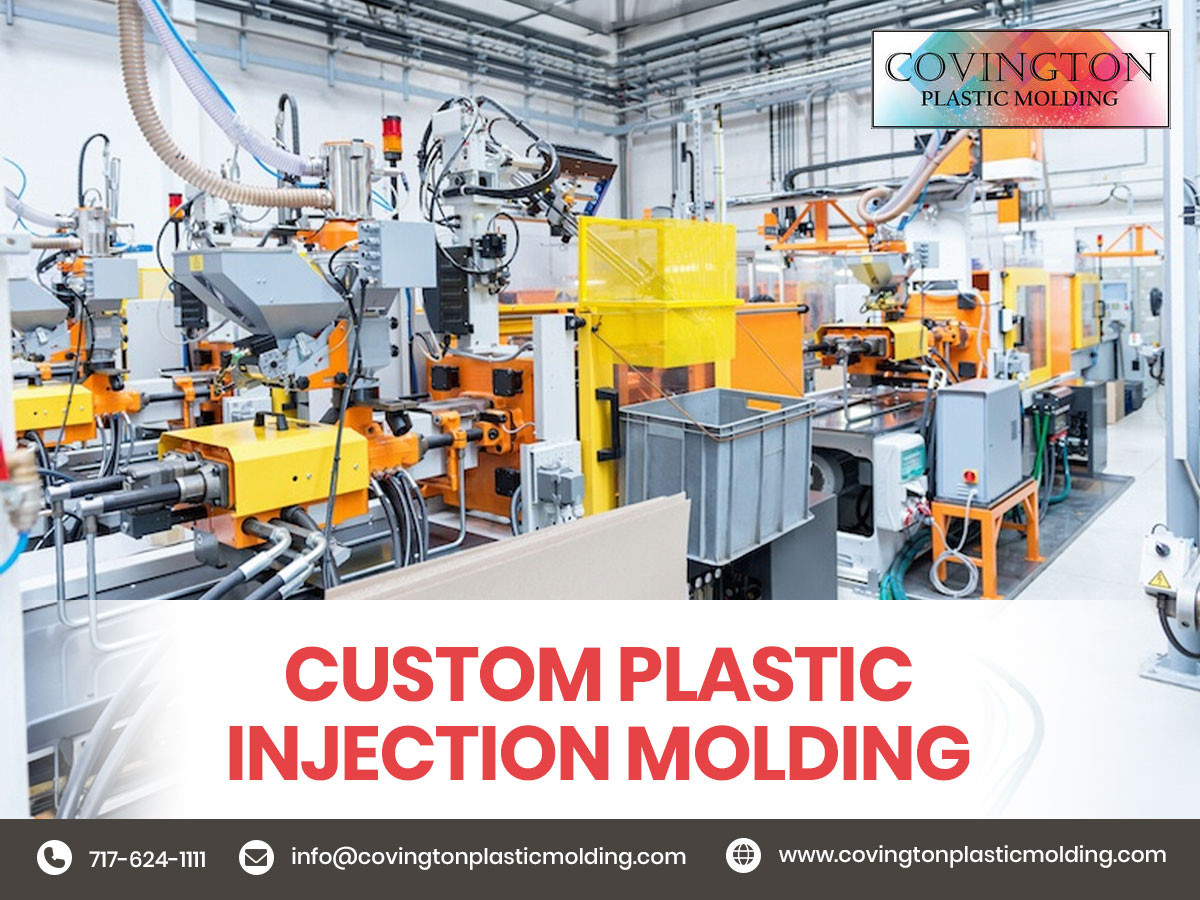
In the manufacturing world, specific tools are used to create everyday plastic products from car parts to phone cases. When you are trying to come up with a new product idea, it is important to know how these items are made. You will find two major concepts: molds for injection molding and the overall mold injection manufacturing process. Choosing the right production method can be a confusing and daunting task. This guide will tell you what you need to know, what challenges you may face, and how this process solves your production issues.
Why Do You Need This Method Of Manufacturing?
If you want to make thousands of identical plastic parts, you can't very well do it by hand or with a 3D printer. You need a system that is fast, accurate, and cost-effective at scale.
This is where mold injection manufacturing comes in. This process involves melting the plastic pellets and forcing them under high pressure into a hollow cavity. The plastic cools and hardens to exactly the shape of the cavity. It lets you make super detailed parts with incredible consistency.
To make that happen, engineers have to design and build custom molds for injection molding. These tools are the negative space or the “stencil” of your final product. Good products require tight tolerances and nice finishes, and the only way to get those is with a well-made tool.
Frequent Problems Experienced by Product Creators
So many creators hit the same predictable roadblocks trying to make plastic parts. Understanding these challenges helps you avoid costly mistakes.
High upfront costs: Custom molds for injection molding represent a large upfront investment. They are made from hard metals like steel or aluminum and take time and precision to machine.
Design Errors: Minor errors in your part design (such as inconsistent wall thickness) can lead to improper cooling of the plastic. This leads to warped parts or surface defects of the parts.
Material selection: If you choose the wrong plastic, your final product could crack under pressure or melt in a warm setting.
Scaling Problems: A small prototype is one thing, but making millions is another, and it needs a robust system. Mold injection manufacturing machines are built to withstand this heavy workload without slowing down.
How Expert Tooling Will Fix Your Problems
A pro manufacturing setup tackles these pain points head-on, and also brings reliability and long-term savings.
Unprecedented Speed: Once your custom molds for injection molding are built and tested, the actual production cycle is seconds per part. It enables you to complete large orders quickly.
Lower Cost Per Unit: Yes, the upfront tooling is expensive, but the more you produce, the less each individual plastic part will cost.
Material Versatility: In mold injection manufacturing, thousands of different plastic resins can be worked with. You can mix additives to make your parts stronger, flexible, UV-resistant, or bright colors.
Less Waste: The excess plastic that is left in the molding channels can often be ground and recycled back into the machine, making for a very efficient process.
Final Thoughts
The best way to make the most of your production run is to be systematic about the project. First, design your part to accommodate the limitations of mold injection manufacturing. Be sure to include draft angles so that the part will eject easily.
Then select a material for your injection molding molds that will last; think about the total amount you expect to produce. Aluminum is good for short runs; steel is needed for millions of cycles. Lastly, always request a small test run of samples so you can see the physical parts before you give the green light for full-scale mass production.
