How mine-spec diesel trailers cut refuelling downtime on remote sites
Author : Andrea Corovic | Published On : 04 Aug 2026
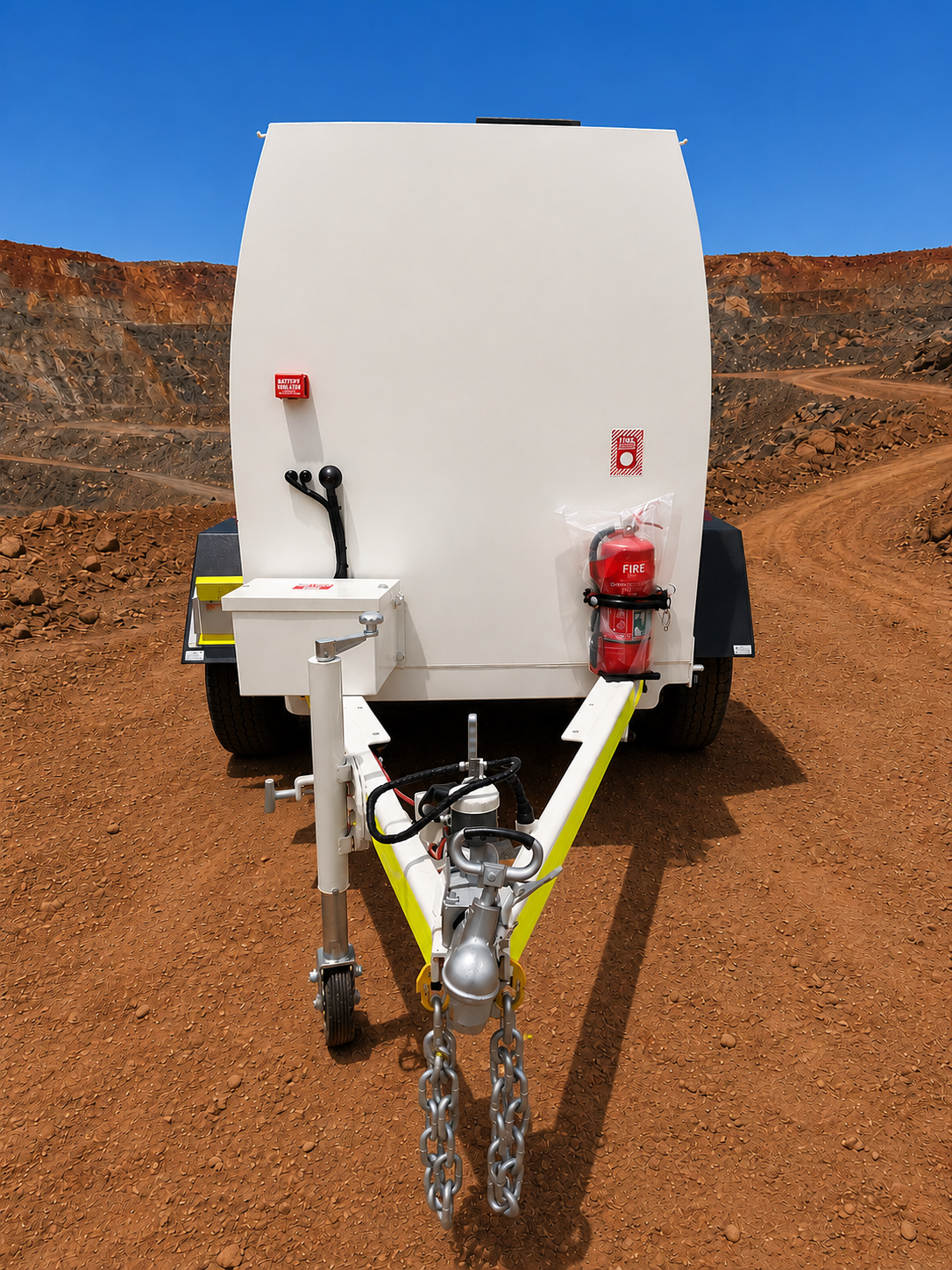
A machine standing still because it's waiting on fuel costs you just as much as one that's broken down, minus the repair bill. On remote sites, refuelling logistics are often the real constraint on fleet utilisation. The fix is bringing fuel to the plant rather than pulling plant back to a central bowser, and doing it fast, safely, and with gear that doesn't break down itself. That's the case for a well-built diesel trailer, and it's why the details of the build matter more than the price.
A dozer burning no fuel because it's waiting on a top-up isn't logged as a breakdown. It doesn't show up in the maintenance report. But for the hours it sits idle, it's costing you exactly what a broken machine costs: lost production, a stalled task, and a crew standing around. Fuel delays are downtime wearing a disguise, and on a big fleet they add up quietly.
For a fleet manager, that's utilisation leaking away where nobody's looking. The plant is fine. The operator's ready. The only thing missing is diesel in the tank, and getting it there on a remote site is harder than it should be. This is the problem a good diesel trailer is built to solve, so it's worth knowing what separates one that lifts your uptime from one that just sits in the yard.
Fuel delays are downtime by another name
The trap is treating fuel as a background task rather than a production input. When refuelling depends on a single fixed bowser or a fuel run that only reaches part of the site, the machines furthest out do the waiting. Multiply that across a shift and a fleet, and the lost hours dwarf the cost of a better refuelling setup.
The point of a mobile fuel solution is to take that constraint off the table. Instead of routing plant back to a central point and queuing, you carry the fuel to where the work is happening. The machine keeps working, the operator keeps producing, and the fuel arrives on your schedule rather than dictating everyone else's.
Reach the machines, don't make them come to you
The first thing that decides whether a diesel trailer actually helps is whether it can get to the plant. A trailer that can only reach the graded roads leaves your hardest-working machines stranded exactly where they burn the most fuel.
Mine-spec diesel trailers are built for that reach. Shermac's are engineered for rugged terrain and remote conditions, on off-road tyres and heavy-duty four-spring suspension, and tested extensively across WA's Pilbara region. The design is meant to reach the machines other trailers can't, so fuel delivery stays simple even on rough, isolated ground. That reach is the difference between refuelling on your terms and refuelling only where the trailer can physically go.
Refuel faster, idle less
Reach gets the fuel there. Speed decides how long the machine stands still once it arrives. A single slow outlet turns refuelling into its own bottleneck, especially when several machines need topping up at once.
This is where the dispensing setup earns its keep. Shermac diesel trailers can run 15-metre fuel reels with multiple outlets for simultaneous refuelling, diesel-powered or 12-volt pump options, fast-fill systems, and mechanical or NMI-approved digital fuel meters for accurate tracking. More outlets and faster flow mean shorter stops, which means less idle time across the fleet over a shift. For anyone measuring utilisation, that's the number that moves.
A fuel trailer that doesn't become the problem
None of this matters if the trailer itself is the weak link. A refuelling unit that cracks, corrodes, or breaks down on a remote site doesn't just fail, it strands your fuel supply where you can't easily fix it. Reliability of the asset is as important as what it does.
Mine-spec diesel trailers are built to hold up. Shermac units use all-steel construction with fully baffled, self-bunded tanks in capacities from 500L up to 2,500L, finished in a two-pack polyurethane paint system for the conditions. Every build is backed by an industry-leading three-year warranty on Shermac-manufactured components and a WA-based aftercare team with ongoing access to spare parts. That combination is why operators working genuinely hostile environments rate them on build quality and backup, as one Shermac customer, Jason Tatchell of Mine-Spec Industries, put it: 'Outstanding product working in some of the most hostile environments. Fantastic build quality and excellent back up service.'
The self-bunded design matters here too. It contains fuel in the event of a spill, which keeps you compliant on environmental controls without a separate bunding setup, one less thing to manage in the field.
Matching the trailer to your fleet
There's no single right build, which is the point of speccing it properly. A light plant fleet on a compact civil site has different needs from a spread-out mining operation running around the clock. Tank capacity, pump and metering, canopy security, and power options like solar recharge should follow how your fleet actually works, not a fixed template.
Shermac's mine-spec diesel trailer range is configurable across all of it, from tank size and dispensing setup to enclosed lockable canopies for tool and filter storage, weather protection, and site security. Matching those choices to your haul distances, machine count, and refuelling frequency is what turns a fuel trailer from a piece of kit into a genuine lift in fleet uptime.
Frequently asked questions
What size diesel trailer do I need?
It depends on your fleet's fuel burn and how far your machines are from a fixed supply. Smaller sites are often well served by 500L to 1,200L units, while larger or more spread-out operations lean toward 2,000L to 2,500L to cut the number of refill trips. Match capacity to your daily demand and travel distances rather than buying the biggest tank by default.
What makes a diesel trailer mine-spec compliant?
Mine-spec compliance covers the safety and environmental features a site requires as standard, most importantly a self-bunded tank for spill containment, plus compliant braking, lighting, and secure storage. Options like fire extinguishers, wheel chocks, and spill kits are added to meet specific site requirements. A compliant trailer has these built into the design rather than bolted on later.
How does a diesel trailer improve fleet uptime?
By removing the wait. When fuel comes to the machine on the operator's schedule, plant spends less time idle between tasks and more time producing. Faster dispensing and the ability to refuel several machines at once shorten each stop, and a reliable, well-built trailer means the fuel supply itself doesn't become a new source of downtime.
Where the real saving sits
The cheapest diesel trailer on the lot is rarely the one that lifts your utilisation. The saving isn't in the purchase price, it's in the idle hours you stop paying for, the machines that keep working because fuel reached them in time, and the years you get out of a trailer that's built to last. Weigh a fuel trailer on what it does to your uptime, not just what it costs to buy.
To spec a diesel trailer around your fleet's fuel demand, terrain, and refuelling schedule, talk to Shermac's today!
