How Machinery Firms Are Pivoting to Data-Driven Business Models
Author : Ayesha Diaz | Published On : 06 Jul 2026
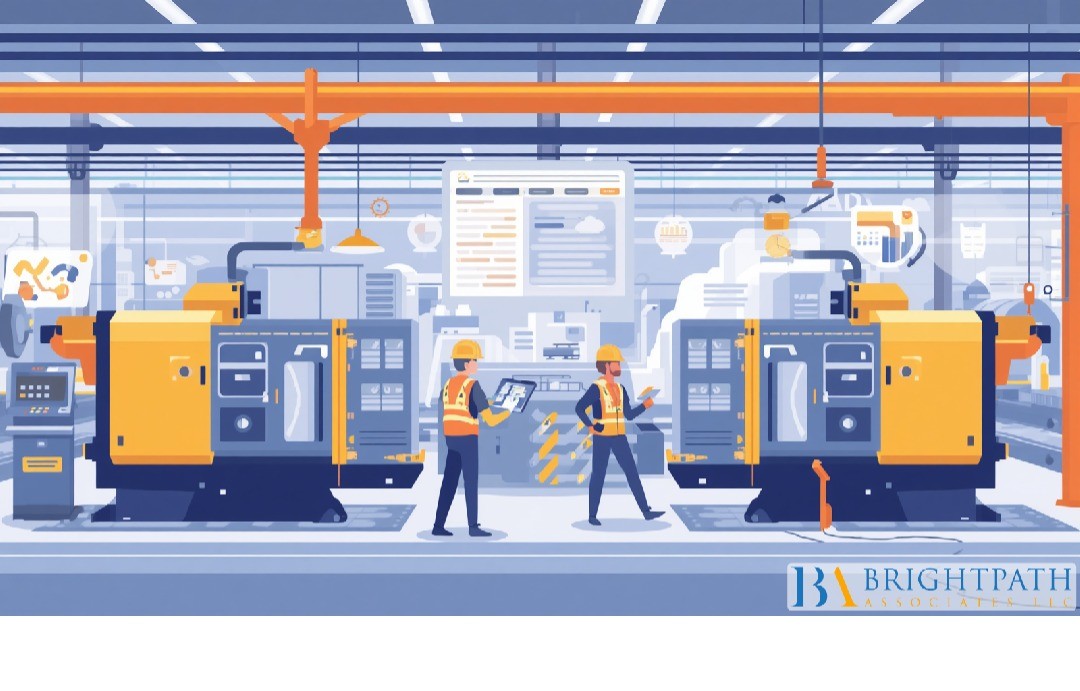
The machinery industry has long been recognized for engineering excellence, manufacturing precision, and durable equipment. Today, however, competitive advantage extends far beyond producing reliable machines. The next generation of market leaders is leveraging data as a strategic business asset, transforming traditional machinery into intelligent, connected solutions that generate ongoing value for both manufacturers and customers.
For small and mid-sized machinery companies across the United States, this shift represents both a challenge and an opportunity. Organizations that embrace data-driven business models are discovering new revenue streams, improving customer retention, optimizing operations, and making smarter strategic decisions. Those that delay risk falling behind competitors who view digital intelligence as essential rather than optional.
Evolution from Equipment Manufacturers to Solution Providers
Historically, machinery manufacturers generated revenue primarily through equipment sales, replacement parts, and maintenance services. While these revenue streams remain important, digital technologies have expanded what's possible.
Connected equipment equipped with IoT sensors now continuously collects operational information regarding performance, utilization, energy consumption, maintenance requirements, and production efficiency. Rather than ending the customer relationship after equipment delivery, manufacturers can now provide continuous monitoring, predictive maintenance, remote diagnostics, and performance optimization services.
This evolution transforms machinery companies from product suppliers into long-term strategic partners. Industry research shows that digital technologies are enabling machinery manufacturers to develop new business models centered on software, analytics, and value-added services rather than hardware sales alone.
Subscription-Based Business Models Are Gaining Momentum
Digital transformation is also reshaping how machinery companies generate revenue. Instead of relying exclusively on one-time equipment purchases, many organizations are introducing subscription-based services for equipment monitoring, analytics, software updates, remote support, and operational consulting.
These recurring revenue models improve financial stability while creating stronger customer engagement throughout the equipment lifecycle. Cloud-based platforms now allow manufacturers to deliver continuous software enhancements, production insights, and performance benchmarking without requiring major hardware modifications. Cloud-enabled digitalization is helping machinery companies improve competitiveness, operational resilience, and profitability through scalable connected services.
Smart Manufacturing Starts with Connected Data
The transition toward Industry 4.0 depends on one essential capability: connected data. Modern production facilities increasingly integrate IoT devices, automation systems, enterprise software, and AI-driven analytics into unified digital ecosystems. Instead of isolated information stored across departments, organizations gain real-time visibility into production, inventory, quality, supply chain performance, and equipment utilization.
This level of transparency enables faster decision-making, better resource allocation, and continuous operational improvement. Companies operating within the Machinery Industry are increasingly investing in digital infrastructure because connected operations improve productivity while supporting greater agility during market fluctuations. For small and mid-sized manufacturers, these technologies are becoming more accessible through scalable cloud platforms and modular digital solutions.
Executive Talent Is Powering Next Generation of Machinery Companies
As business models evolve, so do leadership requirements. Today's machinery manufacturers increasingly seek executives with expertise in digital transformation, smart manufacturing, industrial automation, data analytics, AI implementation, customer success, and business innovation.
Finding leaders who can bridge traditional manufacturing knowledge with emerging digital capabilities has become a significant competitive advantage. Executive recruitment therefore plays a critical role in helping organizations accelerate transformation while managing operational complexity. Experienced leaders bring the strategic vision necessary to modernize operations, implement technology effectively, and position companies for long-term growth.
For additional insights into this evolving trend, explore BrightPath Associates' detailed analysis on How Machinery Firms Are Pivoting to Data-Driven Business Models, which examines practical strategies machinery companies can adopt to remain competitive in an increasingly digital marketplace.
Looking Ahead
The future of the machinery industry belongs to organizations that recognize data as more than operational information—it is a strategic business asset capable of driving innovation, customer loyalty, recurring revenue, and sustainable growth.
For small and mid-sized manufacturers, adopting data-driven business models is no longer reserved for global enterprises. Advances in cloud computing, connected equipment, AI, and industrial analytics have made digital transformation achievable at every scale.
