How HIPAA Compliant Therapy Software Supports Secure Documentation and Better Patient Care
Author : Justin Roy | Published On : 09 Jul 2026

Therapists manage far more than appointments and treatment plans. Every session generates confidential records that must be stored, accessed, and shared responsibly. This is why HIPAA compliant therapy software has become an important part of modern therapy practices. It helps clinicians protect sensitive patient information while making documentation, communication, and daily workflows more organized. Whether serving children, adults, or multidisciplinary teams, secure software allows therapists to spend more time delivering quality care instead of worrying about paperwork or data security.
Why Secure Documentation Matters in Therapy
Clinical documentation is the foundation of effective therapy. Every evaluation, treatment note, progress report, and communication contributes to a patient's care journey. These records help therapists make informed decisions, collaborate with other providers, and meet legal and professional requirements.
Paper records or unsecured digital files create unnecessary risks. Lost documents, unauthorized access, or accidental data exposure can affect patient trust and create compliance concerns. Secure documentation systems reduce these risks by providing protected environments where information is stored safely and can only be accessed by authorized users.
Reliable documentation also ensures continuity of care. If multiple therapists work with the same patient, accurate records allow everyone to understand treatment history and current goals without confusion.
Protecting Patient Privacy with Built-In Security
Patient privacy is one of the highest priorities in healthcare. Therapy software designed for HIPAA compliance includes multiple security features that work together to protect confidential information.
These commonly include:
- Encrypted data storage
- Secure user authentication
- Role based access permissions
- Automatic session timeouts
- Activity logs for user actions
- Secure file sharing
- Data backup and recovery options
These safeguards help prevent unauthorized access while ensuring patient information remains available to the professionals who need it.
Maintaining strong security also builds confidence among patients. People are more comfortable sharing personal information when they know their therapist uses secure systems to protect their records.
Better Documentation Leads to Better Clinical Decisions
Accurate documentation supports better patient outcomes. When therapists can quickly review previous notes, treatment plans, assessments, and progress reports, they can make more informed clinical decisions.
Instead of relying on memory or searching through paper files, providers have organized records available whenever needed. This allows therapists to:
- Track patient progress over time
- Identify patterns and treatment responses
- Update goals based on measurable outcomes
- Create more consistent care plans
- Improve communication with families and other providers
Comprehensive documentation gives therapists a clearer picture of each patient's journey, allowing care to remain focused and personalized.
Saving Time Without Sacrificing Quality
Documentation often consumes a large portion of a therapist's workday. Writing notes, updating records, organizing files, and preparing reports can reduce the amount of time available for patient care.
Modern therapy software streamlines these routine tasks through features such as:
- Custom documentation templates
- Digital intake forms
- Progress note automation
- Electronic signatures
- Centralized patient records
These tools reduce repetitive administrative work while allowing therapists to maintain detailed and accurate documentation.
Instead of spending evenings catching up on paperwork, clinicians can complete documentation more efficiently during regular working hours.
Supporting Team Collaboration
Many therapy clinics involve multiple professionals working together. Occupational therapists, speech language pathologists, behavioral specialists, psychologists, and administrative staff often need access to patient information.
Secure therapy software improves collaboration by allowing authorized team members to view relevant records without compromising privacy.
Everyone works from the same up to date information, reducing misunderstandings and duplicate documentation. This coordinated approach supports more consistent treatment planning and better communication across the entire care team.
Collaboration becomes especially valuable in multidisciplinary practices where several providers contribute to a patient's overall progress.
Reducing Documentation Errors
Manual record keeping increases the likelihood of mistakes. Missing signatures, incomplete notes, duplicate files, or misplaced documents can create administrative challenges.
Digital documentation systems help reduce these issues by guiding therapists through standardized documentation processes.
Many platforms include reminders for incomplete records, required fields, and documentation deadlines. These small improvements help practices maintain accurate and complete patient records while reducing avoidable errors.
Consistent documentation also simplifies internal reviews and external audits when necessary.
Easier Access to Patient Information
Fast access to patient records allows therapists to prepare for sessions more effectively.
Rather than searching through filing cabinets or multiple software systems, clinicians can quickly locate:
- Initial evaluations
- Treatment history
- Progress notes
- Attendance records
- Care plans
- Assessment results
- Uploaded documents
Having everything organized in one secure location improves efficiency and allows therapists to focus on meaningful patient interactions.
Quick access also benefits administrative staff who schedule appointments, process documentation, or coordinate communication with families.
Supporting Long Term Practice Growth
As therapy practices expand, documentation becomes more complex. Additional clinicians, larger patient volumes, and multiple service locations require stronger organization.
Secure therapy software grows alongside the practice by centralizing patient information while maintaining consistent documentation standards.
Practice owners can manage larger caseloads without creating unnecessary administrative burdens. Staff members follow standardized workflows that improve consistency across the organization.
Scalable systems help clinics maintain quality patient care while supporting sustainable growth.
Meeting Compliance Requirements More Efficiently
Healthcare regulations require accurate documentation and secure record management. Meeting these expectations manually can become difficult as patient numbers increase.
HIPAA compliant software helps practices maintain proper documentation procedures through built in safeguards, secure storage, and controlled access.
Rather than constantly monitoring paper files or unsecured digital folders, therapists can rely on systems designed to support regulatory requirements as part of everyday operations.
This allows providers to focus more on patient care while maintaining organized and secure clinical records.
Ready to Simplify Documentation and Strengthen Patient Care?
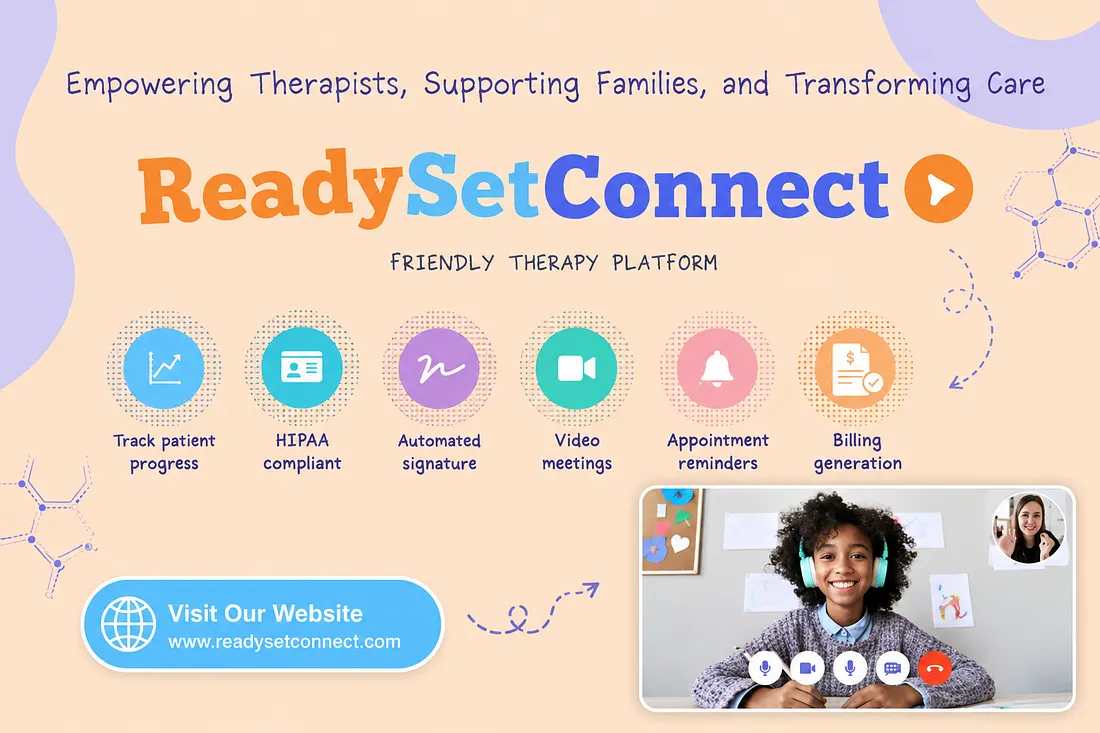
Managing documentation, scheduling, communication, and patient records becomes much easier when everything works together in one secure platform. ReadySetConnect is designed to help therapy professionals organize daily operations, protect patient information, and improve workflow efficiency without adding unnecessary complexity. It supports growing practices with tools that simplify documentation while helping clinicians dedicate more time to meaningful patient care.
Conclusion
Secure documentation is much more than a compliance requirement. It directly affects the quality, consistency, and efficiency of patient care. Organized records help therapists make informed decisions, collaborate effectively, reduce administrative work, and maintain patient trust. Investing in reliable digital solutions supports both clinicians and patients by creating safer, more efficient workflows. As therapy practices continue to evolve, choosing technology that supports secure documentation and efficient operations becomes an important step toward delivering outstanding care with dependable therapy scheduling software.
Frequently Asked Questions
1. Why is secure documentation important for therapy practices?
Secure documentation protects confidential patient information while ensuring therapists have accurate records available for treatment planning, progress tracking, and continuity of care.
2. How does HIPAA compliant therapy software improve daily workflows?
It centralizes documentation, scheduling, patient records, communication, and administrative tasks, helping therapists reduce manual work and improve efficiency.
3. Can secure therapy software help multidisciplinary clinics?
Yes. Authorized team members can securely access shared patient records, improving collaboration among therapists, psychologists, behavioral specialists, and administrative staff.
4. Does digital documentation reduce paperwork?
Yes. Electronic records, customizable templates, digital forms, and electronic signatures significantly reduce paper based documentation and repetitive administrative tasks.
5. What should therapists look for when selecting therapy software?
Important features include secure data storage, encrypted communication, customizable documentation templates, access controls, reporting tools, patient record management, and reliable scheduling capabilities that support efficient clinical workflows.
