How Does a Withdrawable Vacuum Circuit Breaker Transform Switchgear Maintenance and Reliability?
Author : HitokaCece HitokaCece | Published On : 15 Jul 2026
Introduction
Over the years in the switchgear industry, I have witnessed countless maintenance teams struggle with the same challenge: how to service circuit breakers safely and efficiently without shutting down entire electrical systems. Fixed-mounted breakers require full system shutdowns, complex safety preparations, and hours of labor for even routine inspections. The withdrawable vacuum circuit breaker changed all of that. Our withdrawable design, which integrates precision guiding rails and reliable interlocking mechanisms that follow IEC 62271-200 and GB 3906 standards, ensures safe and stable movement between connected, test, and disconnected positions. Having worked with plant engineers and utility managers across the industry, I have seen how withdrawable vacuum circuit breaker technology transforms maintenance from a high-risk, time-consuming operation into a controlled, efficient procedure. In this article, I want to share the key benefits that make withdrawable VCBs essential for modern switchgear reliability.
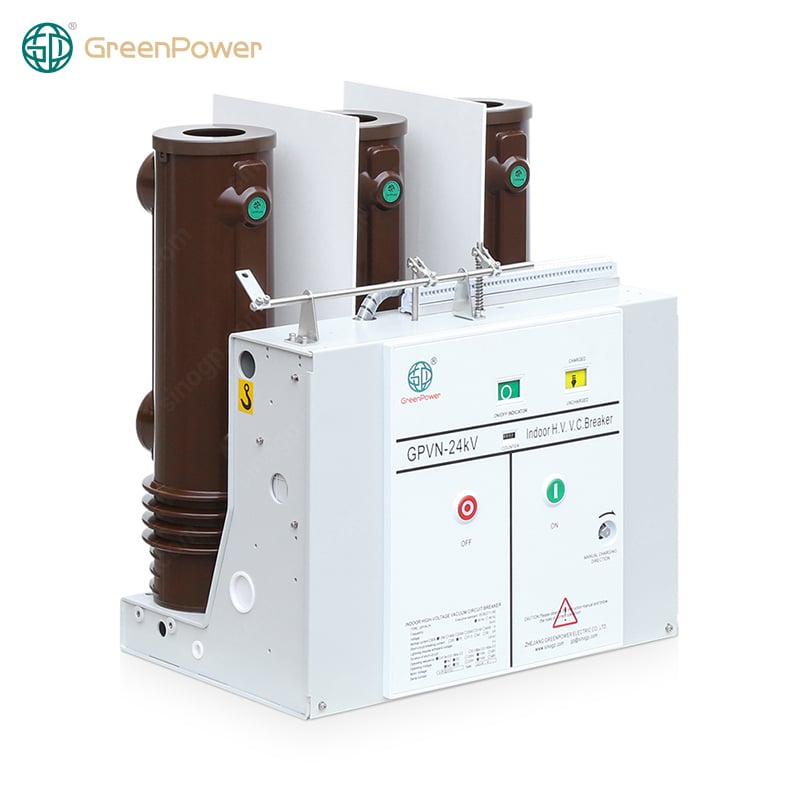
Withdrawable Vacuum Circuit Breaker Safe Isolation and Offline Maintenance
The most significant advantage of a withdrawable vacuum circuit breaker is its ability to create clear physical isolation between the breaker and live components. This design fundamentally transforms maintenance practices by allowing all inspections, repairs, and component replacements to be performed offline, away from energized parts. During my years of field service across industrial plants and utility substations, I have seen this feature eliminate countless high-risk maintenance scenarios. Unlike fixed-mounted breakers that require complete system shutdowns, the withdrawable design allows maintenance teams to work safely on the withdrawn vacuum circuit breaker while the rest of the switchgear remains energized. This not only protects personnel from electrical hazards but also prevents accidental damage to live components during maintenance. The complete isolation capability turns high-risk maintenance into a controlled, safe procedure, significantly reducing safety incidents and compliance burdens.
Withdrawable Vacuum Circuit Breaker Rapid Replacement and Minimal Downtime
One of the most significant maintenance advantages of a withdrawable vacuum circuit breaker is its ability to minimize system downtime through fast replacement. When a fault occurs or scheduled maintenance is needed, the entire breaker can be quickly withdrawn and replaced with a spare unit in minutes, rather than hours. Our design features smooth rolling elements and balanced weight distribution, enabling a single technician to safely move the vacuum circuit breaker without special lifting equipment. This capability was dramatically demonstrated in a cement plant project where a critical production line faced unexpected breaker failure. Using the withdrawable design, the maintenance team replaced the faulty unit in just 18 minutes, compared to the 6+ hours required for a fixed breaker replacement. According to EPRI studies, medium-voltage system downtime costs industrial users an average of $150,000 per hour, making this maintenance efficiency a substantial financial benefit. The modular construction ensures perfect alignment and electrical contact during reinsertion, maintaining performance specifications without complex adjustments after replacement.
Withdrawable Vacuum Circuit Breaker Simplified Inspection and Condition Assessment
Regular condition assessment is essential for preventive maintenance, and the withdrawable design makes these procedures far more efficient. When withdrawn, the vacuum circuit breaker provides complete, unobstructed access to all components—including the vacuum interrupter, operating mechanism, contacts, and control modules—making visual inspections and detailed testing significantly easier. The design incorporates several maintenance-friendly features, such as clear wear indicators, accessible test points, and standardized connection interfaces that simplify diagnostic procedures. Comprehensive testing—including insulation resistance, contact resistance, and operation timing tests—can be performed on a bench or in a controlled workshop environment, rather than within the confined space of a switchgear cabinet. IEEE Standard C37.20.2 specifically notes that withdrawable designs facilitate proper maintenance by allowing complete access for inspection and testing. This accessibility means potential issues can be identified earlier and addressed more thoroughly, preventing minor problems from developing into major failures.
Conclusion
The withdrawable vacuum circuit breaker has transformed switchgear maintenance by enabling safe isolation, rapid replacement, and simplified condition assessment. The ability to withdraw the breaker creates a clear physical barrier between personnel and live components, eliminating the need for full system shutdowns. The rapid exchange capability reduces downtime from hours to minutes, delivering substantial financial savings. And the unobstructed access to all components simplifies inspection and testing, enabling earlier detection and prevention of potential failures. In a world where every minute of downtime costs money and every safety incident threatens operations, the withdrawable vacuum circuit breaker is not just a component—it is a strategic investment in switchgear reliability, maintenance efficiency, and personnel safety.
