How Does a Generator AVR Maintain Stable Voltage Output?
Author : HitokaCece HitokaCece | Published On : 26 Aug 2026
Introduction
In my years working with generator systems, I have seen more equipment failures traced to voltage instability than to any other single cause. A generator AVR—the Automatic Voltage Regulator—is the component that stands between stable power and damaging voltage fluctuations. The AVR is a critical component in power systems, responsible for maintaining a consistent, stable, and desired voltage level at the generator‘s terminals. Without a properly functioning AVR, even the best generator becomes unreliable, putting sensitive electronics, motors, and entire production lines at risk. The global demand for reliable backup power continues to grow, and understanding how a generator AVR works has never been more important. Let me share what I have learned about how a generator AVR maintains stable voltage output.
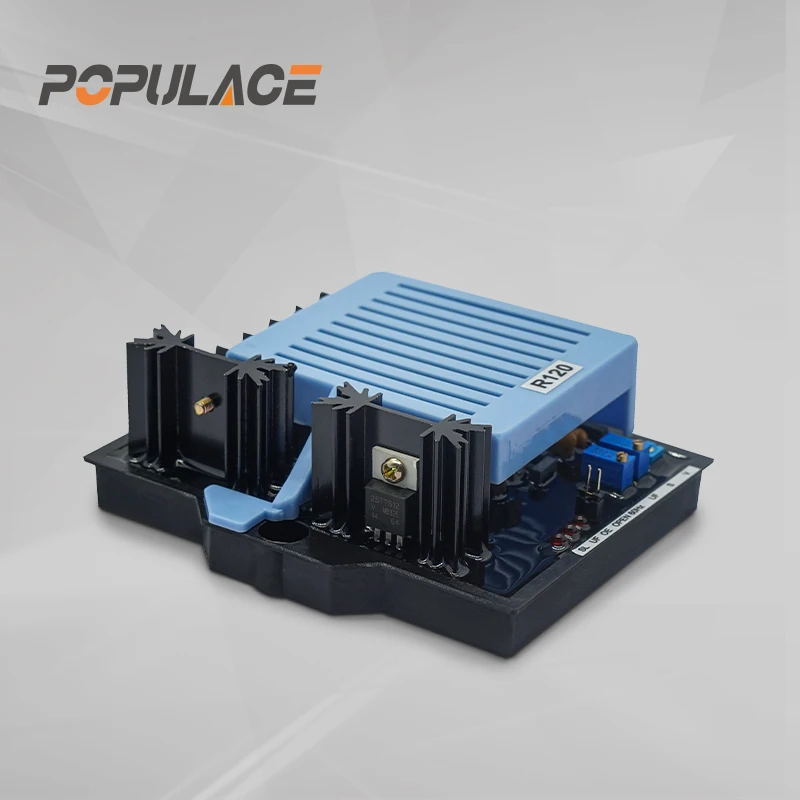
The Working Principle of a Generator AVR
The generator AVR operates on a continuous monitoring and adjustment loop. The primary function of the AVR is to regulate the generator‘s field excitation to control the output voltage within acceptable limits under varying load conditions and disturbances. The AVR continuously monitors the generator‘s output voltage. When the output voltage deviates from the set point—whether due to load changes, speed variations, or other disturbances—the AVR responds by adjusting the excitation current flowing to the rotor winding. If the voltage drops, the AVR increases the excitation current to boost the magnetic field strength, which raises the output voltage. If the voltage rises, the AVR reduces the excitation current to bring the voltage back to the desired level. This constant monitoring and adjustment happens in milliseconds, ensuring that the output voltage remains within acceptable limits regardless of load changes. The AVR operates as a voltage stabilizer and controller because the output voltage is controlled and regulated through a power electronic system.
Excitation Control and Field Current Regulation in Generator AVRs
The heart of generator AVR operation is excitation control. The AVR controls the amount of excitation current flowing to the rotor winding. The exciter-based control technique is among the best ways of achieving stable voltage regulation with a prompt response mechanism. The AVR maintains the constant voltage up to a certain level of the load current which is independent of the generator speed and load. In a typical system, the AVR sends a control signal to the main exciter to adjust the magnetising current in the rotor windings. This adjustment directly affects the alternator‘s output voltage. By precisely controlling the field current, the AVR ensures that the generator produces stable, reliable power even when loads fluctuate or when multiple generators are operating in parallel. The field winding is connected to the AVR, which includes a rectifier to convert AC to DC for excitation. Understanding excitation control is essential for anyone involved in generator specification, operation, or maintenance.
Selection Criteria and Performance Parameters for Generator AVRs
Selecting the right generator AVR requires understanding the key performance parameters and system compatibility requirements. The three most critical selection criteria are: excitation type (self-excited, PMG, or auxiliary winding), field current capacity, and sensing voltage range. The AVR‘s continuous field current rating must exceed the generator‘s maximum field current by at least 25%. Different excitation systems—including self-excited (shunt), permanent magnet generator (PMG), and auxiliary winding (AREP)—each have different AVR requirements. PMG excitation provides excellent fault ride-through and fast voltage recovery, making it ideal for critical applications. AREP is suitable up to 1000 kVA for commercial loads with mixed usage. Early analog AVRs achieved ±1% voltage stability, while modern digital AVRs offer even better performance. When selecting a generator AVR, consider the excitation system type, field current requirements, and the specific application demands.
Conclusion
A generator AVR maintains stable voltage output through continuous monitoring and rapid adjustment of excitation current, ensuring that output voltage remains within acceptable limits under varying load conditions. The excitation control mechanism—whether self-excited, PMG, or AREP-based—determines the AVR‘s performance characteristics and application suitability. And selecting the right AVR requires careful evaluation of field current capacity, excitation type, and voltage sensing range. By understanding how a generator AVR works and what to look for when selecting one, procurement professionals, technicians, and generator operators can ensure reliable, stable power generation for their critical applications.
