How Do You Select a Gasoline Water Pump for Agricultural Irrigation and Flood Control?
Author : HitokaCece HitokaCece | Published On : 21 Sep 2026
Water management is one of the most demanding tasks in agriculture and emergency response. Crops need consistent irrigation. Flooded areas need rapid drainage. Construction sites need dewatering. In all of these situations, a gasoline water pump provides the mobility and power that stationary electric pumps cannot match. But selecting the right pump requires understanding the relationship between flow rate, head height, and engine power.
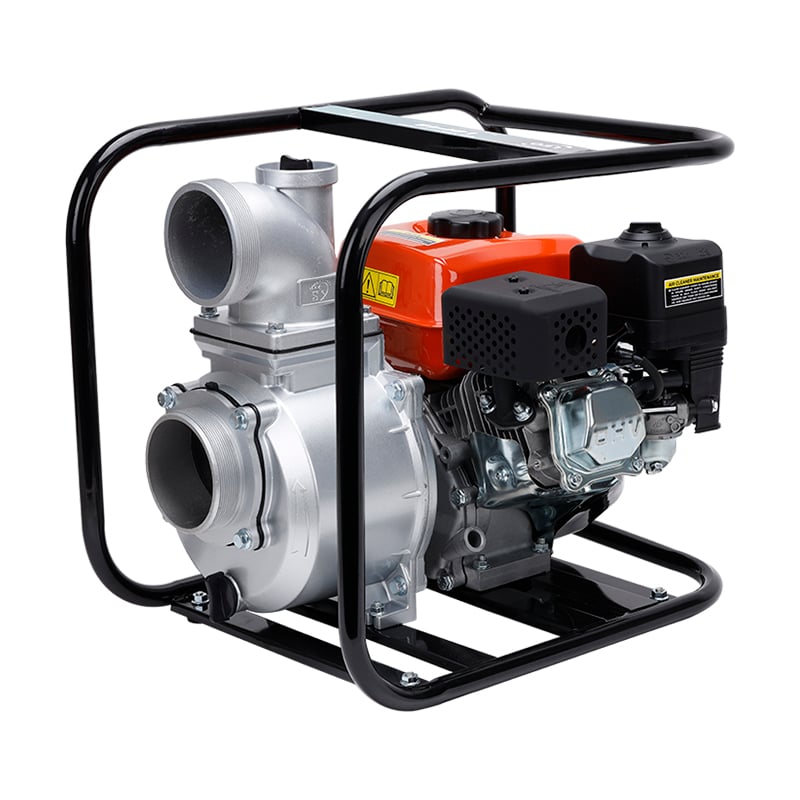
Gasoline Water Pump Flow Rate and Head Height
The two most important specifications for any gasoline water pump are flow rate and head height. Flow rate, measured in cubic meters per hour, determines how much water the pump can move. Head height, measured in meters, determines how high the pump can lift water. These two specifications are related. As head height increases, flow rate decreases. A pump rated at 180 cubic meters per hour at zero head may only deliver 60 cubic meters per hour at 20 meters of head.
For agricultural irrigation, the required flow rate depends on the crop type, field size, and irrigation method. Drip irrigation requires lower flow rates but consistent pressure. Sprinkler systems need higher flow rates to cover large areas. Flood control requires the highest flow rates because the goal is to remove water as quickly as possible. Buyers should calculate the required flow rate and head height for the specific application before choosing a pump. A pump that is too small will not keep up with demand. A pump that is too large wastes fuel and money.
Petrol Water Pump Engine and Port Size
The engine determines the pump’s power and fuel consumption. Petrol water pumps typically use 4-stroke engines ranging from 2.5 HP to 7 HP. Smaller engines are suitable for light duty applications like garden watering. Larger engines are needed for high flow irrigation and flood control. The engine should be matched to the pump’s hydraulic requirements. An oversized engine on a small pump wastes fuel. An undersized engine on a large pump cannot achieve the rated flow rate.
Port size determines what hoses and fittings can be connected to the pump. Common port sizes are 1 inch, 1.5 inch, 2 inch, and 3 inch. The port size should match the suction and discharge hoses being used. A pump with a 2 inch port connected to a 1 inch hose will not achieve its rated flow rate because the hose restricts flow. Buyers should specify the port size based on the required flow rate and the hose diameter available in their market.
Gasoline Water Pump Materials and Self Priming
The pump housing and impeller materials affect durability and corrosion resistance. Cast iron is the traditional choice for pump housings because it is strong and wear resistant. Aluminum housings are lighter but less durable. For pumping clean water, aluminum is adequate. For pumping water with sand, silt, or debris, cast iron or stainless steel is better. The impeller should be made from bronze, stainless steel, or a durable composite material.
Self priming is an important feature for gasoline water pumps. A self priming pump can draw water from a source below the pump without manual priming. This is essential for flood control and irrigation, where the water source may be a pond, river, or flooded area. The suction lift specification indicates how deep the pump can draw water. Typical suction lift for a gasoline water pump is 6 to 8 meters. Buyers should confirm the suction lift requirement and choose a pump that can handle it.
Conclusion
Selecting a gasoline water pump requires matching flow rate, head height, engine power, port size, and materials to the specific application. Agricultural irrigation, flood control, and construction dewatering each have different requirements. Buyers should calculate the hydraulic requirements first, then choose a pump that meets those requirements with some margin for variation. A well specified pump delivers reliable performance and long service life.
