How Do You Choose the Right Generator AVR for Your Genset?
Author : HitokaCece HitokaCece | Published On : 20 Sep 2026
The generator AVR is one of those components that most people ignore until something goes wrong. When the AVR works, the generator produces stable voltage and nobody thinks about it. When it fails, the output voltage collapses, flickers, or rises to dangerous levels. In industrial and commercial power systems, an AVR failure can shut down operations, damage connected equipment, and create safety hazards. Choosing the right AVR is not simply a matter of finding a replacement with the same part number.
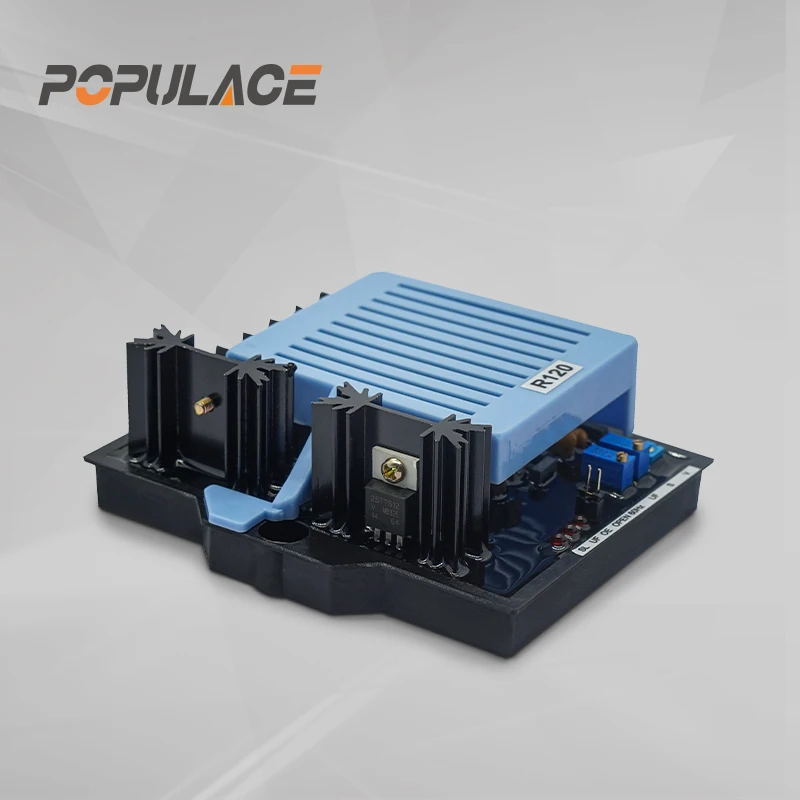
Generator AVR Voltage Sensing and Excitation Control
The AVR’s job is to regulate the generator’s output voltage by controlling the excitation current sent to the alternator’s field winding. It does this by continuously comparing the actual output voltage against a reference value. When the load increases and voltage drops, the AVR increases excitation current to bring voltage back up. When the load decreases and voltage rises, the AVR reduces excitation current. This feedback loop happens many times per second.
The key specification is the voltage sensing input. The AVR must be compatible with the generator’s output voltage and frequency. A 220V AVR will not work on a 400V system. The sensing circuit must also be protected from voltage spikes and harmonics. Some AVRs include filtering to handle distorted waveforms. Buyers should confirm the sensing voltage range, frequency range, and whether the AVR supports single phase or three phase sensing.
GAVR Module Selection for Brushless Alternators
GAVR modules are a common family of automatic voltage regulators used with brushless alternators. They are available in different current ratings, typically from 8A to 20A, and different voltage configurations. The GAVR-8A is suitable for smaller generators, while the GAVR-15A and GAVR-20A handle larger units. The model number indicates the maximum excitation current the AVR can supply.
When selecting a GAVR module, the buyer should match the excitation current rating to the alternator’s field requirements. An AVR with insufficient current capacity will not maintain voltage under heavy loads. An AVR with excessive capacity may not regulate smoothly at low loads. The input voltage range is also important. Some GAVR modules accept 220V input, while others accept 380V or 440V. The wiring configuration must match the alternator’s auxiliary winding.
Generator AVR Failure Symptoms and Replacement
AVR failure symptoms are usually obvious. The generator may fail to build voltage at startup, producing only residual voltage of five to fifteen percent of rated. Voltage may fluctuate wildly under load. In some cases, voltage rises to dangerous levels and cannot be adjusted. These symptoms can also be caused by other issues, such as a faulty diode rectifier, a shorted field winding, or a broken sensing wire. Before replacing the AVR, the technician should test the excitation circuit and confirm that the AVR is the actual fault.
When replacing an AVR, the buyer should verify the alternator model, excitation system type, and original AVR specifications. Cross referencing part numbers is useful, but physical dimensions, terminal layout, and wiring connections must also match. A replacement AVR that fits electrically but not physically may be difficult to install and prone to vibration damage.
Conclusion
Choosing the right generator AVR requires matching voltage sensing, excitation current, and physical compatibility to the alternator. GAVR modules are a reliable option for many brushless generators when the correct current rating and voltage configuration are selected. Regular inspection and prompt replacement of a failing AVR protect the generator and the equipment it powers.
