How Do You Choose the Right Cookware Set for Different Cooking Styles?
Author : HitokaCece HitokaCece | Published On : 21 Sep 2026
A cookware set is more than a collection of pans. It is a system that determines how heat moves, how food releases, and how much effort cleaning takes. Home cooks and professional buyers both need to understand that no single set is perfect for every cooking style. The right choice depends on what is cooked most often and how much maintenance the user is willing to accept.
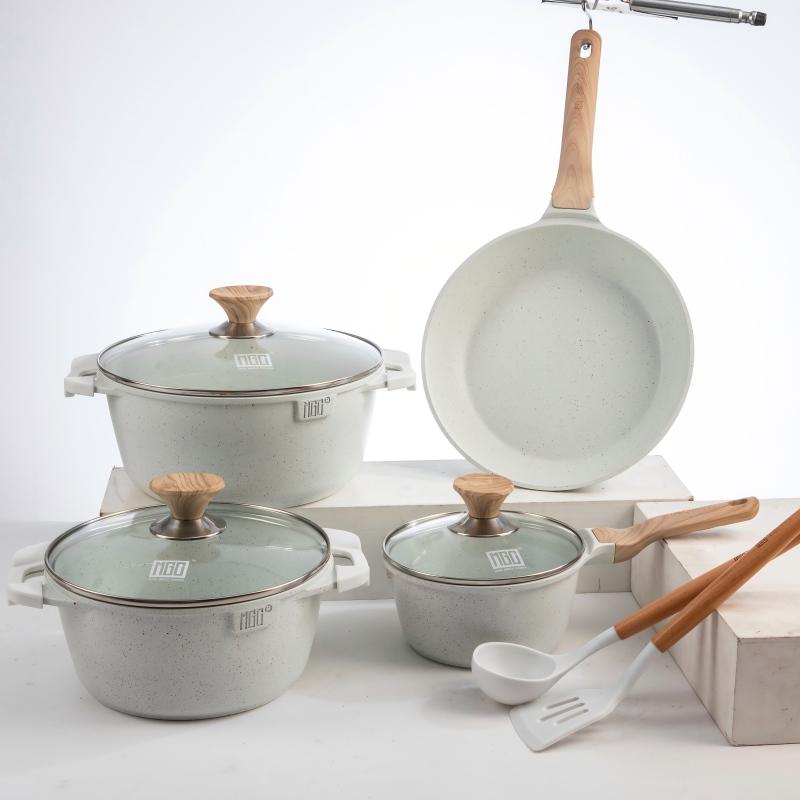
Choosing a Cookware Set for Different Cooking Styles
Frying, searing, simmering, and low oil cooking each place different demands on cookware. A nonstick pan is excellent for eggs, fish, and delicate foods. A ceramic pan offers a clean release surface for health conscious users. A heavier aluminum die cast pan holds heat well for searing meat. A cookware set that combines these strengths gives the user more flexibility. Buyers should ask which pieces are used most and choose a set that covers those tasks rather than adding pieces that rarely leave the cabinet.
Consider the daily routine of the target user. A family that cooks breakfast together every morning needs a reliable nonstick skillet and a saucepan for oatmeal or porridge. A home chef who enjoys weekend braising needs a Dutch oven or a deep sauté pan with a heavy base. A health conscious cook who prepares vegetables and fish will value a ceramic pan that releases food with minimal oil. When a set covers these real tasks, it earns its space in the kitchen. Sets filled with specialty pans that are used once a year create clutter and disappointment. Buyers should study usage patterns before selecting pieces.
Cookware Set Materials and Heat Performance
Material determines heat performance. Aluminum conducts heat quickly and evenly, which is why aluminum die cast cookware is common in mid and high range sets. Stainless steel is durable but conducts heat less evenly unless it has an aluminum core. Ceramic coatings provide a nonstick surface without some of the concerns associated with traditional coatings. The base thickness also matters. A thicker base resists warping and distributes heat more evenly, but it adds weight. Buyers should balance performance with the weight that the target customer is willing to handle.
Induction compatibility is another factor that is often overlooked. Many modern kitchens use induction cooktops, which require a magnetic base. A cookware set that is not induction ready will not work on these stoves, and customers will return it. Buyers should confirm the induction compatibility of each piece before listing a set as versatile. Handle material also deserves attention. Bakelite handles stay cool but may not be oven safe. Stainless steel handles are oven safe but get hot on the stovetop. The right handle depends on how the cookware will be used.
Cookware Set Care and Long Term Value
Care requirements affect how long a cookware set lasts. Nonstick cookware should be washed with soft sponges and stored carefully to avoid scratches. Ceramic pan surfaces also benefit from gentle cleaning and moderate heat. Aluminum die cast cookware should not be left in acidic liquids for long periods. A set that matches the user’s cleaning habits will stay in service longer. For B2B buyers, care instructions and coating quality are important selling points. A set that performs well and is easy to maintain earns repeat purchases.
Long term value is not only about durability. It is also about whether the set continues to perform after months of use. A pan that loses its release properties quickly will be replaced, and the customer may switch brands. Buyers should look for suppliers who test coating durability and provide clear care instructions. Packaging that includes simple tips, such as avoiding metal utensils and preheating at low heat, can reduce complaints and improve satisfaction. When the product and the guidance work together, the cookware set becomes a trusted tool rather than a disposable purchase.
Conclusion
Choosing a cookware set requires matching materials, heat performance, and care needs to the way people actually cook. A mixed set often works better than a uniform one. Buyers who define the cooking tasks first can select a set that delivers reliable results and long term value.
