How Do You Choose Between PVC Pipe and HDPE Pipe for Water Supply?
Author : HitokaCece HitokaCece | Published On : 18 Sep 2026
Water supply projects rarely fail because one material is universally better. They fail because the selected pipe does not match soil conditions, pressure demand, installation method, or future maintenance plans. A contractor may prefer PVC pipe for its stiffness and clean jointing, while another team may choose HDPE pipe for flexibility and long coiled lengths. The decision should come from project data, not habit.
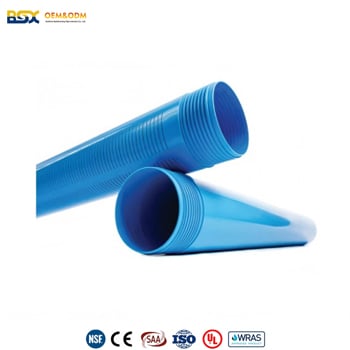
PVC Pipe Strength and Pressure Performance
PVC pipe is widely used in water supply because it offers good rigidity and predictable pressure performance. It does not deform easily under burial loads, which helps maintain alignment in trenched installations. For distribution lines with stable soil and limited ground movement, PVC pipe can be a practical choice. The pressure rating must be checked against working pressure, surge pressure, and temperature. A pipe rated for a certain pressure at one temperature may have a lower limit at higher temperatures. Buyers should also review wall thickness, outside diameter, and joint type. Solvent cement joints require careful surface preparation. If the installation team is not trained, joint quality can vary. In cold weather, PVC becomes more brittle, so handling and backfill need more attention.
HDPE Pipe Flexibility and Installation Conditions
HDPE pipe performs well where ground movement, uneven settlement, or long trenchless sections are expected. Its flexibility allows it to bend around obstacles and absorb some soil movement without cracking. Long coils reduce the number of joints, which can speed installation and lower leak risk. However, HDPE pipe also requires proper fusion procedures. Butt fusion, electrofusion, and mechanical connections each have specific training and equipment needs. If fusion is done poorly, the joint may fail even though the pipe itself is strong. HDPE also has a higher thermal expansion coefficient than PVC, so anchoring and expansion control should be considered in above ground sections. For water supply, the choice often depends on installation environment rather than material price alone.
PVC Fittings and Joint Reliability
Fittings often determine the real reliability of a pipeline. PVC fittings must match the pipe diameter, pressure rating, and joint method. A mismatch between pipe and fitting standards can create weak points. In HDPE systems, fittings may be fused, compression type, or flanged. Each type has different pressure limits and installation requirements. For PVC systems, elbows, tees, reducers, and couplings should be selected from compatible materials and stored away from sunlight and impact. Buyers should ask for dimensional checks and pressure test records. In a typical water distribution project, most leaks appear at joints, transitions, or connections to valves and pumps. This is why fitting quality deserves the same attention as pipe quality.
Conclusion
Choosing between PVC pipe and HDPE pipe for water supply requires a review of pressure, soil, installation method, joint reliability, and maintenance. PVC pipe offers rigidity and predictable jointing in stable conditions. HDPE pipe offers flexibility and fewer joints in moving or difficult ground. The right decision comes from matching material behavior to the actual project environment.
