How Do You Choose a Rubber Grommet for Cable Protection and Vibration Control?
Author : HitokaCece HitokaCece | Published On : 21 Oct 2026
A rubber grommet is a small ring that lines a hole in a metal or plastic panel. Its job is simple: protect whatever passes through the hole and protect the panel from whatever passes through it. Cables, wires, hoses, and tubes are common examples. Without a grommet, a sharp metal edge can cut insulation, a vibrating panel can wear through a hose, and a wire can chafe until it shorts. The grommet is inexpensive, but its failure can be expensive. A cut cable can stop a machine, damage a controller, or create a safety hazard.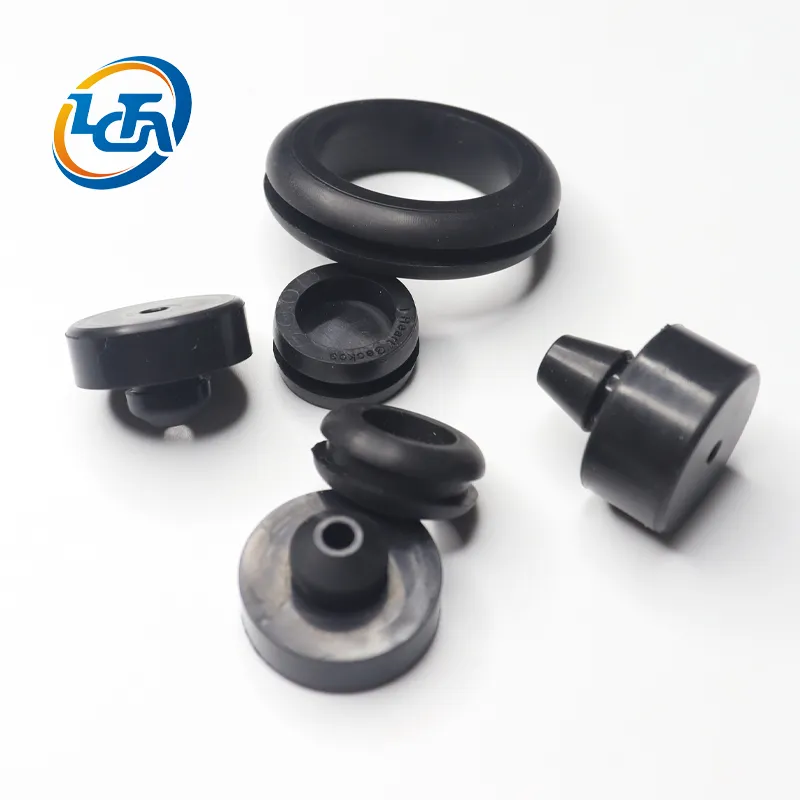
Rubber Grommet Material Selection for Cable Protection
The first step is material selection. Grommets are made from different rubber compounds, and each has different resistance to heat, oil, water, ozone, and abrasion. Nitrile rubber is common for general industrial use because it resists oil and abrasion. EPDM is common for outdoor and water exposure because it resists ozone and weathering. Silicone is used where wide temperature range is needed. Fluorocarbon rubber is used for high temperature and aggressive chemicals.
The material should match the environment, not just the application. A grommet inside an electrical panel may see heat from nearby components and oil from lubricated parts. A grommet on an outdoor enclosure may see sunlight, rain, and temperature cycles. A grommet in a food processing area may need to resist cleaning chemicals. Buyers should describe the full environment to the supplier and ask for a material recommendation.
Hardness also matters. A softer grommet conforms better to irregular holes and cables, but it may wear faster. A harder grommet resists abrasion but may not seal as well. The right hardness depends on the cable movement, the panel vibration, and the installation method. Buyers should test samples under real conditions.
Cable Grommet Dimensions and Groove Design
Dimensions are critical. The grommet must fit the hole diameter, the panel thickness, and the cable diameter. A grommet that is too small will not stay in the hole. A grommet that is too large may bulge or split. The groove that sits in the panel should match the panel thickness. If the groove is too narrow, the grommet will not seat. If the groove is too wide, the grommet will be loose.
The inner diameter should match the cable or hose. A grommet that is too tight may compress the cable and damage insulation. A grommet that is too loose may allow the cable to move and chafe. Buyers should confirm the dimensions with the supplier and test the fit with the actual cable and panel.
Installation method also affects the design. Some grommets are pushed into the hole by hand. Others require a tool or a split design that can be installed around an existing cable. A split grommet is useful for repair and retrofit, but it may not seal as well as a closed grommet. Buyers should choose the design that matches the assembly process.
Rubber Bushing Environmental Resistance and Testing
Environmental resistance should be verified with testing. A grommet that is exposed to oil should be tested with the actual oil. A grommet that is exposed to ozone should be tested in an ozone chamber. A grommet that is exposed to UV should be tested under sunlight or a UV lamp. The supplier should provide test reports and material data.
Vibration testing is also useful. A grommet that is used in a vibrating panel should be tested with the cable installed and the panel vibrated. The test should check for wear, movement, and noise. A grommet that moves or wears quickly is not suitable for the application.
Quality control is the final check. The grommet should be free from flash, cracks, and hard spots. The dimensions should be consistent. The material should be fully cured. Buyers should inspect samples and request batch records. A grommet that looks correct but is under cured may fail early in service.
Conclusion
Choosing a rubber grommet for cable protection and vibration control requires matching material, dimensions, groove design, and environmental resistance to the application. The right grommet protects cables and panels and reduces maintenance. Buyers should test samples under real conditions and choose a supplier with consistent quality and documentation.
