How Data Center Security Protects Business-Critical Information
Author : NetForChoice Storage solution UAE | Published On : 05 Nov 2026
Business information is one of the most valuable assets a company holds. Customer records, financial documents, employee details and internal applications all need protection from unauthorized access. A secure data center helps businesses protect this information through physical access controls, network security, monitoring and backup systems. Security is not limited to protecting servers from online attacks. It also means controlling who can enter the facility and how critical information is stored and accessed. Businesses exploring secure data center infrastructure in the UAE should understand these security layers before choosing a provider.
Why Is Data Center Security Important?
Businesses store and process large amounts of information every day. Some of it is public, but much of it is private or essential to daily operations.
A security incident can expose customer information, interrupt business applications or allow unauthorized users to access important systems.
For example, if someone gains access to a server room without permission, they may be able to interfere with equipment or access storage devices. Similarly, a compromised network account can expose information without anyone physically entering the facility.
This is why data protection needs more than one security measure. A strong approach combines physical controls, digital safeguards and clear operational procedures.
1. Physical Security Controls Protect Server Infrastructure
Physical security is the first layer of protection inside a data center.
Even advanced software security cannot prevent someone from damaging equipment if the facility does not control physical access.
Restricted Access to Server Areas
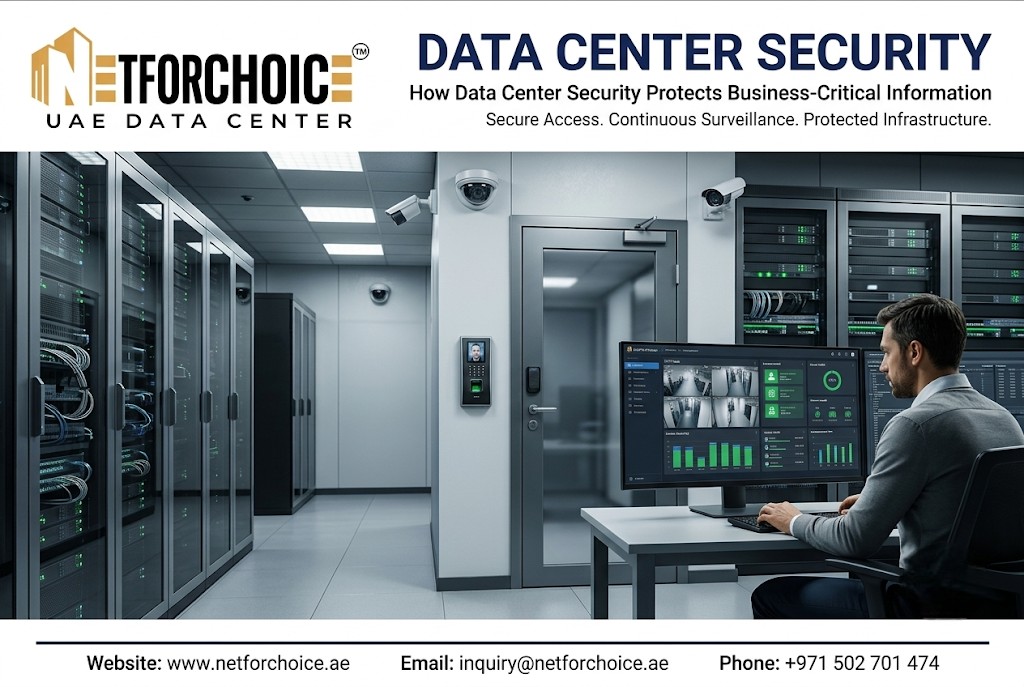
A secure facility should allow entry only to authorized personnel. Access cards, biometric authentication and identity verification can help control entry.
Different areas may also have separate access permissions. A person allowed inside the main facility should not automatically receive permission to enter every server room.
CCTV and Access Monitoring
CCTV cameras help security teams observe important entry points and equipment areas.
Access logs also create a record of who entered restricted areas and when. These records can support investigations when an unusual event occurs.
Environmental and Fire Protection
Physical threats are not limited to unauthorized visitors. Fire, water leaks, smoke and unsuitable environmental conditions can also damage equipment.
Fire detection systems, suitable suppression arrangements and environmental monitoring help reduce these risks.
2. Network Security Helps Prevent Unauthorized Access
A business server may contain sensitive information even when its physical environment is secure. Network protection is therefore equally important.
Firewalls and Network Controls
Firewalls help control incoming and outgoing network traffic according to defined security rules.
Businesses should also restrict unnecessary network access and separate critical systems where appropriate. This reduces the risk of one compromised system affecting every connected service.
DDoS Protection
Distributed Denial of Service attacks attempt to overwhelm online services with large amounts of traffic.
DDoS protection helps identify and filter malicious traffic so legitimate users can continue accessing business services.
Secure Remote Access
Remote administration is useful for IT teams but can create security risks when access is poorly managed.
Multi-factor authentication, strong passwords and limited user permissions help reduce unauthorized account access.
3. Data Backups Reduce the Impact of Security Incidents
Security controls cannot guarantee that every incident will be prevented.
A business may still face accidental deletion, ransomware or hardware failure. Without a suitable recovery plan, an incident can cause lasting data loss.
Regular backups provide another layer of protection.
Businesses should consider:
-
Maintaining separate backup copies.
-
Restricting access to backup storage.
-
Encrypting sensitive backup information.
-
Testing data restoration regularly.
-
Defining recovery priorities for critical applications.
A backup is useful only when the business can restore it successfully. Regular recovery testing helps confirm that the process works when needed.
4. Security Responsibilities and Data Protection in the UAE
Businesses operating in the UAE should also consider applicable data protection requirements.
The UAE Personal Data Protection Law, Federal Decree-Law No. 45 of 2021, establishes a framework for handling and protecting personal data. It includes obligations concerning confidentiality and the security of personal information.
The law has specific scope and exclusions, so organisations should assess which legal requirements apply to their operations.
Choosing a secure hosting environment is one part of the process. Businesses must also manage user permissions, internal policies, data handling and incident response.
What Should Businesses Check Before Choosing a Data Center?
Before moving business information to an external facility, ask the provider practical questions:
-
How is physical access to server rooms controlled?
-
Are CCTV and access records maintained?
-
What network security and DDoS protection options are available?
-
How are backup systems protected?
-
Is infrastructure monitored around the clock?
-
What support is available during a security incident?
-
Can the provider explain its security and compliance controls?
Do not rely on general claims such as secure infrastructure. Ask for details about the controls relevant to your business requirements.
Conclusion: Make Data Security Part of Your Infrastructure Plan
Protecting business-critical information requires more than a firewall or antivirus software. Physical access restrictions, network protection, secure backups and clear operational procedures must work together.
A suitable data center provides an important foundation for these safeguards, but businesses should still review their own security policies and access practices.
If your organisation is reviewing its hosting and infrastructure requirements, explore NetForChoice UAE's data center and security solutions to identify an environment that supports your business information protection needs.
Frequently Asked Questions
1. What are the main security features of a data center?
Common features include restricted physical access, CCTV monitoring, fire protection, network firewalls, intrusion detection and backup systems.
2. Does a data center protect business data from cyberattacks?
A data center can provide security controls such as firewalls, network protection and monitoring. However, businesses must also secure their applications, accounts and devices.
3. Why are physical security controls important in a data center?
They prevent unauthorized people from reaching servers, storage devices and network equipment. This reduces the risk of theft, tampering and physical damage.
