How Conveyor Ovens Improve Efficiency in Food Processing and Manufacturing
Author : Vibrant Thermal Engineering | Published On : 27 Oct 2026
Summary of This Guide
This guide explains how conveyor ovens help food processors and manufacturers work faster, use less energy and keep quality steady. It covers how they work, where they save time and energy, the design features that matter, hygiene and safety, and how to size, install and maintain one.
Topics Inside
-
From Batch to Continuous: What Changes
-
How Heat and Belt Work Together
-
Where Conveyor Ovens Save Time and Energy in Food Lines
-
Efficiency Gains in Manufacturing
-
Design Features That Cut Energy Waste
-
Hygiene, Safety and Control
-
Sizing, Installation and Upkeep
-
Questions to Raise With Your Oven Maker
-
Planning Your Oven Line
-
Answers to Frequent Questions
Why Continuous Heating Matters
Many plants still bake, dry or cure in batches. Loads go in, the door opens, heat escapes, and the next load waits. Conveyor Ovens replace this stop-start routine with a steady flow, where products ride a belt through a heated chamber and come out ready.
The result is more predictable output, less handling and often lower energy use per piece. But the benefit depends on choosing and running the oven well. The sections below explain the main points. Use them as a checklist when quotations arrive. Compare options on output and running cost, not only price. Share your product details with every supplier early.
From Batch to Continuous: What Changes
In a batch oven, products sit in one chamber while temperature and time are set. The door must be opened to load and unload, which lets heat out and interrupts the process.
In a continuous oven, products enter at one end, pass through the heated zone at a set speed, and leave at the other. Heat stays inside, and loading and unloading happen at the same time as heating.
This suits plants with steady, repeat production, such as bakeries, snack lines and coating shops. Batch ovens still make sense for small, varied runs, so choose by your volume and product mix.
How Heat and Belt Work Together
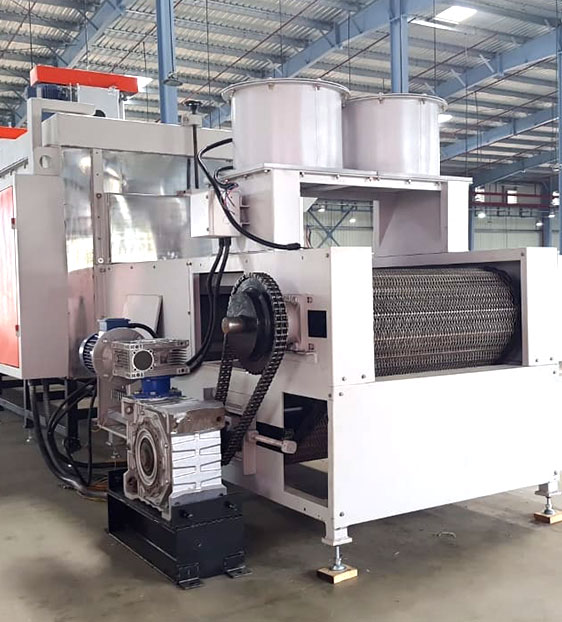
The belt speed sets the time the product spends in the oven, while the temperature and airflow set how it heats. Slowing the belt gives more heating time, and speeding it up gives less. Many ovens have several zones, each with its own temperature, so a product can be warmed, baked and finished in one pass.
Heat may come from gas burners, electric elements or hot air from a thermic oil or other source. Fans circulate air so every product gets even heat. Some designs blow hot air onto the product from above and below for faster results.
Good Conveyor Ovens let operators change speed and zone temperatures easily, so one oven can handle several products. Ask how precisely these settings can be held and recorded.
Where Conveyor Ovens Save Time and Energy in Food Lines
Bakeries use them for bread, buns, biscuits and cookies, while snack and ready-meal producers use them for roasting, cooking and drying. Pizza makers often rely on them for steady, fast output.
Because the product moves at a constant pace, every piece gets the same heat and time. This improves colour, texture and weight loss consistency and cuts rejected product. Fewer rejects also mean less wasted ingredient and energy.
Continuous flow also reduces labour, since loading can be automated and fewer people are needed to watch the oven. Less door opening means less heat wasted, which helps keep fuel or power use per kilogram lower. Food lines gain most when the oven is matched to the cooling and packing steps that follow.
Efficiency Gains in Manufacturing
Factories use continuous ovens to cure powder coating and paint, dry washed parts, preheat components and treat small parts in volume. Parts hang from a conveyor or ride on a belt and pass through the heat at a measured pace.
A steady cure time gives a consistent finish and reduces rework. Parts do not wait for a full batch to build up, so work-in-progress falls and delivery times improve.
Check the product's temperature and time needs, the size and weight of the load and how it is carried. The conveyor type must suit the part, whether belt, chain or overhead.
Design Features That Cut Energy Waste
Insulation is the first thing to check. Thick, well-fitted insulation such as mineral wool or ceramic fibre keeps heat inside the chamber and the outer panels cooler.
Look at burner efficiency, zone control, exhaust handling and sealed entry and exit openings. Some systems recover heat from exhaust air to preheat incoming air. Vibrant Thermal Engineering's public company profile, for example, describes fuel efficient burners, ceramic fibre insulation, refractory lining and automation among its offerings.
A variable speed belt drive and a good temperature controller help the oven match the load. Good conveyor ovens save energy every shift, not only on paper, because insulation, zoning and controls work together. Ask for expected fuel or power use per hour at your operating temperature.
Hygiene, Safety and Control
For food use, product contact parts should be stainless steel with smooth, easy-to-clean surfaces, and belts that can be washed or brushed clean. Design should allow access for cleaning between shifts.
Safety features include over-temperature protection, burner flame monitoring on gas ovens, emergency stops and guards at pinch points. Proper exhaust removes fumes and steam.
Modern controls display temperatures and belt speed and can alarm when values drift. Ask whether data can be recorded for quality audits, and confirm the design meets the food safety and factory rules that apply to you. Operators should be trained on start-up, shutdown and alarms.
Sizing, Installation and Upkeep
Size the oven from your required output, product size, heating time and belt width. A longer heating zone or wider belt raises output but also raises cost and floor space, so avoid oversizing. Leave some room for growth in demand.
Plan the layout, power or gas supply, exhaust duct and the connection to feeding and cooling units. Ask the supplier to handle commissioning and a trial run with your own product.
Keep the oven efficient with daily cleaning, belt tracking checks, burner and fan inspection, and seal and insulation checks. Keep key spares such as belts, bearings, sensors and heaters. Compare quotations on total cost, including fuel, spares and service, not just price.
Questions to Raise With Your Oven Maker
Keep this list ready when you speak to suppliers:
-
What output can the oven hold for my product at the set temperature?
-
How many heating zones are there, and how are they controlled?
-
What insulation and burner or heater type do you use?
-
Which belt type suits my product, and how is it cleaned?
-
What safety and monitoring features are included?
-
Who handles installation and the trial run?
Clear answers to these tell you most of what you need to know.
Planning Your Oven Line
Choosing the right oven takes some planning, but it pays off through steady quality and a lower running cost. Note your product, output, temperature and layout needs, and compare quotations on efficiency as well as price.
Vibrant Thermal Engineering, founded in 2007 and based in Chennai, makes industrial furnaces and ovens, including continuous and baking ovens. You can see what it's offering at Vibrant Thermal Engineering. Share your product details with the team and ask which design suits your line. A short conversation now can save you a lot of trouble later when choosing your next set of conveyor ovens.
Answers to Frequent Questions
How long does delivery take?
Lead time depends on the size, heating type and any custom features. Standard designs usually dispatch sooner, while custom lines need extra time for fabrication and testing. A good manufacturer gives a written delivery date with the quotation and tells you early if it changes.
Can the oven be built for my product and layout?
In most cases, yes. Manufacturers can adjust belt width, length, number of zones, heating source and belt type to suit your product and floor plan. Share product size, output and temperature needs so the team can suggest a setup that fits.
What does the warranty cover?
Warranty normally covers manufacturing defects and faulty parts for a fixed period, often a year. Wear items like belts, and damage from wrong use, are usually left out. Ask for the terms in writing.
Is gas or electric heating cheaper to run?
It depends on local fuel and power prices, your output and the temperature needed. Gas often suits high, continuous heat loads, while electric ovens are simple to install and control. Ask each supplier for estimated running cost per hour at your settings
