How Circuit Blocks Make Electronics More Accessible for Young Learners
Author : Anna Hearth | Published On : 30 Oct 2026
Electronics can seem complicated to children when they are first introduced to concepts such as electricity, circuits, and connections. Technical terms and unfamiliar components may make the subject feel difficult before they have even had a chance to explore it. But learning becomes much easier when children can see how things work and experiment for themselves.
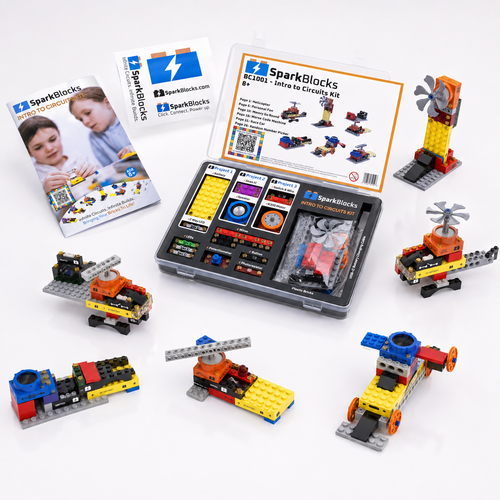
This is where circuit blocks make a difference. By turning electrical components into simple, connectable pieces, they help young learners explore electronics through hands-on play. With electronic blocks and interactive building activities, children can move from curiosity to understanding without needing complicated tools or technical experience.
Making Electronics Easier to Understand
One of the biggest challenges in teaching electronics is explaining something children cannot always see. Electricity flows through a circuit, but the process can feel abstract without a practical demonstration.
Electronic building blocks make these ideas easier to grasp by allowing children to connect components and observe what happens. A light can switch on, a motor can spin or a speaker can produce a sound when the right connections are made.
These immediate results help children understand cause and effect. Instead of memorising definitions, they discover how different parts work together through experimentation.
Learning Through Building and Experimenting
Children naturally enjoy activities that allow them to create something of their own. A well-designed set of circuit blocks turns this interest into an opportunity to explore basic engineering concepts.
They can follow simple instructions to complete their first project, then start changing connections to see what else is possible. If something does not work, they can adjust the arrangement and try again.
This process encourages:
-
Curiosity and independent exploration
-
Logical thinking and problem-solving
-
Patience when testing different ideas
-
Confidence through completing projects
With electronic blocks, every experiment becomes an opportunity to learn something new.
Removing the Fear of Complicated Electronics
Traditional electronics projects can involve small wires, loose components and tools that may be intimidating for beginners. Young learners often need a simpler way to get started.
Modern electronic building blocks help remove these barriers through straightforward connections. Children can focus on understanding how circuits work rather than spending too much time figuring out how to assemble them.
Many beginner-friendly systems also avoid the need for soldering or coding. This makes electronics more approachable for children who are discovering STEM subjects for the first time.
Connecting Creativity With STEM Learning
Electronics is not only about following instructions or making a circuit work. It also gives children the freedom to design, experiment and come up with their own ideas.
For example, a child might begin by building a simple light circuit before exploring ways to add movement or sound. As they become more confident, they can combine different components to create increasingly imaginative projects.
This is one reason LEGO STEM activities are appealing to young builders. Combining familiar building experiences with real electronic components helps connect creativity with practical engineering concepts.
Rather than treating science and play as separate activities, children get to experience how the two can work together.
How Familiar Building Experiences Encourage Confidence
Starting with something familiar can make a new subject feel less intimidating. Children who already enjoy construction toys may find it easier to engage with electronics when components can be connected as part of a building project.
Circuit blocks bring this approach into STEM learning. Children can build structures, add electronic features, and see their creations come to life.
SparkBlocks follows this hands-on approach with electronic components that click together and work with compatible building bricks. Its projects introduce children to lights, motors and sound without requiring screens, coding or soldering.
By combining construction and electronics, SparkBlocks gives young learners a practical way to explore how technology works while enjoying the creative side of building.
Encouraging Screen-Free Learning at Home
Parents often look for activities that keep children engaged while offering something more than passive entertainment. Hands-on electronics projects provide an opportunity to learn away from tablets and screens.
A collection of electronic blocks can give children plenty to explore at their own pace. They can build independently, work alongside a parent or sibling, or challenge themselves to create something beyond the instructions.
These activities also create opportunities for conversation. Parents can ask what a particular component does, why a connection works or how a project could be improved. Such simple questions encourage children to explain their thinking and become more confident in their discoveries.
Choosing the Right Circuit Building Kit
Not every electronics kit offers the same learning experience. When choosing one for a young learner, it is worth considering a few practical features.
Look for a kit that includes:
-
Simple, secure connections suitable for beginners
-
Clear, age-appropriate project instructions
-
Different components such as lights, motors and speakers
-
Opportunities to build beyond the supplied projects
-
Durable parts that can be reused for multiple experiments
A versatile set of electronic building blocks should offer enough structure to help beginners get started while leaving room for independent creativity.
Age suitability matters too. A kit designed for children aged eight and above, for example, can introduce more involved building challenges while keeping the experience accessible.
Final Thoughts
Making electronics accessible to young learners does not have to involve complicated explanations, specialist tools or lengthy lessons. Sometimes, the best way to introduce a new subject is to let children build something, see the results and discover the ideas behind it for themselves. With hands-on activities, even unfamiliar concepts can become easier to understand and much more enjoyable to explore.
Circuit blocks offer a practical starting point by turning abstract electrical concepts into visible, interactive experiences. Through electronic blocks and electronic building blocks, children can experiment with connections, explore how components work together and develop problem-solving skills along the way. These experiences can also complement creative LEGO STEM activities, bringing construction and real electronics together.
For families looking to encourage curiosity beyond traditional toys and screen-based entertainment, SparkBlocks offers a hands-on way to introduce children to circuits, lights, motors and sound. What begins as a simple building activity can grow into a lasting interest in science, technology and engineering. Most importantly, children learn that they do not need to understand everything before they begin; they can learn by building, experimenting and discovering one connection at a time
