How Can an SMC Pneumatic Regulator Improve Air Efficiency?
Author : jack leo | Published On : 28 Oct 2026
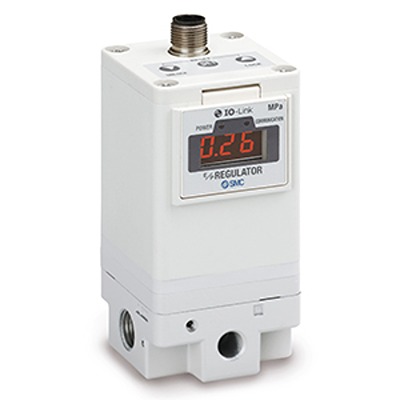
Compressed air is convenient because it can move machinery without complex mechanical drives, but unnecessary pressure has a hidden cost. Extra compressor demand, noisy exhaust and inconsistent actuator movement may all point to a system that needs closer attention. An SMC Pneumatic Regulator offers a way to control a defined pressure target electrically, making careful adjustment and measurement part of routine plant operation.
The SMC Pneumatic Regulator, part ITV1030-01F1CN4, belongs to SMC's ITV1000 electro-pneumatic range. Designed for a 24 V DC supply and a 4–20 mA command signal, it provides an adjustable pressure setting range of 0.005 to 0.5 MPa. It can receive a control signal from suitable automation equipment, while its analogue monitor output helps engineers check the regulator's reported operating condition.
Why Is More Air Pressure Not Always Better?
A common misconception is that increasing pressure automatically improves a pneumatic machine. In reality, an oversized pressure setting can make a clamp press too hard, raise air consumption and place unnecessary stress on components.
The objective is to apply enough force to complete the task reliably, with an appropriate engineering margin. That pressure should come from testing the actual mechanism rather than choosing the highest value available.
Pressure and Energy Are Connected
A compressed-air system requires energy to generate and maintain pressure. If several stations operate above their necessary settings, the site may be paying to produce pressure that provides no useful process benefit.
Lowering a local setpoint does not automatically reduce compressor electricity use in every installation. Savings depend on demand, leakage, compressor control and operating hours. Nevertheless, removing avoidable overpressure is a sensible starting point for an efficiency review.
What Makes Electrical Regulation Useful?
A traditional manual regulator depends on a physical adjustment. An electro-pneumatic device instead uses an electrical reference to request pressure, making it suitable for automation systems that need coordinated control.
For the ITV1030-01F1CN4, the controller must supply the correct 4–20 mA signal. The selected pressure must remain inside the manufacturer's specified range, and the regulator's 1–5 V analogue monitor output needs appropriate interpretation.
These details matter because a programmed value is not the same thing as a verified pneumatic result. Engineers should compare the command, reported output and actual behaviour at the equipment.
Where Can Problems Become Visible?
Pressure instability may appear as repeated movements, inconsistent holding force or irregular cycle times. However, similar symptoms can also come from worn seals, flow restrictions or poorly adjusted mechanisms.
A structured investigation should record:
- Inlet pressure while the machine is operating.
- Requested regulator setpoint and measured outlet pressure.
- Actual performance at the connected pneumatic device.
- Variation between idle and peak-demand conditions.
- Audible leaks, excessive exhaust noise or unusual compressor cycling.
- Any changes after routine maintenance or component replacement.
This information makes it easier to distinguish a regulator issue from a wider air-system problem.
How Does Air Quality Influence Pressure Control?
Air arriving at a pressure-control device should meet the cleanliness and dryness requirements of the equipment. Condensed water, excessive oil or particulate contamination can affect valves, seals and small passages throughout a pneumatic installation.
Well-chosen Pneumatic Filters help remove contaminants suited to their filtration rating, but they need proper inspection and timely element replacement. A neglected filter can become a restriction, so maintenance should consider both air cleanliness and pressure drop.
Drying and filtration should be matched to the manufacturer's air-quality requirements and the site's operating conditions. One filter cannot correct every moisture, oil-vapour or contamination problem.
Which Habits Help Identify Compressed-Air Waste?
Not every loss requires a sophisticated monitoring system. Some of the most useful checks are straightforward and repeatable, particularly when completed during planned shutdowns and routine servicing.
- Listen for leaking joints when background machinery noise is low.
- Check whether pressure settings have gradually increased.
- Review compressor loading and unloaded running patterns.
- Inspect tubing where vibration or movement causes rubbing.
- Test whether actuators still work reliably at validated lower setpoints.
- Record findings so recurring faults can be tracked across shifts.
Never loosen a connection to investigate a leak while the circuit is pressurised. Follow the site's isolation procedure and safely release stored air before working on pipework.
Why Do Small Connection Leaks Matter?
A tiny leak may seem insignificant beside a large compressor. Across many working hours, however, repeated losses can contribute to unnecessary demand and make controlled pressure harder to maintain near the point of use.
Inspect Pneumatic Straight Fittings where tubing joins equipment, checking that the fitting type, tubing dimensions and pressure rating are suitable. Replace damaged components instead of attempting improvised repairs.
When a machine repeatedly needs higher pressure to deliver the same force, examine its connections, seals and mechanical condition before increasing the regulator command. A drifting setting may be a symptom, not the root cause.
How Can Teams Keep Improvements Measurable?
The strongest results come from comparing evidence before and after a change. Choose a stable production condition, record pressure readings and note how the machine performs. Make one approved adjustment at a time, then repeat the observation.
Track indicators that genuinely relate to the application, such as product damage, failed gripping actions, cycle consistency and air use. Avoid claiming an energy saving based only on a lower pressure number; confirm the effect through relevant compressor or flow measurements.
What Should a Reliable Pressure Strategy Include?
An efficient pneumatic system combines suitable air quality, sound connections, correct control signals and realistic pressure targets. The regulator is important, but it works best when the surrounding equipment is maintained, and the results are independently checked.
Where alarms or permissive signals are needed, correctly specified Pressure & Vacuum Switches can help a control system detect an out-of-range condition. Match their switching thresholds and installation to the machine's safety and process requirements, then review the entire circuit regularly to keep air use purposeful and performance dependable.
