Hotel Inventory Tracking Software vs Excel: Which Is Better in 2026?
Author : InnCrew pms | Published On : 10 Aug 2026
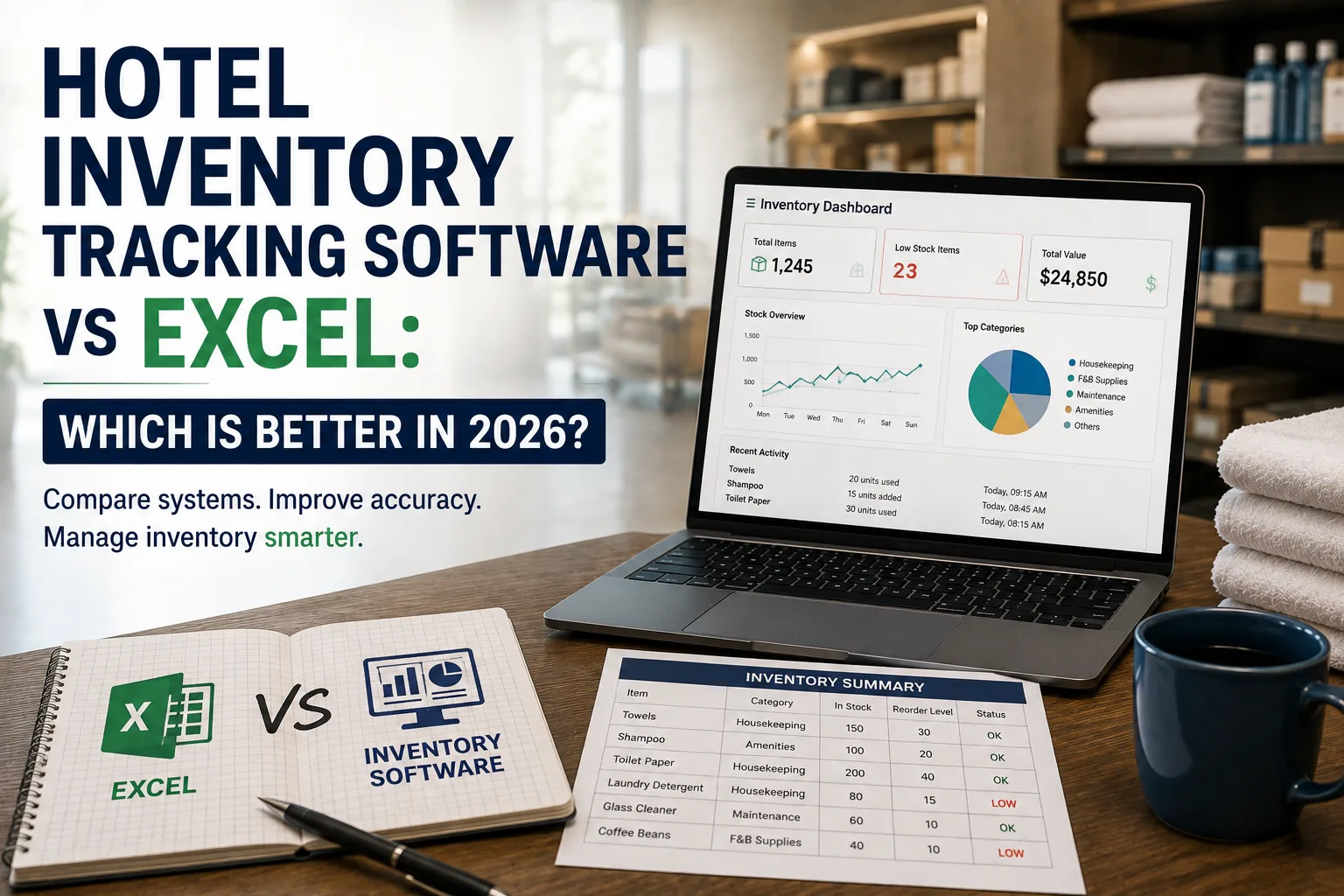
Running a hotel means keeping track of hundreds of small things that guests never think about. Towels, toiletries, cleaning products, minibar items, maintenance supplies, and even basic office materials all need to be available when staff need them. This is where hotel inventory tracking software can make a noticeable difference compared with relying on Excel spreadsheets.
Excel has been around for years, and honestly, there is nothing wrong with using it when a hotel has a small inventory and a simple operation. The problem starts when the property grows, multiple employees need to update stock, and managers need to know what is happening right now rather than what was entered into a spreadsheet yesterday.
In 2026, the question is no longer whether hotels should track inventory. They already do. The bigger question is whether Excel is still the right tool for doing it.
Why Hotels Still Use Excel for Inventory
Let's be fair to Excel.
It is familiar, inexpensive, and almost everyone has used it at some point. A small hotel can create a spreadsheet with product names, quantities, suppliers, purchase dates, and reorder levels in a few minutes.
For a property with limited stock and one person handling purchasing, that may be enough.
A typical spreadsheet might contain:
-
Product name
-
Current quantity
-
Minimum stock level
-
Supplier information
-
Purchase date
-
Unit cost
-
Storage location
The problem isn't the spreadsheet itself.
The problem is everything that happens around it.
Someone has to remember to update it. Someone has to check whether the numbers are accurate. Someone has to notice that supplies are running low. And when several people are using different versions of the same file, things can get messy very quickly.
Where Excel Starts Creating Problems
Imagine a housekeeping supervisor takes 40 bottles of shampoo from the storage room.
They make a note.
Later, another employee takes 20 more.
The spreadsheet still shows the old number.
Then the purchasing manager checks the file and assumes there is enough stock for another week.
A few days later, housekeeping runs out.
Nobody intentionally made a mistake. The problem was simply that the information was not updated at the right time.
This is one of the biggest weaknesses of spreadsheet-based inventory management: the data is only as current as the last person who updated it.
That becomes difficult for hotels where inventory moves constantly throughout the day.
The Case for Dedicated Inventory Software
A dedicated hotel inventory management software platform is designed around the way hotel inventory actually moves.
Instead of treating inventory as a static spreadsheet, it turns stock into an active operational process.
Staff can record usage, update quantities, monitor stock levels, and report shortages as they happen. Managers can get a clearer picture of what is available without waiting for someone to send them an updated file.
That difference may sound small.
Operationally, it isn't.
The biggest advantage is visibility.
Real-Time Inventory Changes the Conversation
One of the biggest benefits of a hotel inventory management system is that managers don't have to depend entirely on yesterday's numbers.
If a team member records stock usage, the information can be reflected immediately.
That helps managers answer simple but important questions:
How much stock do we have?
Which items are running low?
What has been used most frequently?
Which supplies need to be reordered?
Are we holding too much of a particular product?
With Excel, getting these answers often depends on how frequently the spreadsheet is updated.
With a connected system, the information can be much closer to what is actually happening inside the property.
Excel Requires More Manual Checking
This is probably the biggest practical difference.
With Excel, someone has to monitor the spreadsheet.
They need to:
-
Enter stock changes
-
Check formulas
-
Review quantities
-
Look for low-stock items
-
Compare purchases with usage
-
Correct duplicate or outdated entries
-
Share updated versions with relevant staff
None of these tasks is particularly difficult.
But together, they consume time.
And hotel teams already have enough to do.
A dedicated hotel inventory control software solution can automate many of these repetitive steps, allowing managers to spend less time maintaining spreadsheets and more time managing the operation.
What Happens When Multiple Departments Use Inventory?
This is where things become even more complicated.
Inventory doesn't belong to one department.
Housekeeping may use linens, toiletries, cleaning chemicals, and guest supplies.
Maintenance may need spare parts, tools, filters, bulbs, and other equipment.
Food and beverage teams may manage their own supplies.
The front office may also need stationery and guest-facing materials.
When everyone depends on the same inventory, information needs to move between departments.
A spreadsheet can technically handle this.
But it doesn't necessarily make coordination easy.
A hotel supply management software platform can provide a more structured way to manage stock across departments, making it easier to understand where supplies are being used and where shortages are developing.
Mobile Access Matters More Than You Think
Hotel employees don't spend their entire shifts sitting in front of computers.
Housekeepers are on guest floors. Maintenance staff are moving around the property. Supervisors are checking rooms and storage areas. Managers may be walking between departments.
That makes mobile access particularly useful.
With mobile hotel inventory management, staff can update stock information from wherever they are working instead of writing down numbers and remembering to enter them later.
That small change can reduce one of the biggest causes of inaccurate inventory data: delayed updates.
If something is used now, it can be recorded now.
Automation Helps Prevent Stockouts
Running out of an important hotel supply is rarely convenient.
Imagine housekeeping discovering at 8:30 AM that there aren't enough towels for the day's arrivals.
Or maintenance discovering that a commonly used replacement part is missing when a guest room needs urgent repair.
These situations create unnecessary pressure.
Hotel inventory automation can help by monitoring stock levels and identifying items that need attention before they become emergencies.
Instead of discovering a shortage when the last item is used, managers can receive an earlier warning and plan the next purchase.
That is the real value of automation.
It doesn't simply save clicks.
It gives people more time to react.
What About Inventory Accuracy?
There is another issue that often gets overlooked: inaccurate inventory numbers.
Suppose a spreadsheet says there are 200 units of an item in storage.
But the actual count is 163.
Which number should the purchasing manager trust?
This kind of difference can happen because of missed entries, incorrect quantities, damaged items, unrecorded usage, or simple human error.
A hotel stock management software platform can create clearer records of inventory movement and make it easier to identify where changes occurred.
It doesn't eliminate human error completely.
Nothing does.
But it can make mistakes easier to detect and correct.
Excel Is Still Useful for Some Hotels
Does this mean every hotel should immediately stop using Excel?
Not necessarily.
Excel can still make sense when:
-
The hotel is small
-
Inventory is limited
-
Only one or two people manage supplies
-
Stock movement is relatively low
-
There are no complex approval requirements
-
Managers don't need real-time visibility
For a small independent property, replacing a simple spreadsheet with a complicated enterprise platform may create more problems than it solves.
The goal should not be technology for the sake of technology.
The goal is better control.
When Should a Hotel Move Beyond Excel?
There are a few warning signs.
If your team regularly says things like:
"We thought we had more."
"Who used the last box?"
"Did anyone update the spreadsheet?"
"We need to count everything again."
"I don't know where that stock went."
"We forgot to reorder it."
...your inventory process may have outgrown Excel.
Another major warning sign is when managers have to physically visit storage areas just to understand what is available.
That means the system isn't giving them enough visibility.
Software vs Excel: A Simple Comparison
The difference becomes easier to understand when you look at the day-to-day workflow.
Excel
Best for simple inventory tracking and smaller operations.
Updates are usually manual.
Information can become outdated.
Multiple users can create version-control problems.
Low-stock monitoring often depends on formulas or manual checks.
Mobile usage may be less convenient.
Reporting usually requires additional spreadsheet work.
Dedicated inventory software
Designed specifically for operational inventory.
Updates can happen as stock moves.
Teams can work from shared information.
Stock levels can be monitored more consistently.
Low-stock alerts can reduce last-minute shortages.
Mobile access supports staff working throughout the property.
Reports can provide managers with clearer operational insights.
The difference isn't really Excel versus software.
It is manual visibility versus connected visibility.
The Cost of Staying With Excel
The interesting thing about Excel is that its direct cost can be very low.
But the operational cost may not be.
Consider the time employees spend counting stock, checking spreadsheets, correcting errors, searching for missing supplies, and placing emergency orders.
Then consider the cost of stockouts.
A missing housekeeping supply can delay room preparation. A missing maintenance component can extend the time a room stays out of service.
Small problems can create larger operational costs.
This is why hotels should look at inventory technology based on the cost of inefficiency, not simply the price of the software.
How Better Inventory Management Supports Hotel Operations
Inventory might seem separate from everyday hotel operations, but it really isn't.
Housekeeping can't work efficiently without supplies.
Maintenance can't resolve issues without parts and equipment.
Guest services can suffer when essential items aren't available.
That makes inventory another part of the wider operational workflow.
A hotel operations companion tool can help connect inventory activity with the rest of the hotel's daily processes, giving managers a broader view instead of treating stock as an isolated spreadsheet.
The goal is simple: make sure the right people know what is available, what is being used, and what needs attention.
What Hotels Should Look for in 2026
If a hotel decides to move beyond Excel, it shouldn't choose software simply because it has the longest feature list.
Look for practical capabilities that staff will actually use.
Important features include:
-
Mobile access
-
Real-time stock updates
-
Low-stock alerts
-
Department-level tracking
-
Purchase and usage records
-
Simple reporting
-
User permissions
-
Easy staff adoption
-
Cloud access
-
Integration with daily operational workflows
Most importantly, the system should be simple enough for hotel employees to use during a busy shift.
A complicated platform that nobody updates is worse than a simple system that everyone actually uses.
So, Which Is Better in 2026?
For very small hotels with simple inventory needs, Excel can still do the job.
But for properties where inventory changes frequently, several departments use supplies, and managers need real-time visibility, dedicated technology is becoming the more practical choice.
Modern hotel operations management software is no longer just about reservations or front desk processes. Operational visibility increasingly extends to housekeeping, maintenance, inventory, staff tasks, and other behind-the-scenes activities that keep a property running.
The important question isn't whether Excel is bad.
It isn't.
The question is whether Excel can keep up with the way your hotel operates today.
If your team spends more time updating and checking inventory than actually managing it, that is probably your answer.
Final Thoughts
Hotel inventory rarely gets attention when everything is working.
Nobody complimented a hotel because it had enough cleaning supplies in the storage room.
But when something runs out at the wrong time, everyone notices.
That's why inventory management deserves more attention than it usually gets.
Excel can be a perfectly reasonable starting point. But as a hotel becomes busier, adds more employees, or needs faster operational decisions, the limitations of manual tracking become harder to ignore.
In 2026, the strongest inventory strategy isn't necessarily about choosing the most advanced technology.
It's about having accurate information when your team needs it.
And sometimes, that means moving beyond the spreadsheet.
FAQs
Q1. Is hotel inventory software better than Excel?
For hotels with frequent stock movement and multiple users, dedicated software provides better real-time visibility, automation, and control than Excel.
Q2. Can small hotels use inventory management software?
Yes. Modern inventory platforms can work for small hotels and help teams manage supplies without relying on complex spreadsheets.
Q3. What are the problems with using Excel for hotel inventory?
Common problems include outdated information, manual data entry, stock-counting errors, duplicate files, and missed reorder requirements.
Q4. How does real-time inventory tracking help hotels?
It lets managers see current stock levels, identify shortages earlier, and make purchasing decisions based on more accurate information.
Q5. Can hotel staff update inventory from mobile devices?
Yes. Mobile-enabled systems allow staff to record stock usage and updates directly while working around the property.
Q6. When should a hotel replace Excel with inventory software?
A hotel should consider switching when inventory becomes difficult to track, multiple departments need access, or stockouts and manual errors happen regularly.
Q7. Does inventory software reduce hotel operating costs?
It can reduce costs by limiting stock waste, preventing shortages, reducing manual work, and improving purchasing decisions.
Q8. What should hotels look for in inventory software in 2026?
Hotels should prioritize mobile access, real-time updates, low-stock alerts, simple reporting, user permissions, and easy staff adoption.
