Heavy Duty Racks: How to Store More, Move Faster, and Keep Your Team Safe
Author : MEK Engineering | Published On : 05 Oct 2026
Walk into any busy warehouse or factory and you will notice one thing quickly: the way goods are stored decides how smoothly everything else runs. When stock is piled on the floor, workers lose time searching, forklifts get blocked, and damage becomes common.
Heavy duty racks solve this problem. They give your heavy, bulky, and valuable items a strong, organized home. This article explains what they are, how to choose the right ones, and how to avoid mistakes that cost money later.
What Are Heavy Duty Racks?
Heavy duty racks are strong steel storage systems made to carry heavy loads, often pallets, drums, machine parts, steel sections, and large containers. Unlike light shelving meant for small boxes, these racks are built with thick steel uprights and sturdy beams that can handle serious weight day after day.
In simple words, if your goods are too heavy or too large for ordinary shelves, heavy duty racks are what you need.
Why They Make a Real Difference
You use vertical space. Most facilities have plenty of unused height. Racks let you store upward instead of spreading goods across the floor.
Finding items gets easier. Every product has a fixed place, so your team spends less time searching and more time working.
Goods stay protected. Items stored off the ground are safer from damage, moisture, and accidental knocks.
Workers are safer. Proper racking reduces clutter, blocked walkways, and the risk of unstable stacks falling.
Operations speed up. Clear aisles and organized stock mean faster loading, unloading, and order picking.
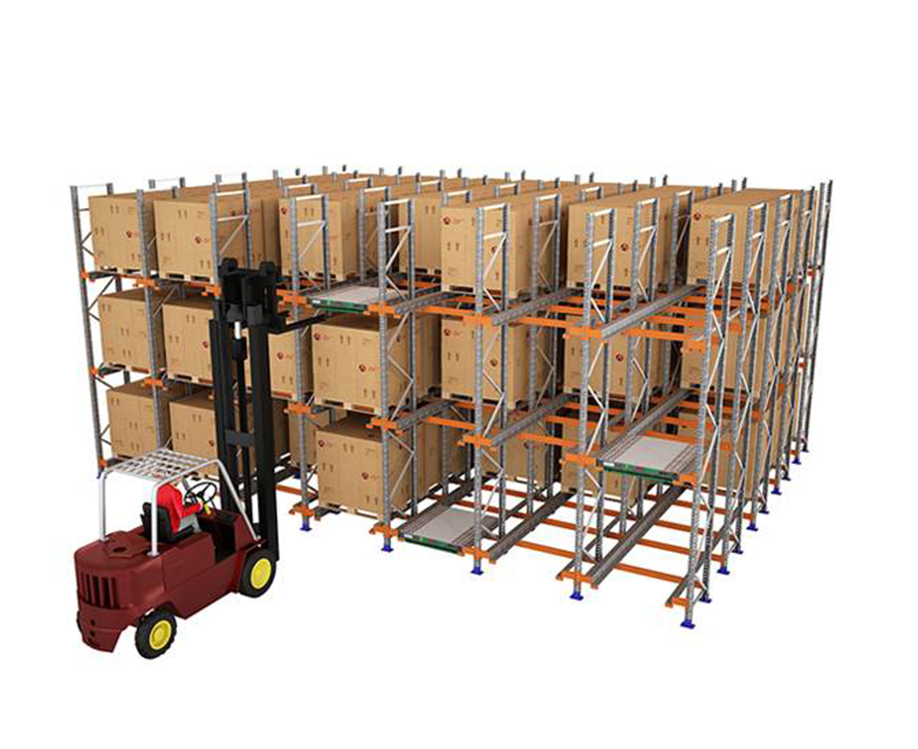
Popular Types of Heavy Duty Racks
Selective pallet racks. The most common choice. Every pallet can be reached directly, which suits businesses with many different products.
Drive-in racks. Forklifts drive into the rack to place and take out pallets. They save space when you store large quantities of the same item.
Cantilever racks. Built with arms that extend outward, these are perfect for long items like pipes, rods, timber, and steel bars.
Push-back racks. Pallets sit on rolling carts and move along slight inclines. They allow dense storage while keeping access simple.
Multi-tier racks. These create several storage levels, helping you get the most from a tall building.
How to Choose the Right Heavy Duty Racks
Before ordering, answer these questions honestly:
What will you store? Weight, size, and shape of your goods decide the rack design.
How heavy is each load? Check the weight per pallet and per beam level. Never guess.
What equipment will you use? Forklift type and turning space affect aisle width and rack layout.
How tall is your space? Measure ceiling height, lights, sprinklers, and beams that may get in the way.
How fast does stock move? Fast-moving items need easy access. Slow-moving items can go deeper or higher.
Will you grow soon? A system that can be extended later saves you from replacing it.
Mistakes That Cost Businesses Money
Overloading the racks. Every rack has a load limit. Going past it puts people and stock at risk.
Mixing rack parts from different makers. Parts may not fit or perform as designed.
Ignoring floor strength. Heavy racks put weight on the ground, so the floor must be able to take it.
Skipping regular checks. Dents, bent beams, and loose bolts should be fixed quickly.
Poor forklift training. Many rack damages come from careless handling, not from weak steel.
Simple Care Tips
Look over your racks on a regular schedule. Watch for bent uprights, damaged beams, missing safety pins, and uneven loading. Fit column guards at the corners where forklifts turn, and display the load capacity clearly so everyone can see it. A few minutes of checking can prevent a serious accident.
Why Quality and Planning Matter
Heavy duty racks are not just steel frames. They are a safety system. The design, steel quality, welding, and finishing all affect how long they last and how safely they carry weight. That is why it pays to work with a team that understands your space before building anything.
Mek Engineering helps businesses plan and supply heavy duty racks that match their goods, their layout, and their budget. By studying your storage needs first, a good partner can recommend the right rack type and design, so you get strength where you need it and no waste where you don't.
Final Thoughts
The right heavy duty racks turn a crowded, messy storage area into a clear and efficient one. They protect your goods, support your team, and help you get more from every square foot you own.
If you are ready to improve your storage, speak with Mek Engineering about heavy duty racks built around your needs.
