Harnessing Digital Twins to Simulate Mill Performance Upgrades
Author : Kabir Pathan | Published On : 23 Sep 2026
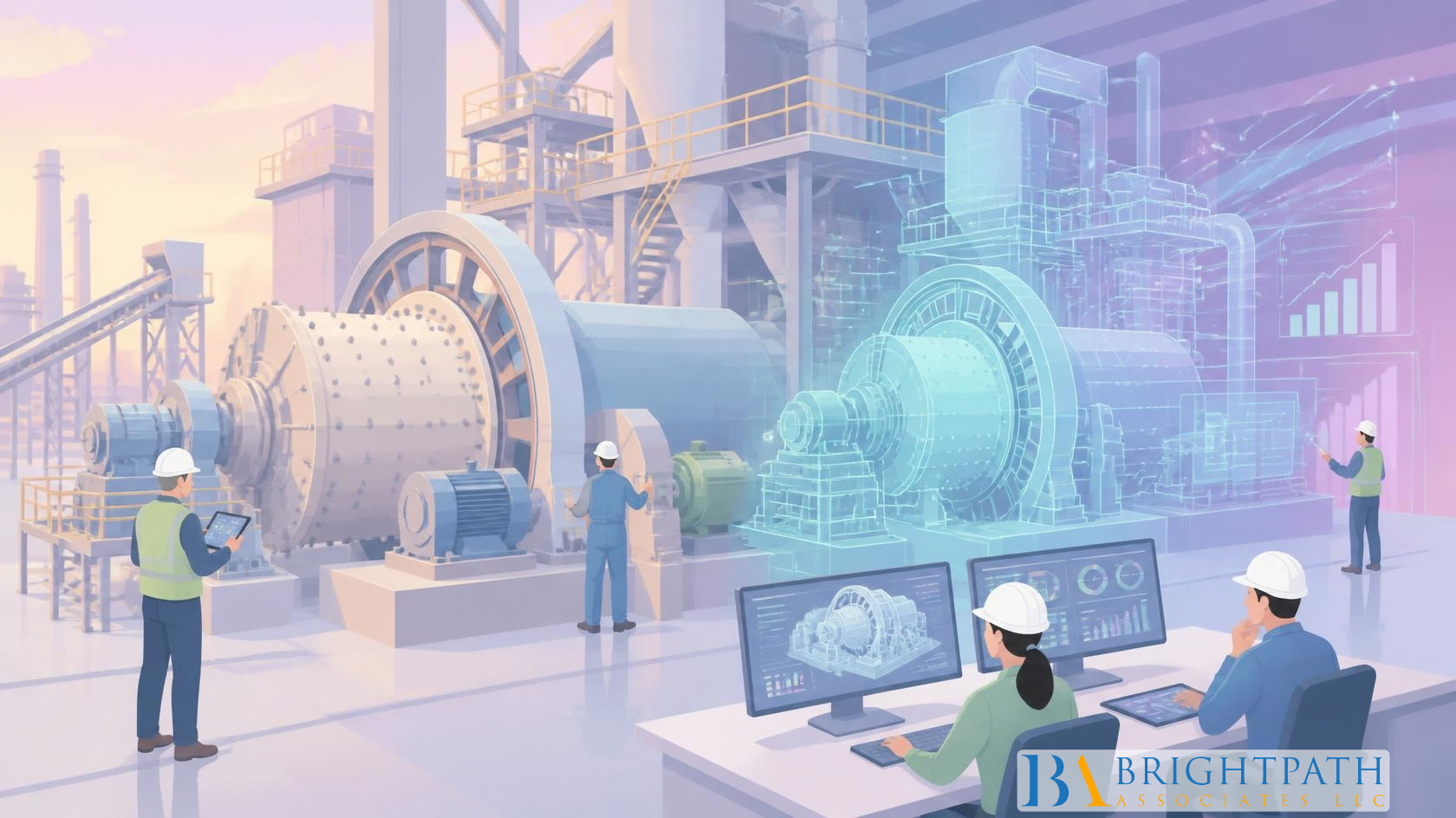
Modern paper and forest product mills are under pressure to accomplish several objectives at once: increase production, control costs, improve energy efficiency, strengthen sustainability, and adapt to changing customer requirements. The challenge is that these objectives are rarely independent. A modification to one part of a mill can influence equipment performance, energy consumption, product quality, maintenance requirements, and even downstream production.
A digital twin creates a virtual representation of a physical asset, production line, or broader manufacturing operation. By combining operational data, sensors, process information, and analytical models, manufacturers can evaluate potential changes virtually before making them on the production floor.
This interconnected environment is making digital twins increasingly relevant to mill modernization. For companies operating across the Paper & Forest Products Industry, this approach creates an opportunity to make modernization decisions with greater visibility into potential consequences.
Why Mill Upgrades Are Becoming More Complex
Consider a manufacturer evaluating a new drying system. The immediate objective might be to improve drying efficiency or production capacity. However, the upgrade could also affect steam consumption, production speed, moisture control, energy demand, equipment loading, and downstream processes.
Traditional planning methods can evaluate individual variables, but complex manufacturing environments require a broader perspective. That ability to test assumptions digitally can be particularly valuable when modernization projects involve significant investment.
Digital twins allow engineering and operations teams to establish a virtual baseline of current mill performance and then introduce proposed changes into that environment. Teams can examine different scenarios and identify potential bottlenecks before committing capital or scheduling a physical shutdown.
From Simulation to Operational Intelligence
A traditional simulation may analyze how a process behaves under predefined conditions. A digital twin can continuously incorporate information from the physical operation, including equipment measurements, production data, maintenance information, and process conditions.
In a paper mill, a digital twin can represent equipment such as digesters, refiners, washers, dryers, recovery boilers, turbines, and paper machines. Variables such as temperature, pressure, flow, moisture, production speed, energy consumption, and product quality can become part of the model.
What happens if production speed increases? What happens if an energy-intensive component is replaced? Could a new control strategy create a bottleneck elsewhere? Would a change in raw material quality require adjustments to processing conditions?
Improving Energy Efficiency Without Sacrificing Output
Energy management is a major consideration for modern mills. Electricity, steam, fuel, and water consumption can have a substantial impact on operating costs and environmental performance. The important point is that efficiency cannot always be measured by looking at one machine.
Digital twins can help organizations examine energy flows across an interconnected production system. Teams can simulate alternative equipment configurations, production schedules, operating conditions, and heat-recovery strategies without immediately disrupting physical operations.
An operational change that reduces energy consumption in one area could create additional demand elsewhere. Similarly, increasing production may improve output economics while increasing energy requirements.
A digital twin can help leadership examine these trade-offs before implementation. This makes the technology useful not only for engineering teams but also for executives responsible for capital planning, operational performance, and sustainability objectives.
Digital Twins and Recycled Fiber
The growing use of recovered fiber introduces another layer of complexity for paper manufacturers. Recycled fiber can vary in moisture, composition, contamination, fiber strength, and overall quality. These variables can influence processing requirements and finished-product performance.
A digital twin can provide a controlled environment for evaluating different raw-material combinations and processing strategies. The same principle can extend to broader circular manufacturing initiatives, where companies need to balance resource efficiency with consistent production performance.
Instead of discovering the operational impact after introducing a particular fiber mix into the physical process, manufacturers can model possible scenarios first. This can help teams understand relationships between raw-material characteristics, process conditions, energy requirements, and product quality.
What Comes Next for Mill Modernization?
The next stage of digital twin development is likely to involve deeper integration with artificial intelligence, machine learning, industrial automation, and real-time analytics. Instead of simply describing what is happening, advanced models may increasingly help organizations identify why performance is changing and explore potential responses.
For mill leaders, the long-term value is not simply having a virtual copy of a production facility. The real opportunity is using that virtual environment to make assumptions visible, test modernization strategies, understand operational trade-offs, and support better investment decisions.
BrightPath Associates explores this broader transformation in its article, Harnessing Digital Twins to Simulate Mill Performance Upgrades examining how digital twins can support modernization across paper, pulp, lumber, and forest-product operations.
A Technology Shift That Requires a Talent Shift
Digital twins may change how mills evaluate equipment upgrades, energy strategies, production changes, and sustainability initiatives. But technology also changes what organizations need from their leadership teams.
The question for executives is no longer simply whether digital tools should be adopted. It is whether the organization has the operational expertise, technical capability, and leadership vision required to turn those tools into measurable business value.
As mill modernization accelerates, the companies that successfully connect technology, operational knowledge, and strategic leadership will have an important foundation for navigating the next phase of manufacturing.
If your organization is planning a mill modernization initiative and needs leadership capable of connecting industrial operations with digital transformation, sustainability, and strategic growth, connect with BrightPath Associates to explore executive recruitment solutions for the Paper & Forest Products sector.
