Harmonizing Design Guidelines for Global Paper Recyclability
Author : Kabir Pathan | Published On : 22 Sep 2026
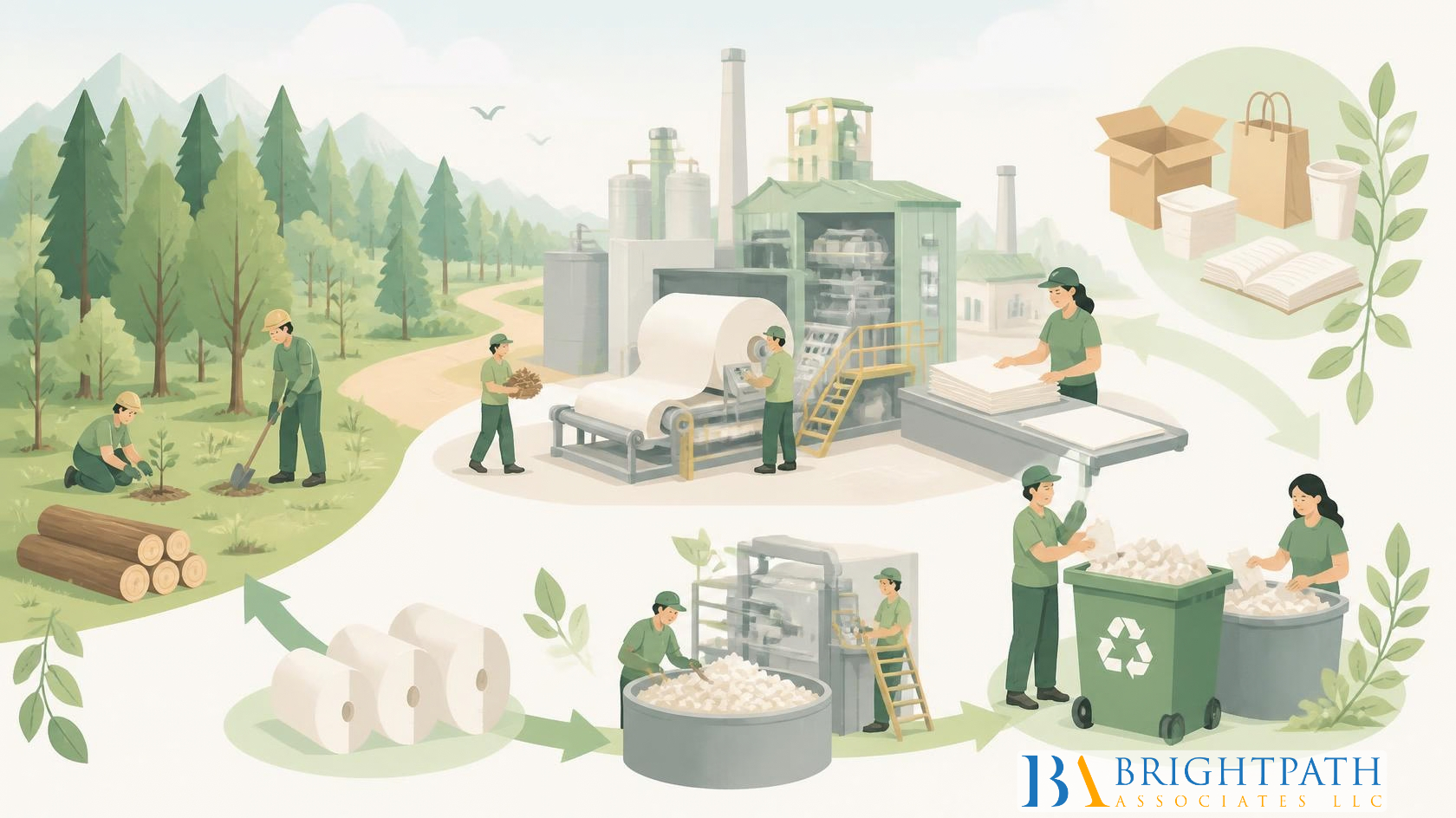
Paper has a powerful advantage in the sustainability conversation: it is fiber-based, renewable when responsibly sourced, and supported by established collection and recycling infrastructure. Yet designing paper-based packaging that can be consistently recycled across different markets is becoming increasingly complex.
The challenge is not simply whether paper can be recycled. The more difficult question is whether a specific packaging design will be collected, sorted, processed, and successfully recycled in the markets where it is sold.
Different countries, regions, recycling systems, industry organizations, and regulatory frameworks can apply different criteria when assessing recyclability. For paper and forest-products companies serving global customers, this creates a difficult design and compliance environment.
Why Recyclability Definitions Matter
When a packaging designer develops a paper-based product, decisions involving coatings, adhesives, inks, barrier layers, labels, additives, and other components can influence what happens at the end of the product's life.
Industry organizations are already developing technical guidance to help designers understand these trade-offs. The American Forest & Paper Association, for example, provides design guidance addressing how non-fiber components such as coatings and additives can affect the recyclability of paper-based packaging.
The problem becomes more complicated when a company sells similar packaging across multiple geographic markets. A design accepted under one region's recyclability framework may face different expectations elsewhere.
The Global Packaging Challenge
For multinational companies, packaging design is rarely developed for one market alone. A product may be manufactured in one country, packaged in another, distributed across several regions, and ultimately disposed of through completely different recycling systems.
That means a packaging designer needs to consider more than material composition. Collection infrastructure, sorting technologies, mill capabilities, local regulations, consumer behavior, and end-market demand can all influence actual recyclability.
The Sustainable Packaging Coalition's 2026 trends research identifies regional differences in recyclability definitions as a significant challenge and highlights global harmonization as an important opportunity for packaging designers. A more consistent global framework could reduce uncertainty and allow companies to develop packaging portfolios against clearer expectations.
Design for Recycling Must Begin Earlier
Historically, recyclability could be treated as an end-of-design consideration. A product was developed first, and its environmental performance was evaluated afterward. Design-for-recycling principles need to enter the product-development process much earlier.
Engineers and designers should ask whether the materials selected will work with existing recycling systems. They should consider whether coatings can interfere with fiber recovery, whether adhesives create processing challenges, whether inks affect deinking, and whether additional components could disrupt sorting.
The objective is not necessarily to eliminate every non-fiber element. Packaging must still protect products, withstand transportation, meet food or product-safety requirements, and perform commercially. The challenge is to balance functionality with circularity.
Harmonization Does Not Mean One Global Recycling System
There is an important distinction between harmonizing design principles and making every recycling system identical. Recycling infrastructure differs considerably between regions. Mills use different technologies, collection systems vary, and recovered-fiber streams have different characteristics.
4evergreen's 2026 Circularity by Design Guideline illustrates this complexity by providing guidance across conventional recycling, flotation-deinking, and specialized recycling processes. The organization also emphasizes that final packaging designs should still be tested for actual recyclability because specific materials and components can behave differently in recycling processes.
Therefore, harmonization should not eliminate regional expertise. Instead, it should establish a common foundation while allowing regional systems to account for their specific infrastructure and processing capabilities.
Conclusion: The Future Requires Common Principles and Local Reality
The paper industry's sustainability story is entering a more sophisticated phase. Recyclability can no longer be discussed only in terms of whether a material is technically recyclable. The conversation increasingly includes design, collection, sorting, processing, fiber quality, infrastructure, regulation, and end-market demand.
Greater harmonization could make that conversation easier. But successful harmonization will require a balance between global consistency and local recycling realities. It will also require companies to bring together technical knowledge, sustainability expertise, operational capabilities, and strong leadership.
If recyclability standards become increasingly harmonized across markets, is your organization prepared to redesign not only its products, but also the talent and capabilities behind them? For a deeper look at how design guidelines can support greater consistency in paper recyclability, explore Harmonizing Design Guidelines for Global Paper Recyclability.
As the paper and forest-products industry navigates changing sustainability expectations, advanced manufacturing requirements, and evolving recycling systems, the right technical and executive talent can become a critical part of the strategy. Explore BrightPath Associates LLC's Paper & Forest Products Industry expertise to see how specialized recruitment can support organizations preparing for the industry's next stage.
