Hair Transplant India: How to Achieve Natural, Long-Lasting Results
Author : Dr. Haror's Wellness | Published On : 24 Aug 2026
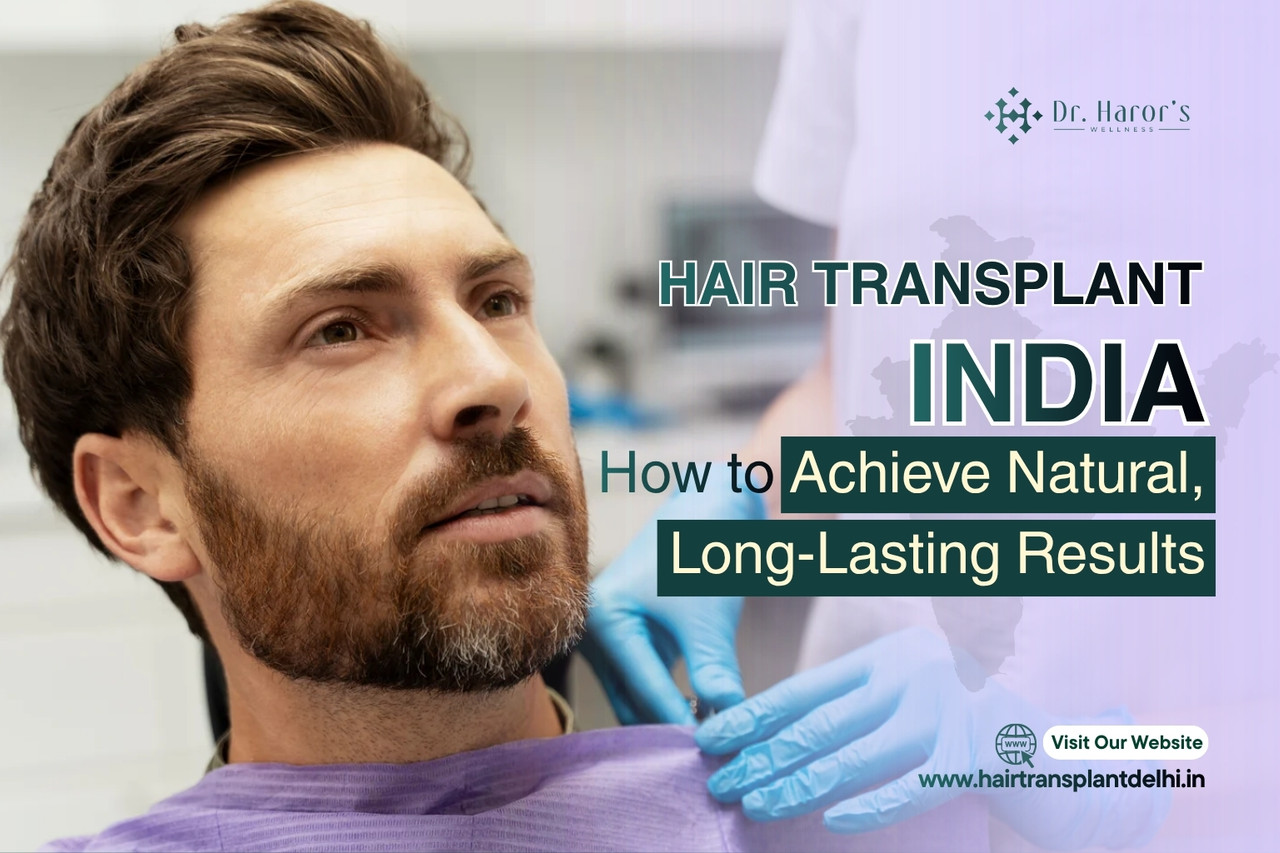
Hair fall isn't just an "aging problem" anymore. Between erratic eating habits, back-to-back work hours, and everyday stress, men and women of almost every age group are noticing thinner patches, receding hairlines, or a widening parting. And it doesn't stop at how you look in the mirror — thinning hair chips away at confidence too, making people overly conscious in social settings, photos, and even at work.
For anyone struggling with pattern baldness, a hair transplant has become one of the most reliable ways to restore hair that looks like it never left. But getting a natural, undetectable outcome from hair transplant in India isn't just about the surgery itself — it's about the planning, the technique, and the surgeon behind it. Here's what actually goes into it.
What Exactly Is a Hair Transplant?
In simple terms, a hair transplant is a surgical procedure where healthy hair follicles are lifted from a donor zone — usually the back or sides of the scalp, where hair is naturally more resistant to balding — and carefully placed into thinning or bald areas.
There are a few different techniques your hair transplant surgeon might recommend, depending on your scalp and hair loss pattern:
-
FUT (Follicular Unit Transplant): The older, more traditional method. A strip of skin is removed from the donor area, and individual grafts are separated from it before being implanted.
-
FUE (Follicular Unit Extraction): A more refined approach where individual follicular units are extracted one at a time and implanted at a precise angle and depth for a more natural look.
-
DHU (Direct Hair Transplant): A step ahead of FUE, this technique uses a specialized implanter pen to extract and place grafts in one motion. It's widely preferred today because of higher graft survival and more natural-looking density.
How Does the Procedure Actually Work?
1. The first consultation Your hair transplant surgeon will start by understanding your concerns — is the hair loss genetic, stress-related, or linked to something else entirely? Expect a detailed round of questions before anything else happens.
2. Scalp evaluation Next comes a close look at your hair caliber, the degree of miniaturization, donor area density, and your natural hairline pattern. This is what decides which technique will actually work for you.
3. Setting realistic expectations A good surgeon won't oversell results. Based on your donor supply, hair quality, and long-term goals, they'll walk you through what's realistically achievable — not just what sounds impressive.
4. Understanding the process Before the actual day, you're briefed on how grafts will be extracted, how they'll be implanted, and what each stage of the procedure looks like.
5. Mapping the recipient area On the day of the procedure, the surgeon carefully marks out the treatment zone to plan hairline design and graft placement.
6. Anaesthesia and comfort Local anaesthesia is given to keep the procedure pain-free from start to finish.
7. Extraction and implantation Follicles are removed from the donor region and placed into the recipient area, one graft at a time, in the right direction and density.
8. Aftercare guidance Once it's done, you're given clear postoperative instructions to protect the new grafts and support healing.
Tips for Getting Natural, Long-Lasting Results
Pick the right technique for your case There's no universal "best" method. The right choice depends on your donor hair quality, extent of hair loss, scalp condition, and how many grafts you'll actually need — something only an experienced hair transplant surgeon can judge accurately.
Don't skip hairline design The hairline is what makes or breaks how natural a transplant looks. It has to account for your age, current hairline shape, donor hair strength, and how your hair loss might progress in the future. A poorly designed hairline is one of the most common reasons transplants look "obviously done."
Quality over quantity More grafts don't automatically mean a better result. How the follicles are handled, how healthy they are, and the precision of placement matter just as much — sometimes more — than the raw graft count.
Take aftercare seriously The surgery is only half the story. Sticking to your post-op instructions directly affects graft survival and how natural the final result ends up looking.
Final Thoughts
A successful hair transplant isn't a single event — it's a combination of honest expectations, careful planning, precise surgical execution, and disciplined aftercare. From how the hairline is designed to how the donor area is preserved and future hair loss is managed, every small decision adds up to the final outcome.
If you're exploring Hair Transplant India, it's worth consulting an experienced hair transplant surgeon who takes the time to assess your age, degree of hair loss, and realistic expected outcomes before recommending a plan. At Dr. Haror's Wellness, every procedure follows strict safety and hygiene protocols, backed by a team of qualified surgeons with years of hands-on experience and a track record of consistent, natural-looking results.
Frequently Asked Questions
Is a hair transplant in India permanent?
Yes. Since transplanted follicles are usually taken from balding-resistant zones, they continue to grow naturally in their new location for a lifetime, in most cases.
Which is better — FUE or DHT?
Neither is universally "better." FUE suits most standard cases, while DHT (using an implanter pen) is often chosen for higher precision and graft survival. Your hair transplant surgeon will recommend one based on your scalp and hair loss pattern.
How long before results are visible?
Initial shedding of transplanted hair is normal in the first few weeks. Real growth typically starts around month 3-4, with fuller, natural-looking results visible by month 8-12.
