Golden Triangle + Wildlife: Is Ranthambore Worth Adding?
Author : India Golden Triangle Tours | Published On : 10 Oct 2026
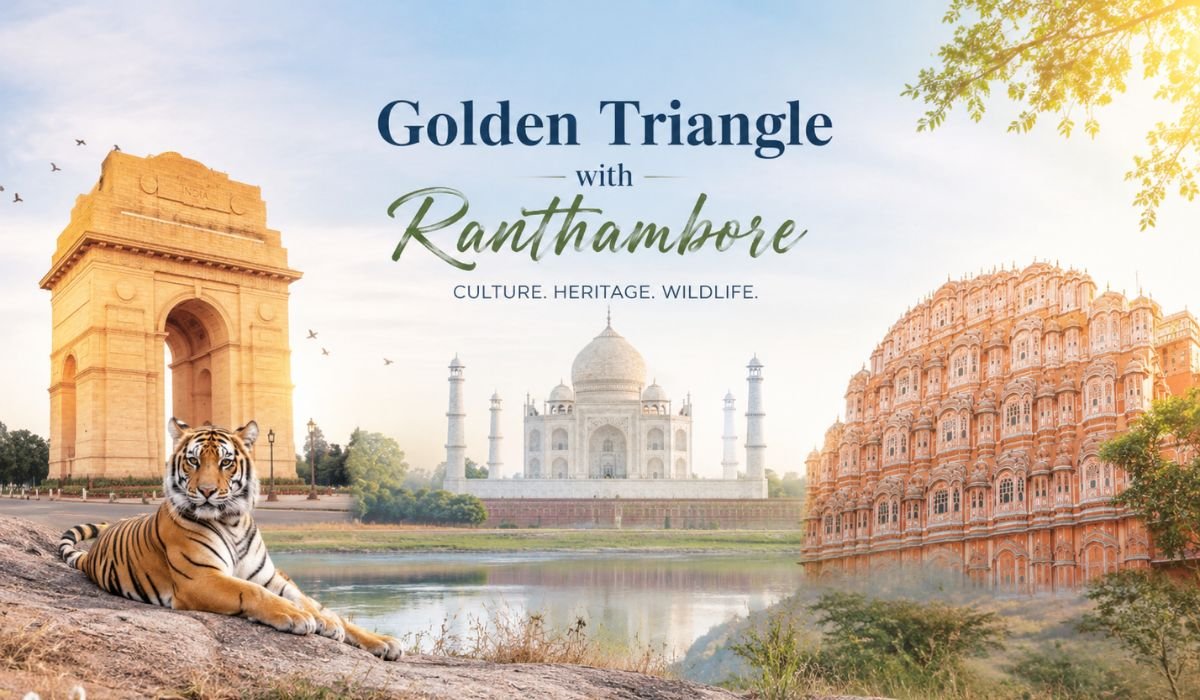
A classic Golden Triangle trip is built around three very different cities: Delhi, with its Mughal and colonial layers; Agra, home to the Taj Mahal; and Jaipur, the Pink City of forts, palaces and bazaars. It is one of the most rewarding first routes through India. It is also almost entirely about monuments and cities.
That is where Golden Triangle with Ranthambore comes in. Ranthambore National Park, in south-eastern Rajasthan, adds forest, lakes, ruins and the chance of wildlife to a heritage itinerary. But it also adds driving, an overnight stay and a safari budget. So is it worth it?
Quick answer: Yes, Ranthambore is worth adding if you love wildlife or photography, have at least six days in India, and can accept that tiger sightings are never guaranteed. If you have only three or four days, or you mainly want monuments, museums and markets, the classic Delhi–Agra–Jaipur route is usually the better use of your time.
What Makes the Golden Triangle with Ranthambore Different?
A traditional Golden Triangle holiday is a cultural circuit:
-
Delhi: Old Delhi's lanes and mosques, Humayun's Tomb, Qutub Minar and the grand avenues of New Delhi.
-
Agra: The Taj Mahal, Agra Fort and the wider Mughal story.
-
Jaipur: Amber Fort, the City Palace, Hawa Mahal and the busy bazaars.
A Golden Triangle tour with wildlife swaps part of that pace for something quieter. Ranthambore offers dry deciduous forest, rocky hills, lakes and the remains of a centuries-old fort inside the park. Mornings start early in an open vehicle rather than in a museum queue.
The result is variety, not a better trip for everyone. Many travellers are perfectly happy with the classic route, and that is a valid choice.
Is Ranthambore Worth Adding to Your Golden Triangle Tour?
The honest answer depends on what you want from India and how much time you have.
Reasons to Add Ranthambore
-
A tiger safari in a natural habitat. Ranthambore is among India's best-known tiger reserves, and a safari here is a very different experience from visiting a fort.
-
A different side of Rajasthan. Beyond forts and palaces, the state has wild landscapes that many first-time visitors never see.
-
Wildlife photography and birdwatching. Even without a tiger, deer, birds, crocodiles and scenery give photographers plenty to work with.
-
A break from monument fatigue. After several days of palaces and bazaars, a nature stop resets the pace.
Reasons You Might Skip Ranthambore
-
You only have three or four days for the whole trip. Extra driving would squeeze Delhi, Agra or Jaipur.
-
You prefer cities, museums, architecture and shopping.
-
Added transport and accommodation would stretch your budget.
-
You would be frustrated by uncertainty. Wildlife does not run on a schedule.
Tiger sightings are never guaranteed. A good safari is valued for the whole experience — the landscape, the birds, the deer and the quiet — not just the chance of seeing a tiger. Go in with that mindset and you are far more likely to enjoy it.
How Many Extra Days Do You Need for Ranthambore?
Plan a realistic trip rather than squeezing a safari into a rushed itinerary.
-
Short Golden Triangle visit (3–4 days): Prioritise Delhi, Agra and Jaipur. Adding Ranthambore here usually means compromising on all of them.
-
More flexible trip (5–6+ days): This is where a Ranthambore stay starts to make sense, with an overnight near the park rather than a rushed day trip.
-
Wildlife-focused trip: Allow extra days for more than one safari, if budget and permit availability allow. Each drive can turn out differently.
For reference, travellers who want to combine historic cities with a wildlife experience can review the dedicated Golden Triangle Tour with Ranthambore, a six-day, five-night itinerary that fits Delhi, Agra, Ranthambore and Jaipur into one private journey. It shows how the destinations can be sequenced, including two safari drives.
The number of days you actually need depends on your arrival and departure times, how you travel, safari availability and your sightseeing priorities. Treat six days as a practical starting point, not a rule.
What Can You Experience in Ranthambore National Park?
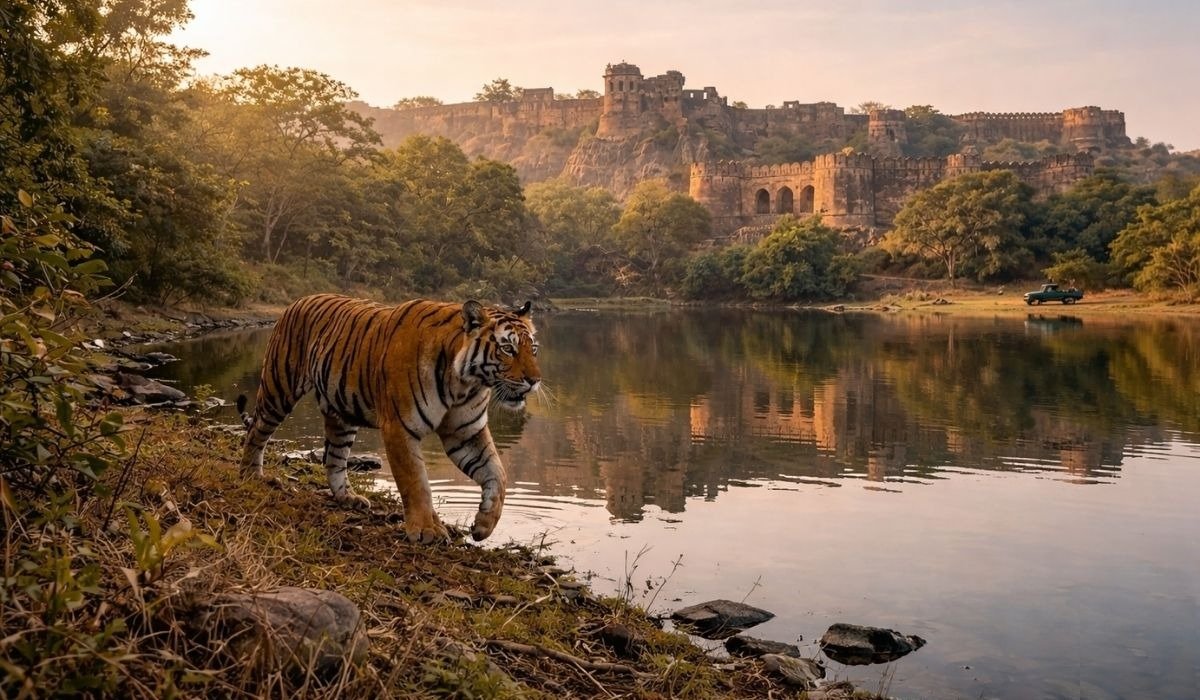
Ranthambore is a place where wildlife, water and ruins sit side by side. In practical terms, expect:
-
Bengal tigers and other mammals. Alongside tigers, the park is home to species such as leopards, sloth bears, deer and crocodiles. Sightings vary widely.
-
Birds and varied habitats. Lakes, grasslands, rocky ridges and forest each attract different species, which is good news for birdwatchers.
-
Lakes, rocky terrain and forest scenery. Even quiet drives can be visually rewarding.
-
Heritage inside the wilderness. Ranthambore Fort sits within the park area, so history and nature overlap.
Wildlife tourism works best when it supports conservation. Following park rules, keeping a respectful distance and listening to your naturalist helps protect the animals and the habitat. It is also why access is controlled, with limited vehicles and official permits.
Every safari is different. Time of day, season, zone, weather and plain chance all shape what you see, so one drive can be quiet while the next is memorable. Avoid any operator who promises a particular zone or vehicle will always deliver a tiger.
After you have decided to go, the next question is logistics: vehicles, permits and timing. Our Ranthambore safari booking guide covers those practical details, so this article stays focused on the bigger decision.
How Does Ranthambore Fit into the Delhi–Agra–Jaipur Route?
Delhi is the usual international arrival point, Agra sits roughly four hours' drive to the south-east, and Jaipur lies to the west. Ranthambore, near the town of Sawai Madhopur, sits south of the traditional triangle, so it is an extension rather than a stop on the way.
A common sequence runs Delhi → Agra → Ranthambore → Jaipur → Delhi. Our six-day itinerary uses this flow, with Fatehpur Sikri visited en route between Agra and Ranthambore. As rough guidance from that itinerary, Agra to Ranthambore is around six hours by road, and Ranthambore to Jaipur around four. Treat these as estimates, since traffic, road works and stops change real journey times.
Some points to keep in mind:
-
Order of destinations should depend on the tour you choose, safari slots and transport timings, not just convenience.
-
Ranthambore needs careful scheduling. Safaris run at fixed morning and afternoon times, so a late arrival can cost you a drive.
-
An overnight stay is usually more practical than a day trip. A rushed same-day visit leaves little time for rest or a proper safari.
For more on sequencing, travel times and itinerary options, see our guide to planning a Golden Triangle tour with Ranthambore.
When Is the Best Time to Add Ranthambore?
Season affects both your sightseeing comfort and your wildlife experience.
-
October to February: Generally the most comfortable weather for city sightseeing and safari drives. Mornings can be cool, so carry layers. Many travellers favour the cooler months, when the forest is also more open.
-
March to June: Hotter, sometimes very hot. Heat can make midday city sightseeing tiring, though some visitors choose these months for different wildlife-viewing opportunities and potentially smaller crowds.
-
July to September: The monsoon. The park's core zones have traditionally been closed, with limited buffer-zone access at best, so it is generally not a time to plan a Ranthambore safari.
Park opening dates, closures, safari timings and permit availability are set by the authorities and can change. Check official information for your exact travel dates before you finalise flights or hotels. No month can promise a tiger sighting.
Jeep Safari vs Canter Safari: Which Should You Choose?
Ranthambore offers two main vehicle types. Neither is guaranteed to give better sightings; choose on budget, group size and preference.
|
Jeep (Gypsy) safari |
Canter safari |
|
|
Group size |
Small groups, typically a handful of passengers |
Larger shared vehicle with more seats |
|
Comfort |
Open vehicle; more personal space |
Open-sided but more crowded |
|
Photography |
Easier to move and frame shots |
Less flexibility with more people |
|
Cost |
Usually higher per vehicle, often shared by the group |
Usually lower per person |
|
Best for |
Couples, families, photographers |
Budget-conscious or solo travellers |
Vehicle availability, routes and permit allocation follow official rules, and your guide or operator cannot override them. Confirm which vehicle and zone are included in your booking and whether choices can change.
What Should You Budget for a Golden Triangle Wildlife Tour?
Prices change with season and demand, so this article does not quote figures. Instead, build your budget from the main components:
-
Private transport and the additional driving time to and from Ranthambore.
-
Hotel accommodation near the park, often a jungle lodge or resort.
-
Safari permits and vehicle charges.
-
Guide or naturalist arrangements, where applicable.
-
Meals, monument entry fees and optional activities.
-
Peak-season demand, which can push up prices and reduce availability, so book early.
Compare the complete trip cost, not just the advertised safari fee. Check what is included — on our six-day itinerary, for example, monument tickets and most meals are listed as exclusions, while two safaris are included. Always read inclusions and exclusions line by line.
Who Should Choose a Golden Triangle Tour with Ranthambore?
The extension tends to suit:
-
Wildlife enthusiasts and photographers.
-
First-time India visitors with enough time who want more than monuments.
-
Families looking for variety and an outdoor highlight.
-
Couples who want to combine heritage and nature.
-
Travellers who prefer a more diverse itinerary.
A shorter classic route may suit you better if you have limited days, dislike early starts, are uncomfortable with long drives, or mainly want the Taj Mahal, Amber Fort and city sightseeing. If you are still weighing a standard cultural trip against an extended one, our complete Golden Triangle tour guide gives a fuller overview of the traditional Delhi–Agra–Jaipur circuit.
Practical Tips Before Booking Your Wildlife Extension
-
Check safari availability first, before you lock in the rest of the itinerary. Popular dates can sell out.
-
Book permits early where possible, especially for peak months.
-
Carry the identification used for the booking. Safari permits are often tied to ID, so bring the original document.
-
Allow enough travel and rest time. Early safari starts after a long drive are tiring.
-
Follow park rules and keep a safe distance from wildlife. Stay seated, keep quiet and listen to your guide.
-
Confirm inclusions, exclusions and cancellation terms in writing.
-
Keep expectations realistic. Treat a tiger sighting as a bonus, not a promise.
Frequently Asked Questions
1. Is Ranthambore worth adding to the Golden Triangle?
It is worth adding if you enjoy wildlife or photography and can spare roughly six days or more in total. It gives the trip variety beyond forts and palaces. If your time is short or you mainly want monuments and markets, the classic Delhi–Agra–Jaipur route is likely the better choice.
2. How many days are needed for a Golden Triangle tour with Ranthambore?
Many travellers allow around six days, which covers Delhi, Agra, an overnight at Ranthambore with safari drives, and Jaipur. Seven or more days feels more relaxed. The right number depends on your flight times, safari availability, travel pace and how much you want to see in each city.
3. Can I see tigers in Ranthambore?
Possibly, but nobody can guarantee it. Ranthambore is well known for tigers, yet sightings depend on the zone, season, weather and luck. Treat the safari as a wider wildlife experience, including birds, deer, lakes and landscapes, and consider more than one drive if your schedule allows.
4. What is the best time to visit Ranthambore National Park?
The park is generally open from October to June, with the monsoon months of July to September usually closed or restricted. Cooler months are more comfortable, while summer is hot. Always confirm official dates, timings and permit availability for your exact travel dates before booking.
5. Is one safari enough in Ranthambore?
One safari gives a taste of the park, but each drive is different, so a single outing may feel limited if you are hoping for tigers. Two drives, ideally in different zones, give a fuller experience. Whether you can book more depends on your budget, time and permit availability.
6. Is Ranthambore suitable for families?
Many families enjoy it, particularly with children who are comfortable with early mornings and long drives. Safaris are in open vehicles and require patience and quiet. Check any age or safety rules, dress for the weather and keep children seated and supervised at all times.
7. Should I book my Ranthambore safari in advance?
Yes, booking early is wise, especially in peak months when slots can sell out. Advance booking also lets you plan hotels and transport around confirmed safari dates. Carry the ID used for the booking, and check the cancellation terms before you pay.
Final Verdict: Should You Add Ranthambore?
For travellers who value wildlife and can comfortably allow extra time and budget, Golden Triangle with Ranthambore is a worthwhile extension. It adds a memorable natural highlight to an itinerary full of history, and it works best when you treat the safari as an experience in its own right rather than a tiger-spotting guarantee.
For short trips focused on iconic monuments, the classic Delhi–Agra–Jaipur route is often the smarter choice. There is no wrong answer, only the one that fits your time, budget and interests.
If you would like to see how the cities and the park can fit together, explore our six-day Golden Triangle with Ranthambore itinerary, or contact the team to discuss a customised trip around your dates and priorities.
