Generative Design in Plastics: How Algorithms Are Replacing Traditional Tooling
Author : Daniel Sparks | Published On : 01 Oct 2026
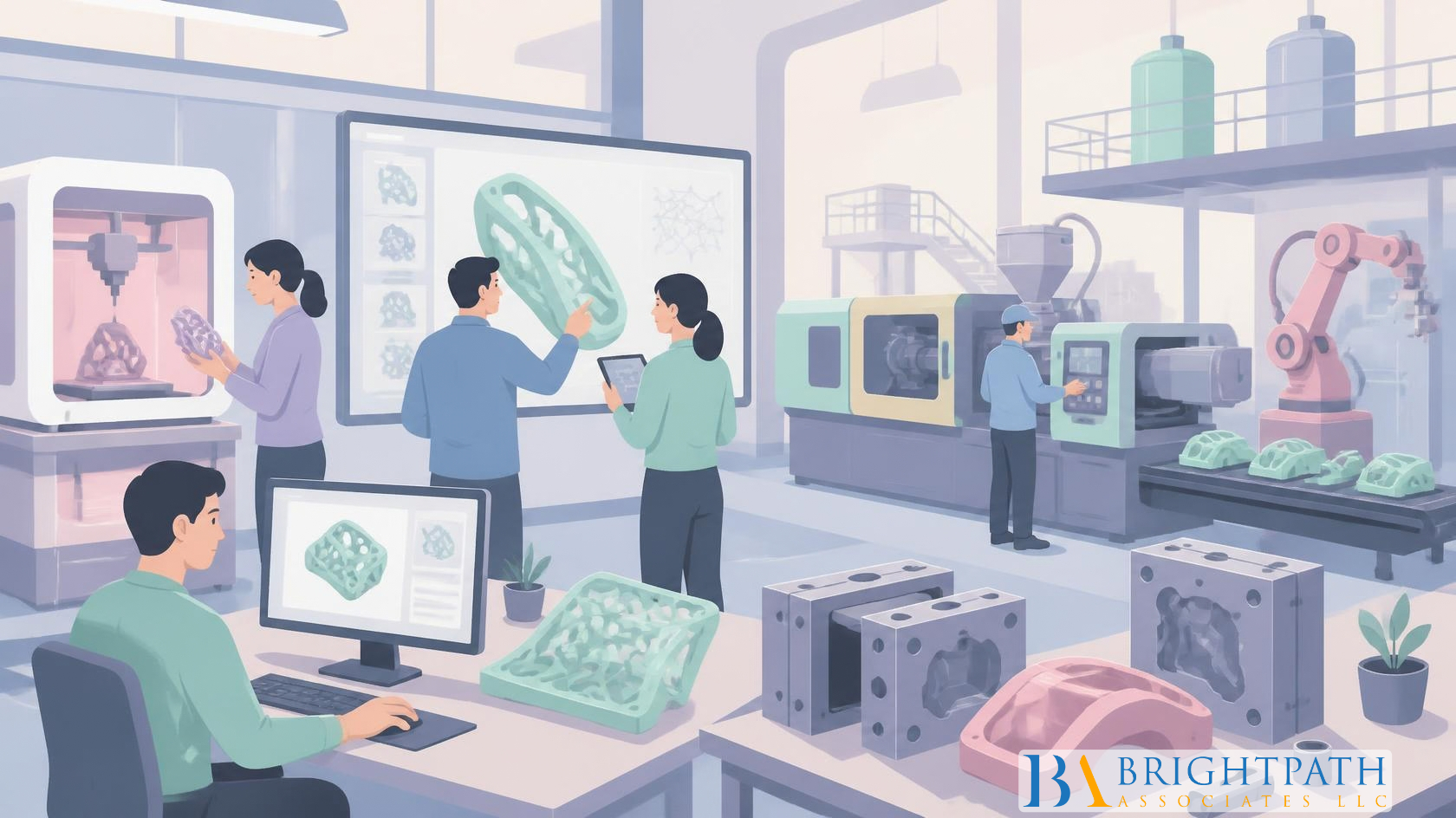
For decades, plastics manufacturers have relied on a familiar product-development process: engineers create a design, tooling specialists translate that design into molds and fixtures, prototypes are produced, testing identifies weaknesses, and the cycle repeats until the desired result is achieved.
That model remains important, but digital engineering is changing how quickly manufacturers can move through it. For plastics companies competing on cost, speed, customization, and innovation, this shift deserves serious attention.
Generative design is emerging as one of the technologies capable of reshaping the relationship between product design, tooling, material usage, and manufacturing. Instead of asking engineers to develop one solution based primarily on previous designs and established engineering practices, generative design software can evaluate numerous possible configurations against defined requirements such as weight, strength, material usage, manufacturability, and performance.
From Designing One Solution to Exploring Many Possibilities
Traditional engineering workflows often begin with a specific concept. Engineers refine that concept through simulations, testing, and revisions. The process can be highly effective, but it may also be constrained by the assumptions built into the initial design.
Engineers can establish parameters and constraints, allowing software algorithms to explore multiple design possibilities. Instead of simply optimizing a predetermined shape, the system can help identify alternative geometries that may not have been obvious during conventional design work.
The technology does not eliminate engineering judgment. Rather, it changes where engineering expertise is applied. Engineers increasingly become responsible for defining the right objectives, constraints, materials, manufacturing processes, and performance requirements—and then evaluating the solutions produced by computational systems.
Why Generative Design Matters to Plastics Manufacturers
The plastics industry operates under constant pressure to improve productivity while controlling material, labor, tooling, and energy costs. Companies are also responding to demand for lighter products, greater functionality, shorter development cycles, and more sustainable manufacturing practices.
A component that performs the same function while using less material can affect both manufacturing economics and product weight. In applications such as automotive components, industrial equipment, consumer products, and specialized packaging, even relatively small design improvements can become meaningful when multiplied across high production volumes.
The technology can also support design customization. Manufacturers increasingly serve customers seeking specialized products rather than standardized components. Computational design can make it easier to explore variations without requiring engineers to rebuild every design entirely from scratch.
This broader transformation is occurring within a plastics industry increasingly shaped by automation, AI-enabled quality control, digital transformation, advanced materials, and evolving manufacturing technologies.
Tooling Is Becoming More Closely Connected to Digital Engineering
Traditional tooling development can require substantial engineering effort, particularly for complex molds and components. Toolmakers must consider factors such as cooling, material flow, structural integrity, cycle time, manufacturability, and maintenance.
Digital engineering can allow these considerations to become part of the design process earlier. That matters because correcting a digital design is generally less disruptive than discovering a major problem after expensive tooling has already been manufactured.
Instead of designing a component first and determining tooling requirements later, manufacturers can increasingly evaluate product and tooling considerations together. This can help engineering teams identify potential manufacturing problems before physical tooling is produced.
What Plastics Leaders Should Be Asking Now
The most useful question for a plastics manufacturer may not be whether generative design is “the future.” Instead, leadership teams should ask where computational design could create measurable value today.
Which products have excessive material usage? Where are tooling iterations slowing development? Which components require frequent customization? Where could digital simulation reduce physical prototyping? Does the existing engineering team have the expertise to evaluate algorithm-generated designs?
These questions can help companies move beyond technology enthusiasm and toward practical implementation. The original BrightPath Associates discussion, Generative Design in Plastics: How Algorithms Are Replacing Traditional Tooling, explores this broader shift and its implications for the future of plastics manufacturing.
The Real Competitive Advantage May Be the Combination of Technology and Talent
Generative design is unlikely to eliminate the need for traditional manufacturing knowledge. Instead, it is changing how that knowledge is applied. The plastics manufacturers best positioned to benefit may be those that combine computational design capabilities with deep expertise in materials, tooling, processing, quality, and production.
For executives and owners of small and mid-sized plastics companies, this creates a workforce question alongside the technology question. That conversation may be just as important as the software investment itself.
What is your organization seeing in generative design, AI-assisted engineering, or digital tooling? Are these technologies reducing development time—or creating new skills and implementation challenges?
Share your experience in the comments, and connect with BrightPath Associates LLC if your organization is looking for specialized engineering, manufacturing, or executive talent to support its next stage of plastics innovation.
