Generative AI in Engineering: Accelerating Product Design Cycles for Custom Machinery
Author : Ayesha Diaz | Published On : 21 Sep 2026
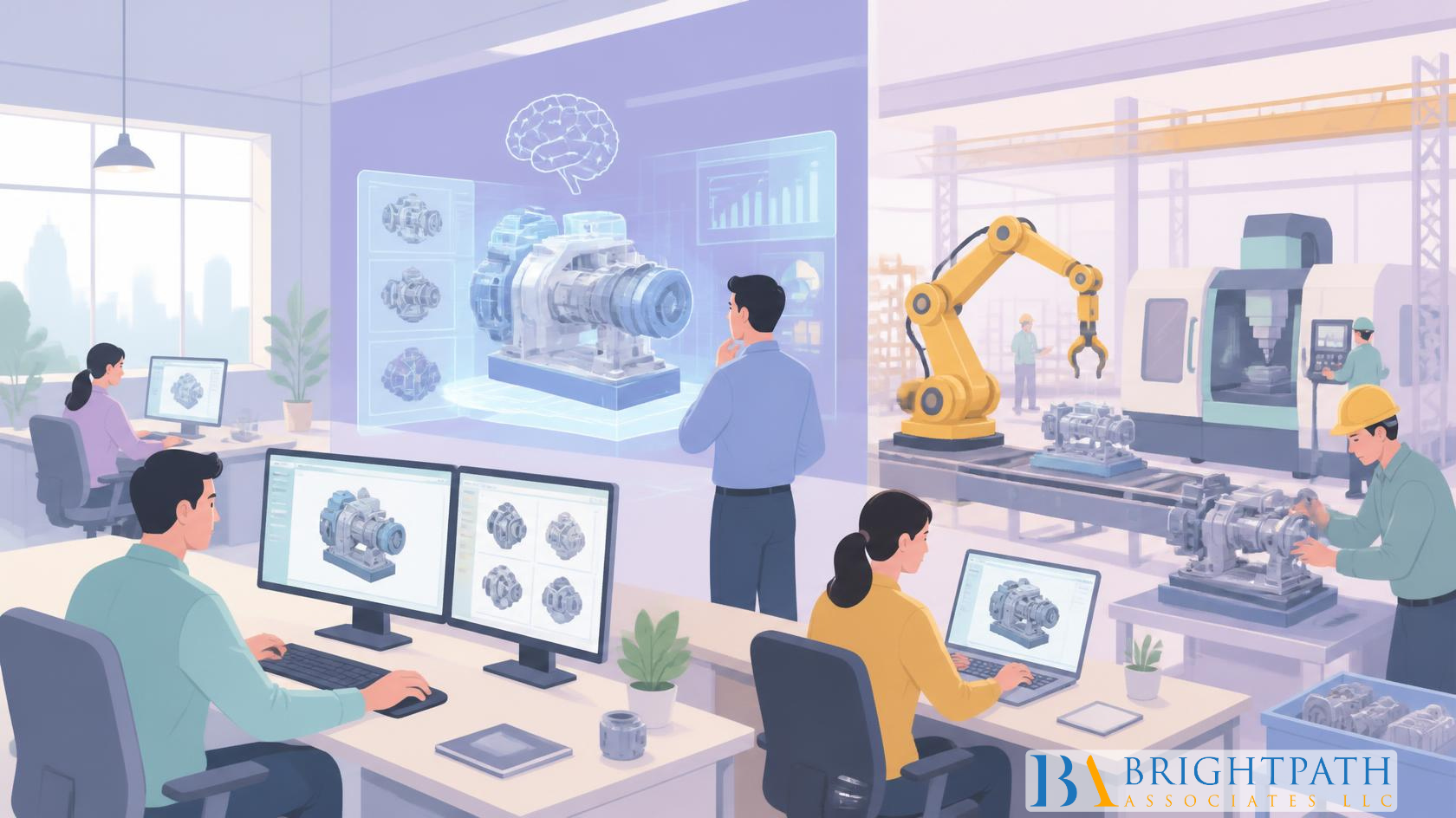
Custom machinery has never been a simple engineering exercise. Unlike standardized equipment, custom machines are built around specific production requirements, facility constraints, materials, throughput targets, automation needs, and customer expectations. Engineers must often balance mechanical performance, manufacturability, safety, cost, maintenance, and integration with existing systems—all within demanding project timelines.
Rather than replacing engineers, AI can provide a new layer of engineering intelligence that helps teams explore design possibilities faster, retrieve institutional knowledge, evaluate alternatives, and reduce repetitive work. For machinery manufacturers, the opportunity is not simply about producing designs more quickly. It is about creating a more connected product-development process in which engineering expertise, historical data, simulation, manufacturing knowledge, and AI work together.
Why Custom Machinery Needs a Different Approach to AI
A custom machinery project typically begins with a customer problem rather than an existing product specification. One customer may need equipment that operates within a very limited footprint, while another may require higher throughput, greater precision, specialized material handling, or integration with an established production line.
Turning those requirements into a functioning machine requires collaboration between mechanical engineers, electrical engineers, controls specialists, manufacturing teams, procurement professionals, field technicians, and customers.
Generative AI can assist at the beginning of this process by helping engineering teams organize technical requirements, analyze documentation, retrieve information from previous projects, and identify relationships between constraints. Instead of spending excessive time searching through drawings, specifications, and project files, engineers can potentially access relevant knowledge much faster.
Moving From One Design Concept to Multiple Possibilities
Traditional engineering workflows often progress sequentially. Engineers develop a concept, evaluate it, identify problems, modify the design, and repeat the process until the solution satisfies the necessary requirements. Iteration remains essential, but generative AI can expand the number of alternatives considered during the early stages.
Engineers can define objectives such as weight, strength, dimensions, material consumption, manufacturability, cost, or operating performance and use AI-assisted tools to explore potential configurations. The technology can help identify alternatives that might otherwise take considerable engineering time to develop manually.
The engineer remains responsible for deciding which concepts are technically appropriate. AI simply makes the exploration stage broader and potentially faster. For custom machinery manufacturers competing on responsiveness, this difference can have commercial significance. Faster concept development can allow companies to respond to customer inquiries, feasibility questions, and preliminary proposals with greater speed.
Connecting Design With Manufacturing Reality
Precision machining introduces considerations involving tolerances, tooling, material availability, surface finishes, machine capabilities, setup requirements, and production time. If manufacturing constraints are considered too late, design changes can create expensive delays.
Generative AI can support design-for-manufacturing processes by evaluating potential designs against known production constraints. When engineering systems are connected with manufacturing information, AI-assisted analysis may help identify unnecessary complexity before a component reaches the machining or fabrication stage.
This creates an important shift: engineering decisions can increasingly account for manufacturing realities from the beginning rather than treating manufacturability as a later-stage review. For companies operating in the broader Machinery Industry, this integration can become an important part of improving responsiveness and production efficiency.
Bringing Maintenance Intelligence Into Product Design
The value of a custom machine does not end when installation is complete. Long-term reliability, accessibility, serviceability, and downtime can significantly influence the customer's overall return on investment. Generative AI creates opportunities to bring maintenance information back into engineering.
Historical service records can reveal which components experience recurring failures, which parts require frequent replacement, and which design configurations create maintenance difficulties. Engineering teams can use these insights when developing future machines.
For example, a design that performs exceptionally well but makes routine component replacement difficult may create unnecessary operational costs. AI-supported analysis can help engineers evaluate such lifecycle considerations earlier.
This creates a feedback loop between field performance and product development. Instead of treating maintenance as a separate post-sale function, machinery manufacturers can use service intelligence to continuously improve future designs.
Conclusion: Engineering Expertise Still Leads the Way
Generative AI is opening new possibilities for custom machinery engineering, from faster concept exploration and improved design-for-manufacturing to better knowledge retrieval, automation integration, and lifecycle analysis.
But the technology does not eliminate the need for engineering judgment. It increases the potential value of experienced professionals by allowing them to spend less time on repetitive information work and more time solving complex technical problems.
For a deeper look at how generative AI can reshape custom machinery product development, explore Generative AI in Engineering: Accelerating Product Design Cycles for Custom Machinery. If your organization is preparing for the next generation of machinery engineering, automation, and digital manufacturing, BrightPath Associates LLC can help you identify the specialized and executive talent required to turn emerging technologies into practical business capabilities.
