Indexable Threadmill Cutter Selection Guide for Precision Threading
Author : Surya makeyoueasy | Published On : 07 Sep 2026
Introduction
An indexable threadmill cutter is a practical choice for precision threading when manufacturers need flexibility, replaceable cutting edges, and consistent CNC performance. Unlike solid thread mills, indexable systems use replaceable carbide inserts, helping reduce tooling costs over repeated production. Choosing the correct cutter depends on the thread standard, pitch, diameter, insert compatibility, workpiece material, thread depth, machine rigidity, and cutting conditions.
What Is an Indexable Threadmill Cutter?
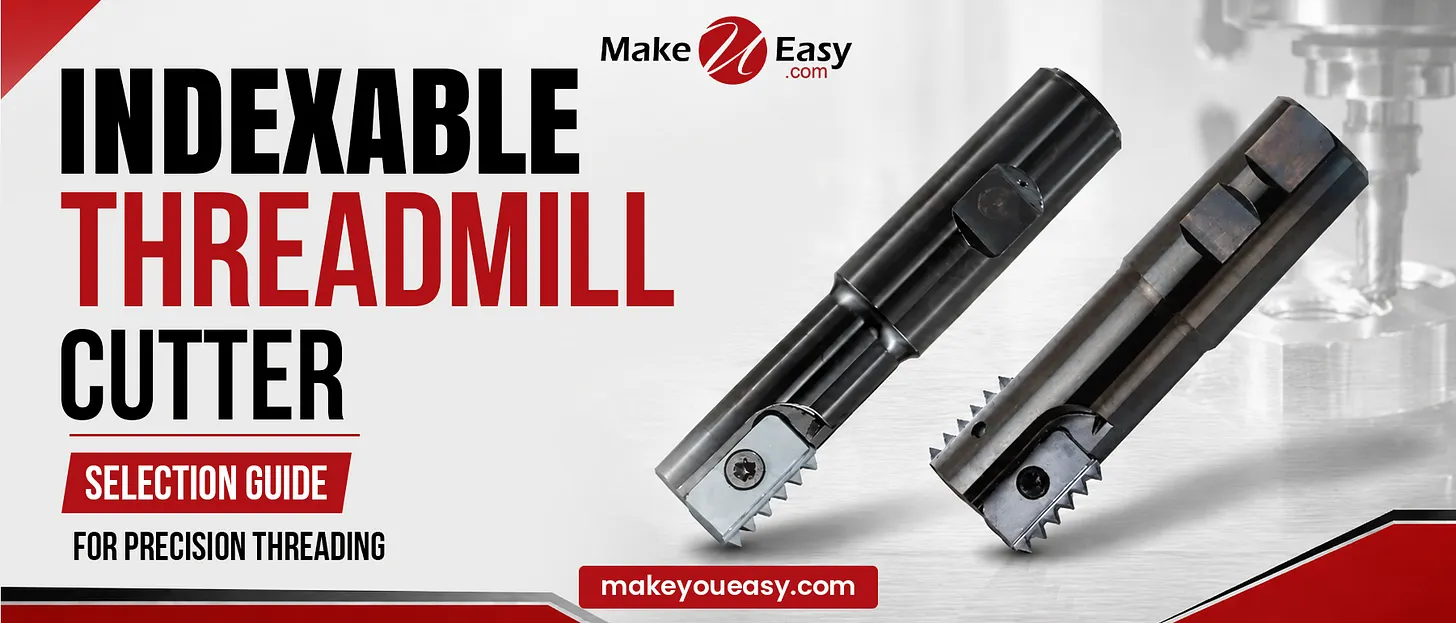
An indexable threadmill cutter is a CNC threading tool that uses replaceable carbide inserts mounted on a cutter body.
Instead of replacing the complete tool when the cutting edge wears, the insert can be indexed or changed while the cutter body remains in use.
These cutters are commonly used for:
-
Internal threading
-
External threading
-
Large-diameter threads
-
Blind holes
-
Through holes
-
Precision components
-
Production machining
-
Large thread sizes
They are especially useful where repeated threading operations make insert replacement more economical than replacing an entire solid cutter.
Why Choose an Indexable Threadmill?
Replaceable Cutting Inserts
The main advantage is the ability to replace only the worn insert.
This can reduce tooling costs in suitable production applications.
Good Flexibility
Depending on the cutter and insert system, one cutter body may support different insert profiles or pitches within its designed range.
Suitable for Large Threads
Indexable thread mills are commonly considered for larger thread diameters where solid carbide tooling may become costly.
Precision Thread Control
Thread size can often be adjusted through CNC programming and cutter compensation within the allowed machining range.
Reduced Tool Replacement Cost
A reusable cutter body combined with replaceable inserts can improve long-term tooling economy.
How to Choose the Right Indexable Threadmill Cutter
1. Identify the Thread Standard
Start by checking the required thread type.
Common thread standards include:
-
Metric
-
UNC
-
UNF
-
BSP
-
NPT
-
Other application-specific thread forms
The insert profile must match the required thread standard.
Using the wrong profile can produce incorrect flank angles and unusable threads.
2. Check the Thread Pitch
Pitch is one of the most important selection parameters.
For example:
M16 × 2.0
-
M16 = nominal diameter
-
2.0 mm = thread pitch
The selected insert must support the required pitch.
Do not assume that all inserts used in the same cutter body can produce every pitch.
3. Match the Cutter Diameter
The cutter diameter should suit the thread diameter and available machining space.
For internal threading, sufficient clearance must remain between the cutter body and the pre-machined hole.
A cutter that is too large may not fit properly, while an unnecessarily small cutter may increase cycle time or reduce rigidity.
4. Verify Insert Compatibility
This is critical with indexable tooling.
Check:
-
Insert designation
-
Insert size
-
Thread profile
-
Pitch range
-
Number of usable cutting edges
-
Seat geometry
-
Screw compatibility
-
Cutter body model
An insert that looks similar may not fit correctly in another cutter system.
Always match the insert to the exact cutter specification.
5. Choose the Right Insert Grade
The insert grade should match the workpiece material.
Typical material groups include:
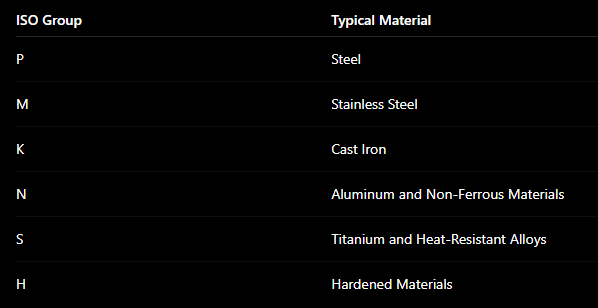
The correct grade helps balance wear resistance, toughness, and cutting stability.
6. Consider Internal or External Threading
Not every indexable threadmill cutter is suitable for both operations.
Before selection, check whether the cutter is designed for:
-
Internal threads
-
External threads
-
Right-hand threads
-
Left-hand threads
-
Specific thread profiles
The toolpath and cutter geometry must match the application.
7. Check Thread Depth
Thread depth influences cutter length and rigidity.
A longer cutter may be necessary for deep threads, but excessive overhang can increase:
-
Deflection
-
Chatter
-
Poor thread accuracy
-
Insert chipping
-
Tool failure
Use the shortest cutter that safely reaches the required threading depth.
8. Evaluate Cutter Rigidity
Thread milling relies heavily on stable toolholding.
For best results:
-
Use a rigid tool holder.
-
Minimize cutter overhang.
-
Keep the spindle taper clean.
-
Check tool runout.
-
Clamp the workpiece securely.
-
Avoid unnecessary extension lengths.
Rigidity becomes even more important when machining large threads or difficult materials.
Indexable Threadmill vs Solid Carbide Threadmill
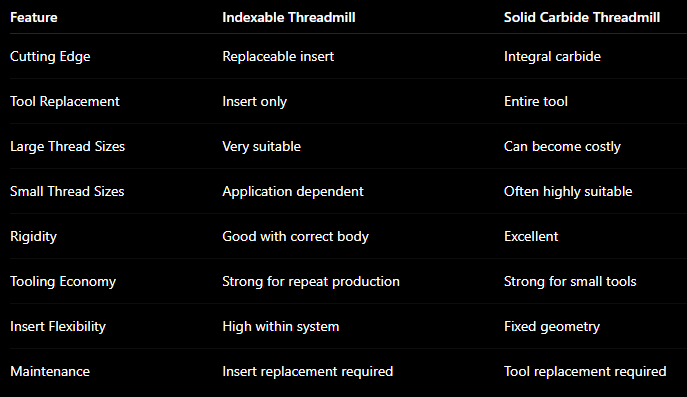
Neither is automatically better.
The correct choice depends on thread size, production quantity, accuracy requirement, material, and machine conditions.
Cutting Parameters Matter
Even the correct cutter can perform poorly if the machining parameters are unsuitable.
Important factors include:
Cutting Speed
Use a cutting speed suitable for the insert grade and workpiece material.
Feed Rate
Feed should maintain stable cutting without overloading the insert.
Radial Engagement
For difficult materials or large threads, multiple radial passes may improve stability and tool life.
Helical Interpolation
The CNC machine must accurately coordinate circular movement with Z-axis travel.
Correct programming is essential for thread accuracy.
How to Improve Thread Accuracy
For precision threading:
-
Check cutter runout.
-
Use correct cutter compensation.
-
Measure thread size regularly.
-
Keep the insert seats clean.
-
Replace damaged screws.
-
Monitor insert wear.
-
Use thread gauges after machining.
-
Maintain stable cutting conditions.
Small errors in cutter setup can quickly become large errors in thread diameter.
Common Selection Mistakes
Choosing by Diameter Only
Thread pitch and profile are equally important.
Ignoring Insert Code
Visually similar inserts may use different seating or geometry.
Excessive Tool Overhang
This increases vibration and reduces thread quality.
Wrong Grade for Material
An unsuitable grade can cause rapid wear or chipping.
Using Incorrect Thread Profile
A pitch match alone does not guarantee the correct thread form.
Ignoring Machine Capability
The CNC machine must support accurate helical interpolation.
Where Are Indexable Threadmills Used?
Typical applications include:
-
Automotive components
-
Pump components
-
Valve bodies
-
Machine tool parts
-
Industrial equipment
-
Large threaded holes
-
Heavy engineering
-
Precision components
-
CNC job shops
-
Production machining
They are especially useful where repeat threading and replaceable cutting edges provide a cost advantage.
Buying Checklist
Before purchasing an indexable threadmill cutter, verify:
-
Thread standard
-
Thread diameter
-
Pitch
-
Internal or external application
-
Cutter body diameter
-
Required reach
-
Insert designation
-
Insert grade
-
Number of cutting edges
-
Holder compatibility
-
Machine spindle capability
-
Workpiece material
Checking these details before ordering can prevent costly compatibility errors.
Why Choose MakeYouEasy?
At MakeYouEasy, you can explore CNC cutting tools and machining accessories for industrial threading and milling applications.
The product range includes:
-
Indexable Threadmill Cutters
-
Thread Milling Inserts
-
Solid Carbide Thread Mills
-
Threading Inserts
-
Milling Cutters
-
Milling Inserts
-
Turning Inserts
-
U Drills
-
BT Tool Holders
-
CNC Tooling Accessories
Conclusion
Choosing the right indexable threadmill cutter for precision threading requires more than matching the cutter diameter. The thread standard, pitch, insert code, carbide grade, thread depth, machine rigidity, and CNC programming all influence the final result.
A correctly selected indexable threadmill can provide accurate threads, replaceable cutting edges, good tooling economy, and reliable production performance. For the best results, treat the cutter body, insert, holder, machine, and toolpath as one complete threading system.
Frequently Asked Questions
1. What is an indexable threadmill cutter used for?
It is used to machine precise internal or external threads using replaceable carbide inserts and CNC helical interpolation.
2. What is the main advantage of an indexable threadmill?
Its replaceable inserts allow the cutter body to be reused, which can reduce tooling cost in repeated production.
3. Can one indexable threadmill cut different thread sizes?
Some systems can machine different diameters within their designed pitch and insert compatibility range.
4. Are indexable threadmills suitable for large threads?
Yes, they are commonly used for larger thread diameters where replaceable inserts can provide good tooling economy.
5. How do I choose the correct threadmill insert?
Match the insert designation, thread profile, pitch, grade, and cutter body specifications to the machining application.
