Future of US Machinery Sector: Market Consolidation vs Niche Specialization
Author : Ayesha Diaz | Published On : 04 Sep 2026
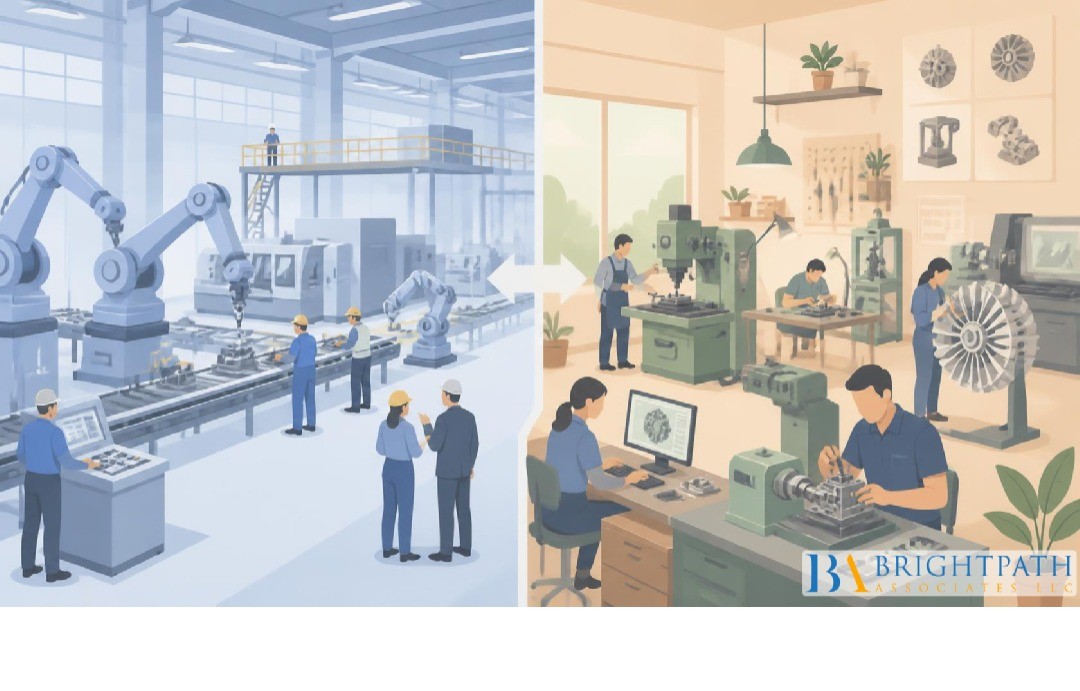
The U.S. machinery industry is entering a period where traditional growth strategies are being challenged by two competing forces: market consolidation and niche specialization. Larger manufacturers are pursuing scale through acquisitions, expanded product portfolios, and broader geographic reach, while smaller companies are discovering that deep expertise in specialized markets can be equally powerful.
For CEOs, founders, and operations leaders of small to mid-sized machinery companies, this creates an important strategic question: Is bigger necessarily better, or can specialization create a stronger competitive advantage?
The answer is becoming increasingly nuanced. In a machinery market shaped by automation, reshoring, technological innovation, supply-chain uncertainty, and changing customer expectations, both strategies can succeed. The determining factor is whether a company's leadership understands where its competitive advantage actually comes from.
Why Consolidation Is Gaining Momentum
Consolidation has become an increasingly attractive strategy across industrial manufacturing. Machinery companies can gain access to new customers, technologies, manufacturing capabilities, and distribution networks by acquiring complementary businesses.
Scale can also create purchasing advantages. Larger organizations may have greater negotiating power with suppliers, broader engineering resources, and more capacity to invest in advanced production technologies. For companies facing rising labor costs and increasing pressure to improve manufacturing efficiency, these advantages can be significant.
Consolidation can also accelerate technological transformation. An acquiring company may be able to introduce automation, predictive maintenance, data analytics, or digitally connected production systems across a newly acquired operation. Instead of developing every capability internally, companies can acquire expertise that already exists.
However, consolidation comes with its own risks. Integrating different corporate cultures, technologies, processes, and leadership teams can be considerably more difficult than completing the transaction itself. If executives focus exclusively on financial synergies while overlooking people and operational compatibility, expected benefits may never fully materialize.
The Case for Niche Specialization
While consolidation offers scale, specialization offers something equally valuable: depth. A machinery manufacturer that focuses on a narrowly defined customer segment can develop highly specialized engineering knowledge, product expertise, and service capabilities. Over time, this expertise can become difficult for larger competitors to replicate.
Consider a manufacturer serving a specific application within aerospace, medical manufacturing, food processing, energy, or precision machining. Rather than competing on product breadth, a specialized machinery company can compete on reliability, technical knowledge, customization, responsiveness, and customer relationships.
This approach can be particularly attractive for small and mid-sized businesses. Instead of attempting to match the capital resources of large industrial groups, they can establish leadership within carefully selected market segments.
Specialization also creates opportunities for innovation. A focused company often has a closer understanding of its customers' operational problems. That proximity can help engineers and product leaders identify opportunities for customized machinery, automation solutions, maintenance improvements, or entirely new product concepts.
Technology Is Changing the Meaning of Scale
One reason the consolidation-versus-specialization debate has become more complicated is the rapid evolution of industrial technology.
Historically, larger manufacturers often possessed a clear advantage because they could afford sophisticated equipment, engineering teams, research capabilities, and information systems. Today, digital technologies are making some of these capabilities more accessible to smaller organizations.
Cloud-based systems, industrial automation, connected machinery, advanced analytics, digital manufacturing platforms, and increasingly intelligent production equipment allow smaller manufacturers to improve productivity without necessarily matching the physical scale of a large corporation.
A smaller machinery company may not have hundreds of engineers, but it can use technology to amplify the capabilities of a highly skilled engineering team. Likewise, a specialized manufacturer can use automation to increase production capacity while preserving the flexibility that differentiates it from larger competitors.
Leadership May Determine Which Strategy Wins
An acquisition strategy requires executives who can evaluate businesses strategically, integrate operations, retain key employees, manage cultural differences, and identify genuine synergies. A specialization strategy requires leaders capable of identifying profitable niches, understanding customer needs, investing selectively in technology, and developing deep technical expertise.
The executive talent required for these strategies is increasingly sophisticated. Machinery companies need leaders who understand manufacturing operations while also being comfortable with digital transformation, supply-chain strategy, financial management, workforce development, and innovation.
For organizations competing for this talent, the challenge is particularly significant. Experienced machinery executives are not easily replaced, and smaller manufacturers may not have the internal succession pipelines available to larger corporations.
Companies evaluating their future growth strategy should therefore consider leadership planning at the same time as capital allocation and market strategy. Exploring specialized Machinery Industry can help organizations identify leadership capabilities aligned with their long-term direction.
The Real Competitive Advantage: Strategic Clarity
The future of the U.S. machinery sector will not be determined by consolidation alone, nor will every specialized manufacturer automatically succeed. Companies will win by understanding their customers, choosing their markets carefully, investing in the right technologies, and developing leadership teams capable of executing their strategy.
The broader question of market consolidation versus niche specialization in the U.S. machinery sector is therefore ultimately a question of strategic fit. For CEOs and founders, now is the time to examine where their organization can create the greatest value. Should the business pursue acquisitions? Deepen its expertise in a specialized market? Invest aggressively in automation? Expand its product portfolio? Or combine several approaches?
What strategy do you believe will create the strongest competitive advantage for small and mid-sized machinery manufacturers over the next five years—greater scale or deeper specialization? Share your perspective and join the conversation.
