Future of Food Security: Why Agribusiness Needs Decentralized Supply Chain
Author : Alex Turner | Published On : 02 Oct 2026
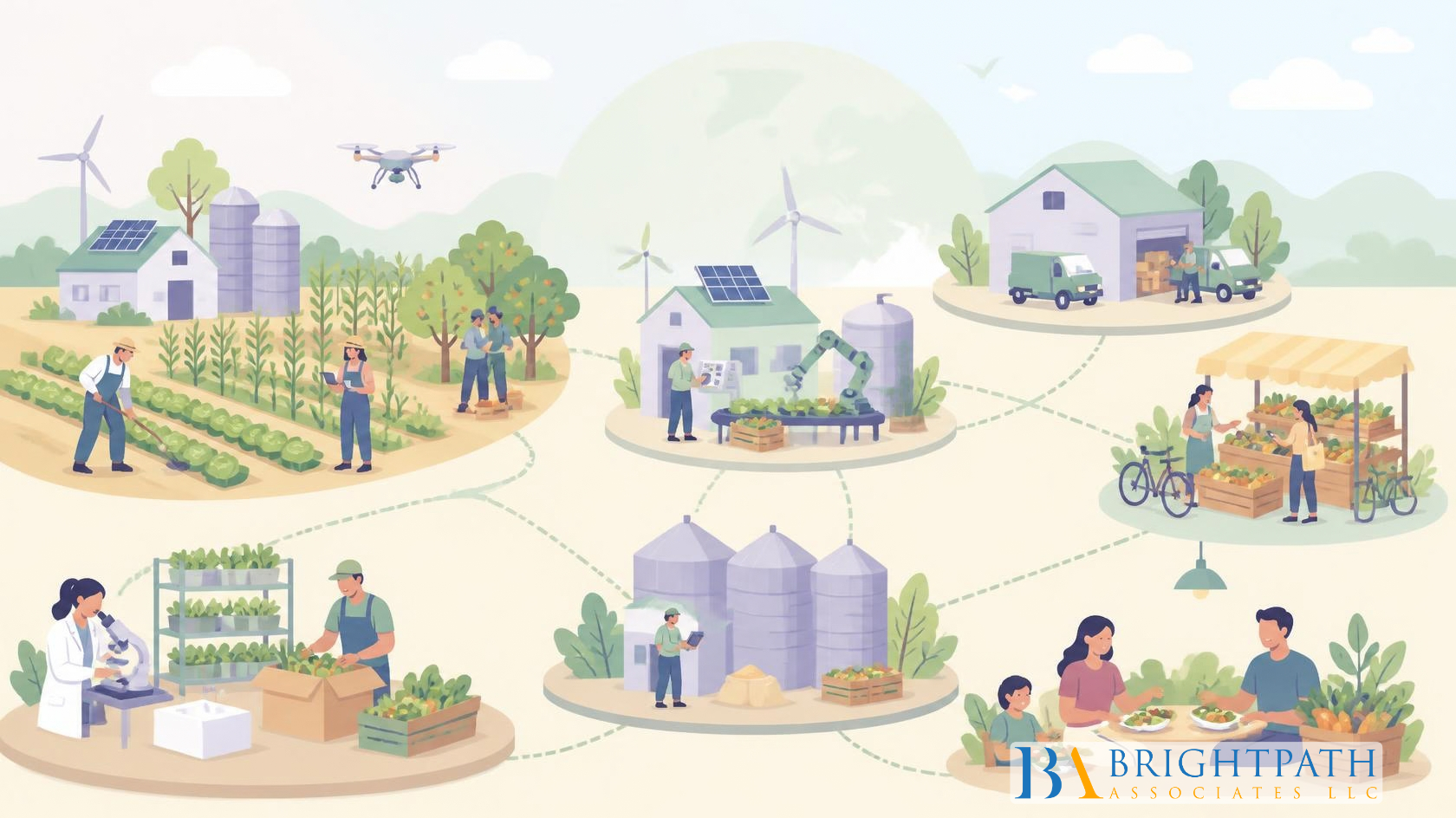
Food security is no longer simply a question of how much food the agricultural sector can produce. For agribusiness leaders, an equally important question is whether food can continue moving from farms to processors, distributors, retailers, and consumers when unexpected disruptions occur.
Extreme weather, labor constraints, transportation interruptions, changing consumer demand, rising input costs, and infrastructure challenges are forcing agricultural businesses to reconsider how their supply networks are designed. One strategy receiving increasing attention is decentralization: building supply chains that rely on multiple interconnected production, processing, storage, and distribution locations rather than concentrating critical activities in a small number of hubs.
This does not mean abandoning large-scale agriculture or economies of scale. Instead, it represents a shift toward creating agricultural networks that can combine efficiency with flexibility.
The Vulnerability of Highly Concentrated Supply Chains
Centralized supply chains have historically offered significant advantages. Large processing facilities can achieve economies of scale, centralized purchasing can reduce costs, and consolidated distribution can simplify logistics.
A drought in an important growing region, flooding near a processing facility, a transportation bottleneck, or an unexpected labor shortage can affect multiple stages of the food supply chain simultaneously. When companies depend heavily on a single geographic region or facility, disruption in one location can quickly become a broader operational problem.
For small and mid-sized agribusinesses, this risk can be particularly significant. They may have fewer alternative suppliers, less inventory capacity, and limited resources for absorbing prolonged interruptions.
Decentralization Creates Strategic Flexibility
A decentralized supply chain distributes production and logistics capabilities across multiple locations. Instead of sourcing a critical commodity exclusively from one region, an agribusiness may develop relationships with producers in several geographic areas.
Regional processing and storage can add another layer of resilience. Perishable agricultural products, for example, may benefit from being processed closer to production areas rather than transported long distances before entering the next stage of the supply chain.
The objective is not simply to build more facilities. It is to design a network in which different locations complement one another. A company might retain a large centralized processing facility for high-volume production while establishing smaller regional facilities that provide flexibility during periods of disruption. This hybrid model can preserve some of the efficiency associated with centralized operations while creating additional options when market or environmental conditions change.
Technology Is Making Distributed Agriculture More Connected
Connected sensors, satellite imagery, artificial intelligence, farm-management platforms, cloud systems, automation, and predictive analytics can provide visibility across geographically dispersed operations. These technologies allow executives and operations teams to understand what is being produced, where it is located, when it may become available, and what resources will be required to move it.
Precision agriculture can contribute at the farm level by helping producers optimize irrigation, fertilizer application, crop protection, equipment utilization, and other inputs. When similar capabilities are deployed across multiple production locations, businesses can develop a more detailed understanding of their overall supply network.
The bigger opportunity comes when farm-level information is connected with procurement, inventory, logistics, and market-demand data. Instead of discovering a shortage after it occurs, an agribusiness may be able to identify early warning signals and adjust sourcing or transportation plans before the disruption becomes critical.
The Leadership Challenge Behind Supply-Chain Transformation
A decentralized agricultural network requires leaders who can coordinate multiple operational functions while understanding the complexities of farming. Procurement, logistics, technology, sustainability, finance, production, and commercial strategy can no longer operate as completely isolated functions.
For businesses seeking specialized agricultural leadership, BrightPath Associates provides Farming Industry executive recruitment solutions covering areas such as farm operations, agronomy, supply chain and procurement, agricultural technology, food safety, sustainability, finance, and agricultural marketing. The firm's farming-industry practice is designed around the changing requirements of modern agricultural organizations.
For a deeper discussion of how geographic diversification, digital farming, regional processing, precision agriculture, and hybrid networks can influence long-term food-system resilience, explore BrightPath Associates' analysis, Future of Food Security: Why Agribusiness Needs Decentralized Supply Chain.
The Next Chapter of Agribusiness Resilience
Food security will increasingly depend on more than agricultural productivity. It will also depend on the ability of businesses to anticipate disruption, adapt sourcing strategies, maintain operational continuity, and coordinate increasingly complex networks.
Decentralized and hybrid supply chains offer one potential path forward. Combined with precision agriculture, digital connectivity, automation, regional infrastructure, and capable leadership, they can help agribusinesses build networks designed not only for efficiency but also for adaptability.
What does resilience look like in your agricultural supply chain today? Are you considering regional sourcing, distributed processing, or a hybrid operating model? Share your perspective in the comments—and start a conversation about what the next generation of resilient agribusiness could look like.
