Future of Dairy Workforce Policy: Lobbying and Adapting to Labor Scarcity
Author : Alyssa Miller | Published On : 22 Sep 2026
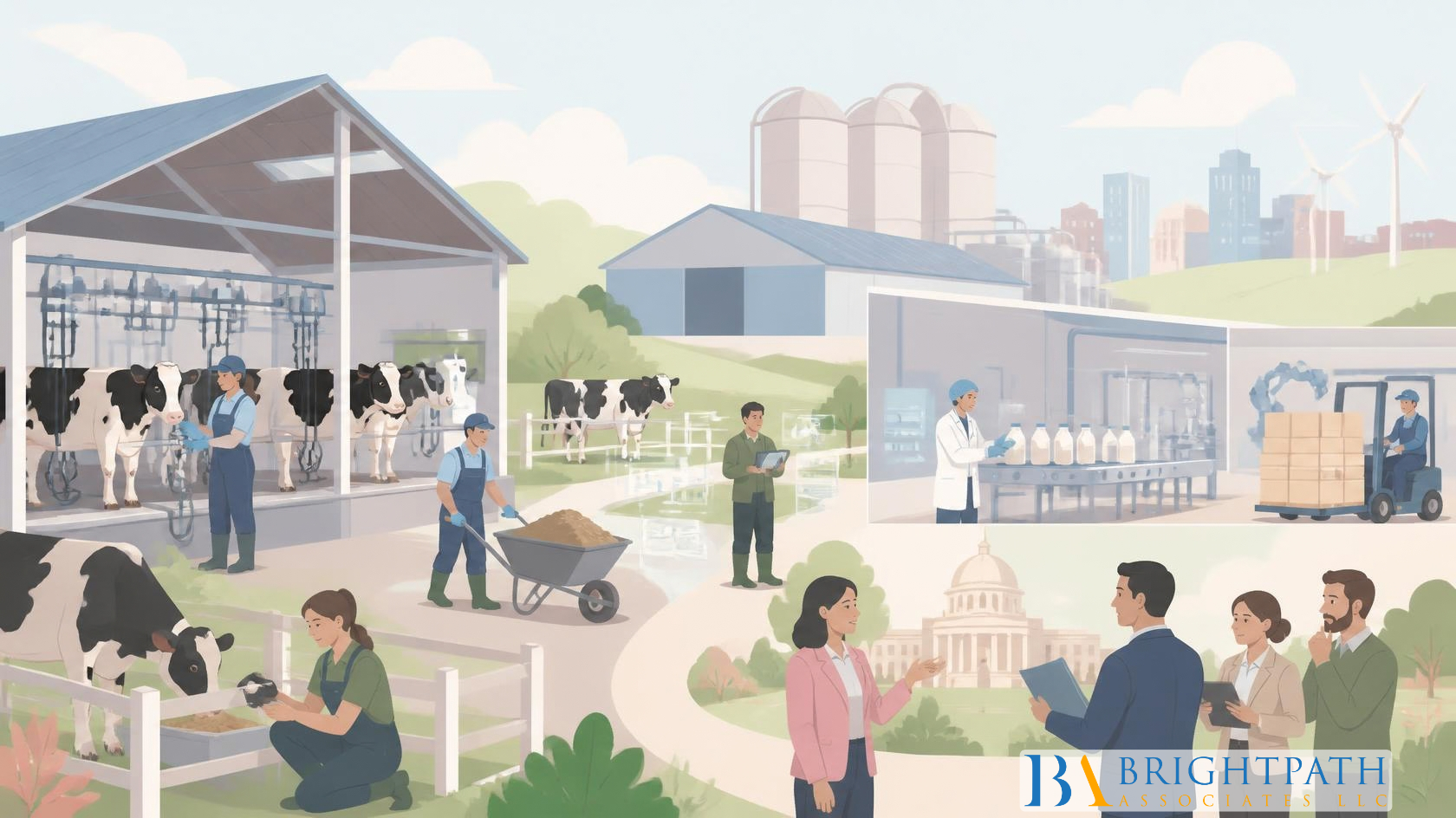
The U.S. dairy industry is producing more milk while operating with fewer farms, larger herds, and increasingly sophisticated technology. Behind this transformation lies a challenge that cannot be solved by equipment alone: Who will operate, manage, maintain, and lead the dairy businesses of the future?
Labor scarcity has become more than a hiring problem for dairy companies. It is increasingly connected to production continuity, technology adoption, operating costs, employee retention, immigration policy, and long-term business planning.
USDA Economic Research Service data illustrates the structural shift underway. U.S. milk production increased from 170.8 billion pounds in 2004 to 225.9 billion pounds in 2024, while the number of licensed dairy herds fell substantially. At the same time, larger operations have increasingly adopted computerized feeding, milking systems, and other advanced technologies.
For small and mid-sized dairy businesses, this creates an important strategic question: Can the industry continue expanding productivity without simultaneously redesigning how it attracts, develops, and retains its workforce?
Labor Scarcity Is Becoming a Structural Issue
Dairy operations require people at virtually every stage of the production cycle. Herd management, animal health, milking, feed management, equipment maintenance, quality control, processing, logistics, sales, and administration all depend on skilled workers.
Unlike some agricultural activities, dairy production is generally a year-round operation. Cows require consistent care regardless of season, meaning labor gaps cannot always be addressed through short-term seasonal hiring.
USDA notes that most livestock producers, including dairies, are generally not eligible to use the H-2A temporary agricultural worker program for their year-round labor needs. This distinction is important because it limits one potential labor pathway available to some other agricultural operations.
Policy Has Become Part of Workforce Strategy
Labor availability in dairy is influenced by more than local recruiting conditions. Immigration policy, employment regulations, wage requirements, housing considerations, workplace standards, and agricultural policy can all affect the industry's ability to maintain a reliable workforce.
This makes policy awareness increasingly relevant for dairy executives. Dairy leaders do not necessarily need to become policy specialists, but they do need to understand how policy developments could affect labor availability, operating costs, workforce planning, and investment decisions.
Industry associations and producer organizations can also play a role in communicating workforce challenges to policymakers and supporting constructive discussion around agricultural labor. The objective should be practical: ensuring that policymakers understand the operational realities of businesses that require skilled, dependable labor throughout the year.
Technology Is Changing the Definition of a Dairy Worker
Automation is becoming an increasingly important component of the workforce equation. Robotic milking, automated feeding, herd-monitoring systems, sensors, data platforms, and precision dairy technologies can reduce the amount of repetitive manual work required in some operations.
USDA research published in 2026 found that robotic milking adoption has increased, with midsized dairy farms showing particularly notable adoption rates. The research also found that the financial effect of robotic milking varies according to farm size and labor structure.
Technology does not necessarily eliminate the need for employees. Instead, it changes the skills employees need. A dairy employee who once spent much of the day performing manual tasks may increasingly need to monitor automated systems, interpret data, identify equipment abnormalities, understand animal-health indicators, and coordinate maintenance.
Small and Mid-Sized Dairy Businesses Face a Unique Challenge
Large dairy operations may have greater financial capacity to invest in automation, dedicated HR functions, training programs, and specialized management. Smaller and mid-sized businesses may need to achieve similar workforce outcomes with fewer resources.
Rather than attempting to solve every workforce issue simultaneously, smaller organizations can identify the positions where vacancies would create the greatest operational risk. These might include herd managers, veterinarians, maintenance specialists, plant managers, quality leaders, automation professionals, operations executives, or supply-chain specialists.
A strong operations leader, for example, may improve productivity, employee retention, process discipline, technology adoption, and cost management simultaneously. As the Dairy Industry becomes increasingly technology-driven, the connection between workforce strategy and operational performance will become harder to ignore.
Building a More Resilient Dairy Workforce
The workforce challenge facing dairy is not the result of one issue. It is the interaction of labor availability, demographic changes, technology, economics, policy, and evolving skill requirements. USDA research shows that the U.S. agricultural workforce is aging in important segments, while the supply and composition of agricultural labor continue to evolve.
For dairy executives, the response therefore needs to be equally multidimensional. The industry can invest in technology while investing in people. It can participate in policy discussions while improving workplace practices. It can recruit externally while developing internal career pathways.
The broader workforce challenge is explored in Future of Dairy Workforce: Policy, Lobbying, and Adapting to Labor Scarcity, particularly the relationship between labor availability and the broader policy environment.
Is the Dairy Industry Ready for Its Next Workforce Era?
The dairy industry's future will depend not only on cows, facilities, equipment, and markets. It will also depend on people who can operate increasingly sophisticated production systems and lead businesses through continued structural change.
For small and mid-sized dairy companies, this creates an opportunity to treat workforce planning as a core business strategy rather than an HR activity.
BrightPath Associates LLC helps growing organizations identify executive and specialized talent for complex business environments. For dairy companies navigating labor scarcity and technological transformation, having the right leadership and workforce strategy can become an important part of building long-term resilience.
