Future is Now: Visionary Perspectives on the Forest Products Industry
Author : Kabir Pathan | Published On : 30 Jun 2026
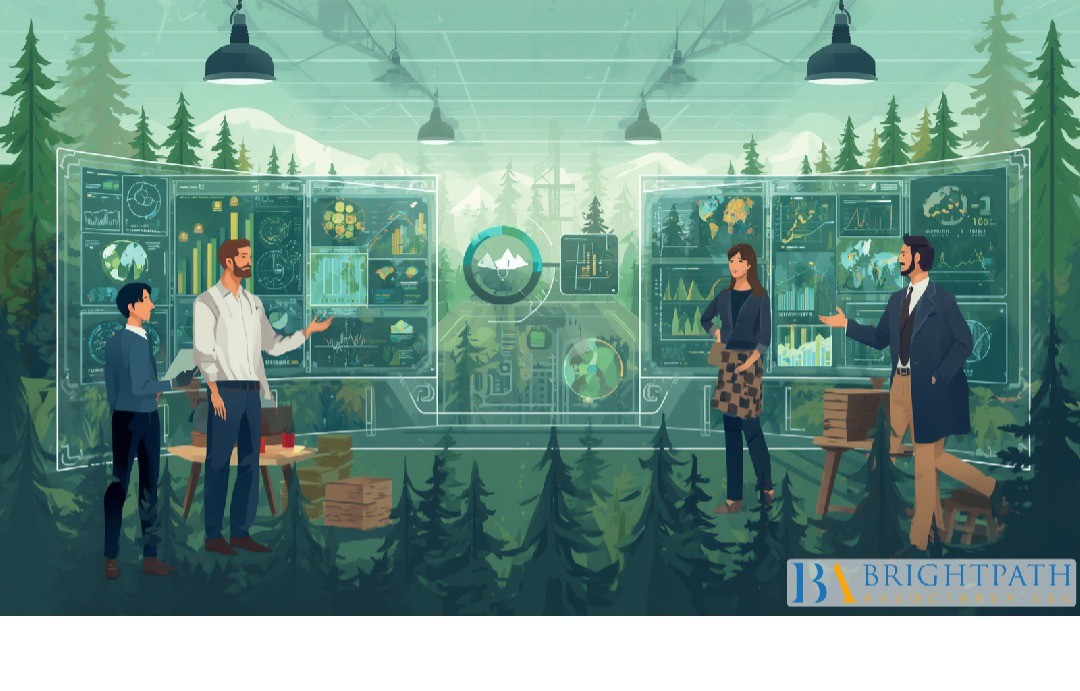
The Paper and Forest Products industry is entering a defining decade. Once viewed primarily as a traditional manufacturing sector, it is rapidly evolving into an innovation-driven industry where sustainability, digital transformation, and operational resilience determine long-term success. Global demand for renewable materials, environmentally responsible packaging, engineered wood products, and circular manufacturing practices is creating new opportunities for growth. At the same time, rising customer expectations, stricter environmental regulations, workforce shortages, and technological disruption are reshaping how companies compete. For small and mid-sized enterprises across the United States, the future will belong to organizations that embrace visionary leadership, invest in advanced technologies, and develop strategies capable of adapting to an increasingly dynamic marketplace.
One of the most significant forces driving industry transformation is sustainability. Governments, investors, and consumers are placing greater emphasis on responsible forestry, carbon reduction, recyclable packaging, and environmentally conscious manufacturing. Rather than treating sustainability as a compliance requirement, leading organizations are integrating it into their core business strategies. Sustainable forest management, responsible sourcing, fiber recovery, and energy-efficient production are becoming essential components of competitive advantage. Companies that align profitability with environmental stewardship are strengthening customer trust while positioning themselves for long-term growth in markets increasingly focused on sustainable products. Industry analysts expect growth to concentrate around low-carbon construction, fiber-based packaging, and circular manufacturing supported by verified sustainability practices.
Digital transformation is equally reshaping the future of paper and forest products manufacturing. Artificial intelligence, Industrial Internet of Things (IIoT), predictive analytics, robotics, digital twins, and cloud-based manufacturing platforms are enabling organizations to optimize production, improve product quality, reduce waste, and enhance operational visibility. Modern mills can now monitor equipment performance in real time, predict maintenance requirements before failures occur, and optimize energy consumption across production lines. These technologies allow manufacturers to improve efficiency while responding more quickly to changing customer demands. Organizations that embrace digital innovation today are building the operational agility required to remain competitive in tomorrow's marketplace.
The future also demands greater supply chain resilience. Recent disruptions have demonstrated how vulnerable global manufacturing operations can become when sourcing, transportation, or inventory management challenges arise unexpectedly. Paper and forest products companies are responding by diversifying supplier networks, strengthening regional partnerships, implementing advanced planning systems, and improving end-to-end supply chain visibility. Data-driven forecasting and integrated logistics platforms enable organizations to make faster decisions while minimizing operational risks. Building resilient supply chains not only improves business continuity but also enhances customer satisfaction by ensuring reliable product availability even during periods of uncertainty.
Organizations operating within the Paper & Forest Products Industry are increasingly recognizing that innovation extends far beyond technology investments. The industry's future depends on leaders who can successfully integrate sustainability, automation, workforce development, customer expectations, and financial performance into a unified strategic vision. Executive leadership has become one of the most valuable competitive advantages, enabling organizations to navigate market uncertainty while identifying emerging opportunities for expansion. Companies that prioritize leadership development alongside operational excellence are often better positioned to outperform competitors in rapidly evolving markets.
Innovation in product development is creating additional opportunities across the sector. Growing demand for biodegradable packaging, engineered timber, specialty papers, fiber-based composites, and renewable construction materials is encouraging manufacturers to expand beyond traditional product portfolios. Research and development efforts are increasingly focused on enhancing product performance while reducing environmental impact. New materials and production techniques enable companies to serve industries ranging from construction and consumer packaging to healthcare and advanced manufacturing. Organizations willing to invest in product innovation are discovering new revenue streams while strengthening their market differentiation.
Workforce transformation is another defining trend shaping the industry's future. As experienced professionals retire and manufacturing technologies become increasingly sophisticated, organizations require employees with expertise in automation, engineering, sustainability, digital analytics, and advanced manufacturing systems. Attracting, developing, and retaining highly skilled professionals has become a strategic priority. Forward-thinking companies are investing in leadership development programs, technical training, succession planning, and collaborative workplace cultures that encourage continuous learning. Building a future-ready workforce ensures organizations possess the capabilities needed to adapt as technology and customer expectations continue evolving.
Environmental responsibility continues influencing investment decisions across the industry. Companies are implementing renewable energy systems, water conservation initiatives, waste reduction programs, carbon management strategies, and circular economy practices that improve both sustainability and financial performance. Customers increasingly favor organizations capable of demonstrating measurable environmental progress, while investors prioritize businesses with strong Environmental, Social, and Governance (ESG) performance. Visionary organizations understand that sustainability is not simply a corporate responsibility—it is a driver of innovation, profitability, and long-term shareholder value.
Technology is also strengthening transparency throughout the value chain. Digital traceability systems, advanced analytics, blockchain-enabled documentation, and intelligent monitoring solutions provide customers with greater visibility into sourcing, production, and distribution activities. Enhanced transparency supports regulatory compliance while strengthening trust among customers, suppliers, and investors. As global markets demand greater accountability, companies capable of providing accurate, real-time information will enjoy stronger competitive positioning.
Leadership will ultimately determine how effectively organizations capitalize on these emerging opportunities. Modern executives must possess expertise across operations, digital transformation, sustainability, finance, workforce management, and strategic planning. They must foster cultures that encourage innovation while maintaining operational discipline and regulatory compliance. Strong leadership enables organizations to navigate uncertainty with confidence, respond proactively to changing market conditions, and inspire employees to embrace continuous improvement. As the pace of industry transformation accelerates, executive talent capable of balancing innovation with operational excellence will become increasingly valuable.
Business leaders seeking additional insights into the industry's future can explore the original article on Visionary Perspectives on the Forest Products Industry, which examines how emerging technologies, sustainability initiatives, and strategic leadership are redefining long-term success across the sector.
The future of the Paper and Forest Products industry is already taking shape. Organizations that invest in innovation, digital transformation, sustainable operations, resilient supply chains, and exceptional leadership will be best positioned to thrive in an increasingly competitive global economy. Rather than reacting to change, successful companies will anticipate it, transforming challenges into opportunities for growth and differentiation. Visionary leadership, combined with strategic investment and operational excellence, will define the next generation of industry leaders.
