FUE Hair Transplant: Procedure, Recovery Timeline & Expected Results
Author : Dr. Haror's Wellness | Published On : 03 Aug 2026
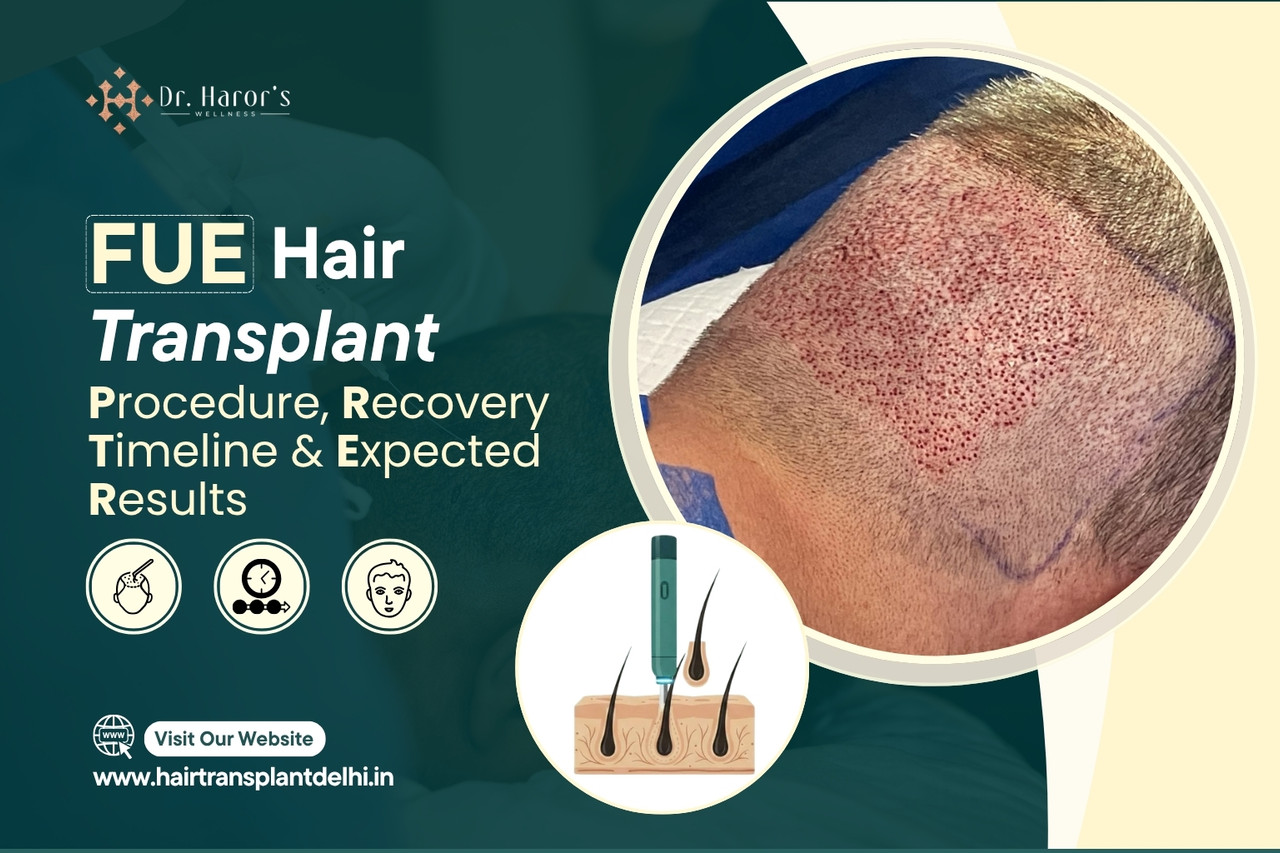
Pattern baldness has a way of becoming the thing you think about more than you'd like to admit. It changes how you look in photos, how you feel walking into a room, how much time you spend in front of a mirror trying to work with what's left. Most people try a few things before landing on the idea of a transplant — medications, topicals, various treatments — and eventually start researching what actually fixes it rather than just slowing it down.
FUE hair transplant keeps coming up for good reason. It's become the most widely used technique in hair restoration, and for people specifically looking at an FUE hair transplant in Delhi, the options are genuinely solid. Here's what the procedure actually involves, what to expect from it, and what recovery looks like in practice.
What FUE Actually Is
FUE stands for Follicular Unit Extraction. The idea is straightforward: individual hair follicles get extracted from a donor area — usually the back or sides of the scalp where hair tends to be more resistant to thinning — and moved into wherever the baldness or thinning is happening.
What makes it different from older methods is that extraction happens one follicle at a time rather than cutting away a strip of scalp. No strip means no linear scar running across the back of your head. Just small circular marks that fade and become nearly invisible over time. That's a big part of why FUE hair transplant has displaced older techniques as the default choice for most patients.
Why People Choose It Over Other Options
The results look natural- Each follicle gets placed individually, which means the surgeon controls the exact angle, direction, and depth of every single graft. Done properly, the hairline looks like it simply grew there — not like a row of plugs that was clearly put in.
Scarring is minimal- The extraction tool leaves tiny circular marks rather than a continuous incision. People who wear their hair short find this particularly relevant — there's nothing obvious to hide.
Success rates are high- With proper technique and graft handling, FUE hair transplant procedures typically achieve 90–95% graft survival. A lot of that comes down to how carefully grafts are stored between extraction and implantation — a preservation solution keeps them viable during that window.
Recovery is faster than people expect- No large incisions means the healing process moves quicker than with older strip methods. Most people are back to normal life within a week or two, with restrictions mainly around protecting the scalp from sun and avoiding anything that might dislodge newly placed grafts.
How the Procedure Actually Runs — Step by Step
The consultation comes first- Before anything else, your hair transplant surgeon looks at your hair loss pattern, evaluates the donor area, reviews your medical history, and figures out how many grafts are realistic and where they need to go. This is where the treatment plan gets built — and a good one is specific to your scalp, not generic.
Preparation on the day- The donor region gets trimmed down, and local anesthesia gets applied. The anesthesia is honestly the most uncomfortable part for most people — the extraction itself is generally fine once it kicks in.
Extraction- A specialized micro-punch tool pulls out follicles one at a time. They go straight into a preservation solution to keep them healthy until implantation. How carefully this step is handled matters enormously — grafts that get damaged during extraction don't survive regardless of how well everything else goes.
Creating recipient sites- Tiny incisions get made in the thinning or bald areas. This is where the angle and direction planning from the consultation actually gets executed — each incision is made to mirror how natural hair grows in that part of the scalp.
Implantation- Each follicle goes into its designated site using fine forceps or an implanter pen. Precision here is what separates results that look natural from results that look like work was done.
Recovery starts immediately- You'll leave with aftercare instructions and a scalp that looks a bit red and swollen — completely normal. Small scabs form around the treated area and fall off within a week or two.
What the Timeline Actually Looks Like
This is the part people find hardest — the waiting. Results from an FUE hair transplant in Delhi don't show up quickly, and knowing the timeline in advance makes it considerably less stressful: The shedding in the first couple of weeks catches people off guard if they haven't been warned. It looks like the transplant failed. It hasn't — it's just part of how the follicle settles and restarts its growth cycle.
Recovery — What to Actually Do
A few things that genuinely matter during healing:
Follow the hair-washing instructions your surgeon gives you. They're specific for a reason — the early days require a particular technique to protect grafts without leaving the scalp unwashed.
Don't touch, scratch, or rub the transplanted area. It's tempting when things start to itch during healing. Resist it.
Avoid smoking and alcohol during the healing period — both affect circulation and graft survival in ways that aren't worth risking.
Keep the scalp out of direct sun. A hat works, but ask your surgeon what they recommend for the first few weeks specifically.
Show up to follow-up appointments. This is where problems get caught early if anything isn't healing as expected.
Conclusion
An FUE hair transplant is as close to a permanent fix as hair restoration currently offers — and when it's done by someone who actually knows what they're doing, the results are natural enough that nobody can tell. The technique is well-established, the success rates are solid, and the recovery is manageable for most people. The main things that separate a good outcome from a disappointing one: the surgeon's experience, how carefully grafts are handled, and how closely aftercare gets followed. Dr. Haror's Wellness is a trusted name for FUE hair transplant in Delhi — qualified surgeons who handle the procedure personally, strict safety protocols throughout, and post-operative support that continues beyond the day of surgery. If you're seriously considering an FUE hair transplant and want to know what your specific case would involve, book a consultation and get a proper assessment rather than guessing from a general guide.
