From Reactive to Prescriptive: Optimizing Maintenance for Peak Output
Author : Jimmy Patel | Published On : 18 Sep 2026
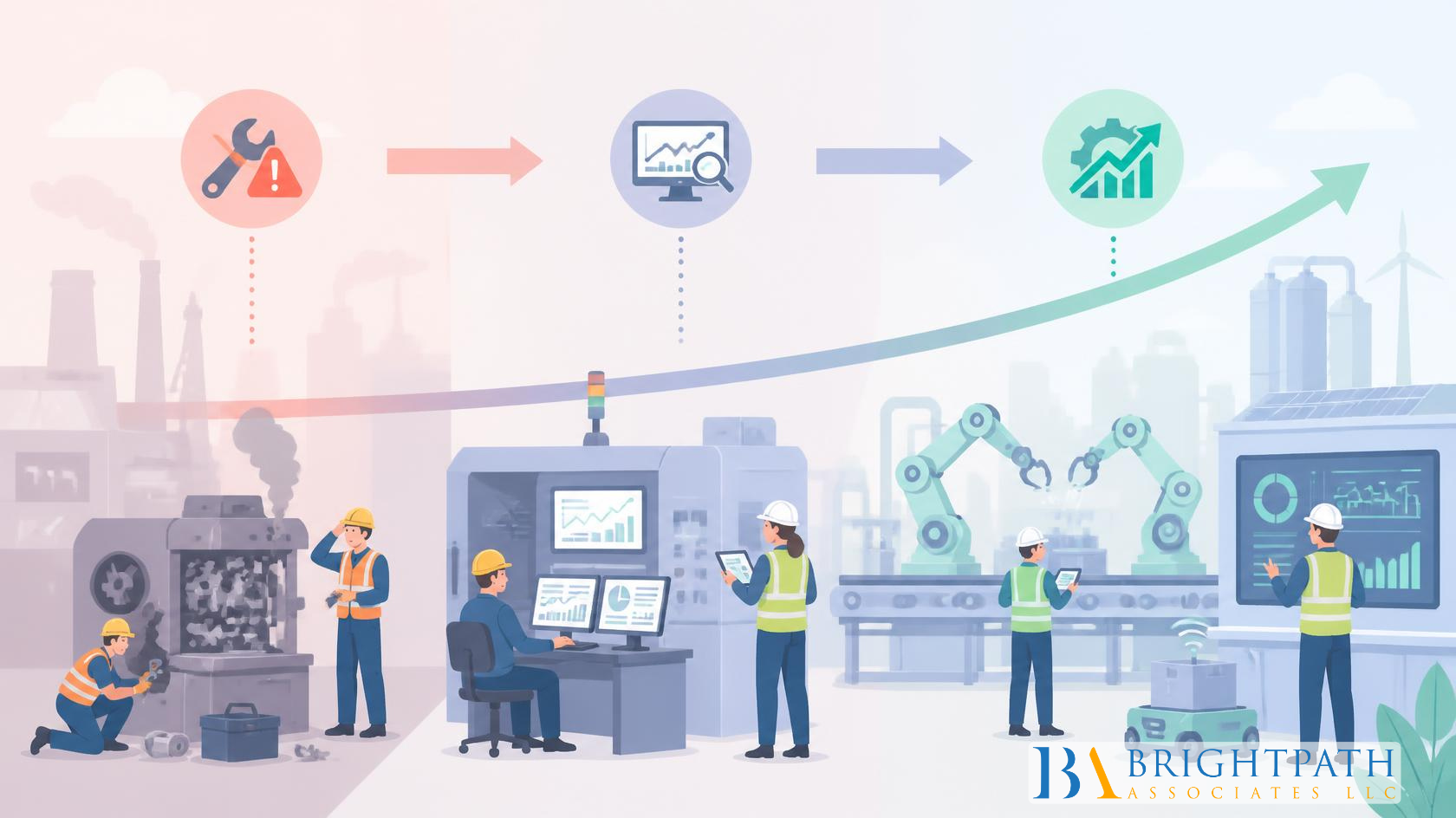
In an industrial environment, every minute of unexpected downtime can have consequences far beyond a repair bill. A failed motor can stop a production line. A damaged bearing can disrupt an entire process. A malfunctioning control system can create quality problems, delivery delays, and safety risks.
For decades, manufacturers have responded to these problems through reactive maintenance: fix the machine when it breaks. While this approach remains necessary in certain situations, it is becoming increasingly difficult to justify as industrial operations become more automated and interconnected.
The next stage is not simply predictive maintenance. It is prescriptive maintenance—using operational data, analytics, artificial intelligence, and engineering expertise to determine not only when an asset may fail, but what action should be taken and when.
The Limitations of Reactive Maintenance
Reactive maintenance is straightforward. Equipment operates until a failure occurs, after which technicians diagnose the problem and restore production. The difficulty is that industrial failures rarely occur at a convenient time.
An unexpected breakdown can interrupt production schedules, require emergency parts, create overtime expenses, and place pressure on maintenance teams. If a critical component is unavailable, the downtime can last even longer.
Reactive maintenance also makes planning difficult. Maintenance teams spend their time responding to immediate problems instead of systematically identifying patterns that could prevent future failures.
As industrial automation becomes more sophisticated, these limitations become more significant. A highly automated production line may contain interconnected PLCs, sensors, robotics, motors, drives, control systems, and machine-vision technologies. A failure in one component can affect multiple downstream processes.
Predictive Maintenance Changes the Question
Predictive maintenance introduces a different approach. Instead of waiting for a machine to fail, manufacturers monitor equipment condition and look for indicators that a failure may be developing.
Sensors can capture information such as temperature, vibration, pressure, current, speed, and other operational parameters. Historical data can then be analyzed to identify abnormal patterns. When these patterns are recognized early, maintenance teams may have an opportunity to intervene before the equipment reaches a critical failure state.
The value is not simply that maintenance becomes more technologically advanced. It becomes more predictable. Manufacturers can potentially schedule interventions during planned downtime rather than responding to emergencies. Spare parts can be ordered in advance. Technicians can prepare for specific repairs. Production schedules can be adjusted with greater visibility.
Industrial Automation Creates the Data Foundation
The transition toward prescriptive maintenance is closely connected to the broader evolution of industrial automation. The challenge is turning that data into usable information. This is where analytics and artificial intelligence can become increasingly valuable.
Modern factories increasingly generate large volumes of operational data through sensors, PLCs, SCADA systems, robotics, machine vision, and connected equipment. BrightPath's current Industrial Automation analysis describes how connected automation architectures can integrate operational data with analytics to support predictive maintenance and more responsive manufacturing environments.
A factory may have thousands of data points, but not every measurement is equally important. Organizations need systems that identify meaningful signals, establish appropriate thresholds, recognize patterns, and provide information to the people responsible for taking action.
The Future of Maintenance Is Decision Intelligence
The ultimate objective of prescriptive maintenance is not to create more alerts. Industrial organizations already have enough notifications, dashboards, and data streams. The objective is to create better decisions.
The progression can be understood simply: reactive maintenance asks what failed; preventive maintenance asks when maintenance should occur; predictive maintenance asks what is likely to fail; prescriptive maintenance asks what the organization should do next.
For manufacturers, the opportunity is to transform maintenance from a cost center focused primarily on repairs into a source of operational intelligence. For small and mid-sized companies, the journey does not need to happen overnight. It can begin with a critical machine, a reliable data source, and a clear business problem.
The important question is whether the organization has the technology, processes, and people required to make that transition successful. To explore the broader technology, leadership, and workforce challenges shaping modern manufacturing, visit BrightPath Associates' Industrial Automation Industry resource.
For a deeper look at the transition from conventional maintenance toward more advanced operational strategies, explore BrightPath Associates' original article, From Reactive to Prescriptive: Optimizing Maintenance for Peak Output.
BrightPath Associates LLC helps industrial automation organizations identify executive and specialized talent capable of leading technology transformation, reliability initiatives, and operational growth. If your organization is building its next generation of automation and maintenance capabilities, connecting the right leadership with the right technology may be the most important maintenance decision of all.
