From Manual to Automated: Phased Approach to Digital Transformation
Author : Alex Turner | Published On : 26 Aug 2026
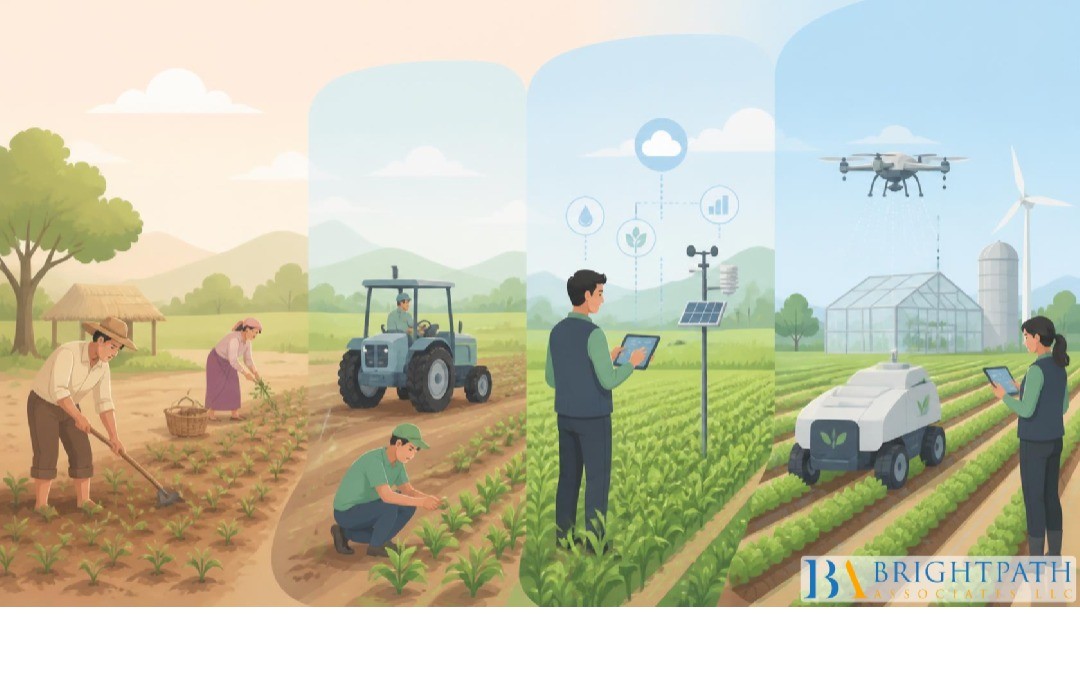
Agriculture is changing rapidly. Farming businesses are being asked to produce more efficiently, manage rising costs, respond to changing customer expectations, and operate with greater visibility across increasingly complex supply chains. At the same time, technologies such as automation, sensors, artificial intelligence, connected equipment, and farm-management platforms are becoming more accessible.
For businesses operating in the Farming Industry, the most practical approach may not be a sudden transition from manual operations to a fully automated farm. Instead, transformation can be approached as a phased journey—one that allows companies to identify priorities, test solutions, train employees, measure results, and gradually expand successful technologies.
Why Digital Transformation Matters in Modern Farming
Many agricultural businesses still depend on manual processes. Employees may record information on paper, communicate through phone calls or messages, manually inspect equipment, monitor fields through physical observation, or enter information into multiple systems.
These approaches can work when operations are small. But as a farm grows, manual processes can create information gaps. Important data may be recorded inconsistently. Decisions may depend heavily on individual experience. Managers may have limited visibility into what is happening across fields, equipment, livestock operations, inventory, or supply chains.
Digital transformation can address some of these challenges by connecting information and automating repetitive activities. The objective, however, should not be to automate everything. The objective should be to automate the right things.
Start With the Problem, Not the Technology
One of the most common mistakes businesses make during digital transformation is starting with technology. A company sees an impressive automation platform or artificial intelligence solution and immediately asks how it can implement it.
A better approach starts with a business problem. Where is the operation losing time? Where are errors occurring? Which processes require excessive manual effort? Where does management lack visibility? Which activities create unnecessary costs?
For example, if employees spend hours manually collecting equipment-performance information, connected sensors may provide an opportunity for automation. If irrigation decisions depend entirely on periodic field inspections, soil-moisture monitoring and automated irrigation systems may provide value.
Phase One: Digitize the Information
The first step toward automation is often digitization. Before a process can be automated effectively, the information supporting that process needs to be available in a usable digital format. This could include production records, equipment maintenance history, crop data, inventory information, weather observations, labor records, and financial information.
Digitization can create a single source of information that managers can access more easily. It can also reduce dependence on spreadsheets, paper records, and disconnected systems. For smaller farms, this phase may appear less exciting than robotics or artificial intelligence, but it can provide the foundation for everything that comes later.
Phase Two: Connect the Operation
Once information is digitized, the next opportunity is connectivity. Modern agricultural operations can generate data from tractors, harvesters, irrigation systems, weather stations, soil sensors, storage facilities, and other equipment.
Connecting these sources can provide a more comprehensive view of the operation. Instead of looking at equipment information separately from field information, managers can begin examining relationships between them.
For instance, equipment utilization data might reveal that certain machines are consistently underused while others become bottlenecks during critical periods. That insight can support better scheduling, maintenance, and capital-investment decisions.
Phase Three: Automate Repetitive Tasks
Once processes and data are organized, businesses can begin introducing automation. It may involve automated irrigation, robotic equipment, GPS-guided machinery, automated inventory tracking, digital workflow systems, or software that automatically generates reports.
The best candidates for automation are often repetitive, predictable tasks that consume significant employee time. Automating such activities allows employees to spend more time on work requiring judgment, problem-solving, relationship management, and technical expertise. This is particularly important in an industry where skilled labor can be difficult to find.
Phase Four: Use Data to Improve Decisions
Automation generates data. But collecting data is not the same as using it effectively. The next stage of transformation is turning information into actionable insight. Farm managers can use data to identify patterns in production, equipment performance, resource consumption, labor efficiency, and operating costs.
Over time, this can support more informed decisions. Instead of asking what happened last season, management can increasingly ask what current data suggests may happen next. That is where agriculture begins moving from simple digitization toward predictive decision-making.
Leadership Makes Digital Transformation Sustainable
Digital transformation is ultimately a leadership challenge. Executives need to establish priorities, allocate resources, evaluate results, and ensure that technology investments support broader business objectives.
The goal should not be to create a farm filled with disconnected digital tools. The goal is to build an operation where technology helps people make better decisions, use resources more efficiently, and respond more quickly to changing conditions.
For a deeper look at how agricultural businesses can move progressively from manual processes toward automation, explore From Manual to Automated to Digital Transformation.
As agricultural businesses adopt increasingly sophisticated technologies, the need for leaders and specialized professionals who understand both farming operations and digital transformation will continue to grow. If your organization is preparing for its next stage of growth and needs experienced operational, technical, or executive talent, connect with BrightPath Associates LLC to discuss your hiring requirements.
