From Gadgets to Ecosystems: Building an Integrated Dairy 4.0 Infrastructure
Author : Alyssa Miller | Published On : 21 Sep 2026
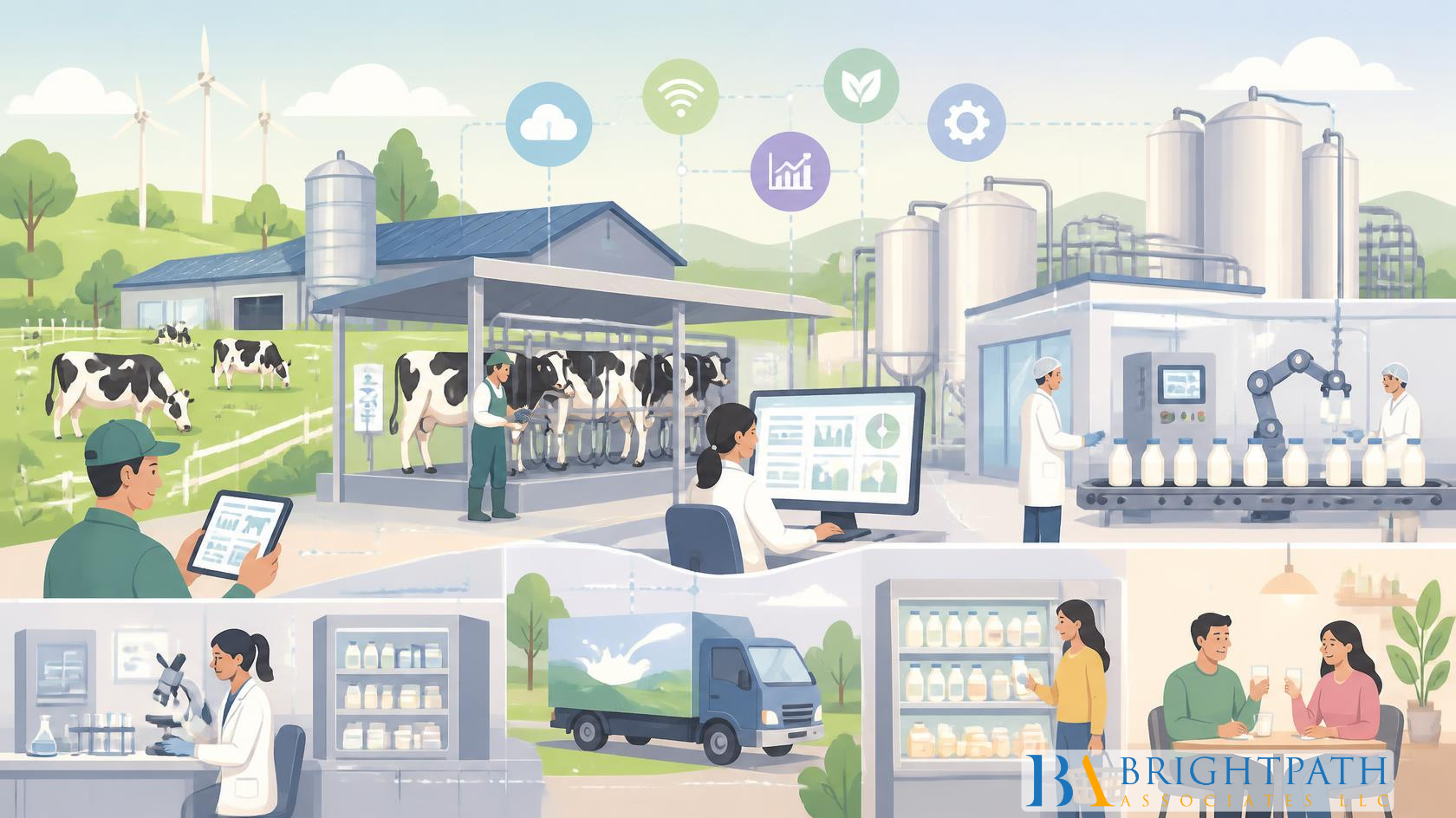
The dairy industry has never lacked technology. Farms use automated feeding systems, processors operate sophisticated production equipment, laboratories rely on advanced testing, and supply chains increasingly use digital tracking. Yet having more technology does not automatically create a smarter dairy business.
Dairy 4.0 represents a shift from isolated digital tools toward an integrated ecosystem in which sensors, automation, artificial intelligence, data analytics, processing systems, logistics, and human expertise work together. Recent research describes Dairy 4.0 as an end-to-end digital transformation extending across production, collection, processing, logistics, and distribution.
For small and mid-sized dairy businesses, this distinction matters. The question is no longer simply which technology should be purchased. The more strategic question is how different technologies can communicate, share information, and support better business decisions.
Why Dairy 4.0 Is About Ecosystems, Not Gadgets
A dairy operation can invest in an individual smart sensor and still remain largely disconnected. Another facility may deploy automation equipment but continue relying on spreadsheets and manual communication for planning.
An integrated Dairy 4.0 ecosystem connects individual technologies to a broader operational architecture. Data generated during milk production can potentially influence quality management. Processing information can support predictive maintenance. Supply-chain data can improve traceability. Production information can help management understand efficiency and resource consumption.
The objective is to create a continuous information flow throughout the organization. This approach turns technology from a collection of individual tools into an operational network capable of supporting faster and more informed decisions.
Connecting the Farm With the Processing Plant
One of the most significant opportunities exists in connecting upstream and downstream activities. Milk quality and production conditions begin at the farm, but their implications continue through collection, transportation, processing, packaging, storage, and distribution.
IoT-enabled sensors and digital monitoring can generate information about environmental conditions, animal health, milk characteristics, equipment performance, and other operational variables. When this information is integrated appropriately, dairy organizations can move toward more proactive decision-making.
For example, quality-related information collected earlier in the supply chain can help processing teams prepare for potential variability rather than simply reacting after a problem appears.
The same principle applies to cold-chain management. Real-time information can provide greater visibility into transportation and storage conditions, helping organizations identify potential deviations earlier.
Data Integration Becomes the Foundation
A dairy company may have information coming from herd-management systems, laboratory testing, production equipment, inventory platforms, maintenance systems, enterprise software, logistics providers, and customer-facing systems.
If these platforms cannot communicate effectively, management may still have to make decisions using incomplete information. Interoperability therefore becomes one of the most important elements of Dairy 4.0.
Recent research highlights data integration, interoperability, legacy-system integration, and standardization as continuing barriers to broader Dairy 4.0 adoption. For growing dairy companies, this means digital transformation should not begin with technology procurement alone. It should begin with understanding how information currently moves through the organization and where critical gaps exist.
AI Can Turn Data Into Decisions
AI and machine learning can analyze large volumes of operational information to identify patterns that may not be obvious through manual observation. Applications can include quality monitoring, predictive maintenance, production optimization, animal-health monitoring, and resource management.
A 2026 review of AI-enabled dairy systems notes that the effectiveness of AI depends heavily on sensing infrastructure, data integration, model generalizability, interoperability, and workforce capability.
This is an important lesson for dairy executives. Installing an AI platform without reliable data, connected systems, and capable people can produce disappointing results. The strongest business case emerges when AI becomes part of an integrated decision-making architecture.
The Strategic Question for Dairy Leaders
Dairy 4.0 is moving beyond the era of individual gadgets. The emerging model is an interconnected ecosystem in which farms, processing facilities, equipment, sensors, software, logistics networks, data platforms, and people contribute to a continuous flow of information.
For dairy leaders, this creates an important strategic opportunity. Companies that successfully connect these elements can potentially improve visibility, responsiveness, quality, productivity, traceability, and resource efficiency.
That question may become increasingly important as Dairy 4.0 evolves from an emerging concept into a practical operating model. For a deeper exploration of how connected technologies can move dairy businesses from isolated tools toward integrated infrastructure, read From Gadgets to Ecosystems: Building an Integrated Dairy 4.0 Infrastructure.
As dairy organizations invest in automation, digital systems, advanced processing, and data-driven operations, the need for capable technical and executive leadership will continue to grow. Explore the opportunities and evolving workforce requirements across the Dairy Industry and consider how the right talent strategy can help turn Dairy 4.0 investments into sustainable business capabilities.
