From Customer Feedback to Better Business Relationships: The Role of Digital Review Cards
Author : thestarcompany Company | Published On : 23 Oct 2026
Why Customer Feedback Deserves Attention
A customer might enjoy a meal, appreciate the service at a salon, or leave a shop feeling completely satisfied. They may even tell the staff how much they enjoyed the experience. Yet, once they leave, the thought of writing an online review can easily slip their mind.
This is a common challenge for businesses that want to understand how customers perceive their services. Positive conversations are valuable, but online feedback gives other people an opportunity to learn about real customer experiences before choosing a business.
The difficulty is not always a lack of willingness to leave a review. Sometimes, customers simply do not know where to go, cannot find the correct review page, or do not want to spend time searching for it.
This is where a Google review card can make a practical difference. By providing a convenient route to a business's review page, digital review tools help reduce unnecessary steps in the feedback process. They do not guarantee that customers will leave reviews, but they can make the opportunity easier to access.
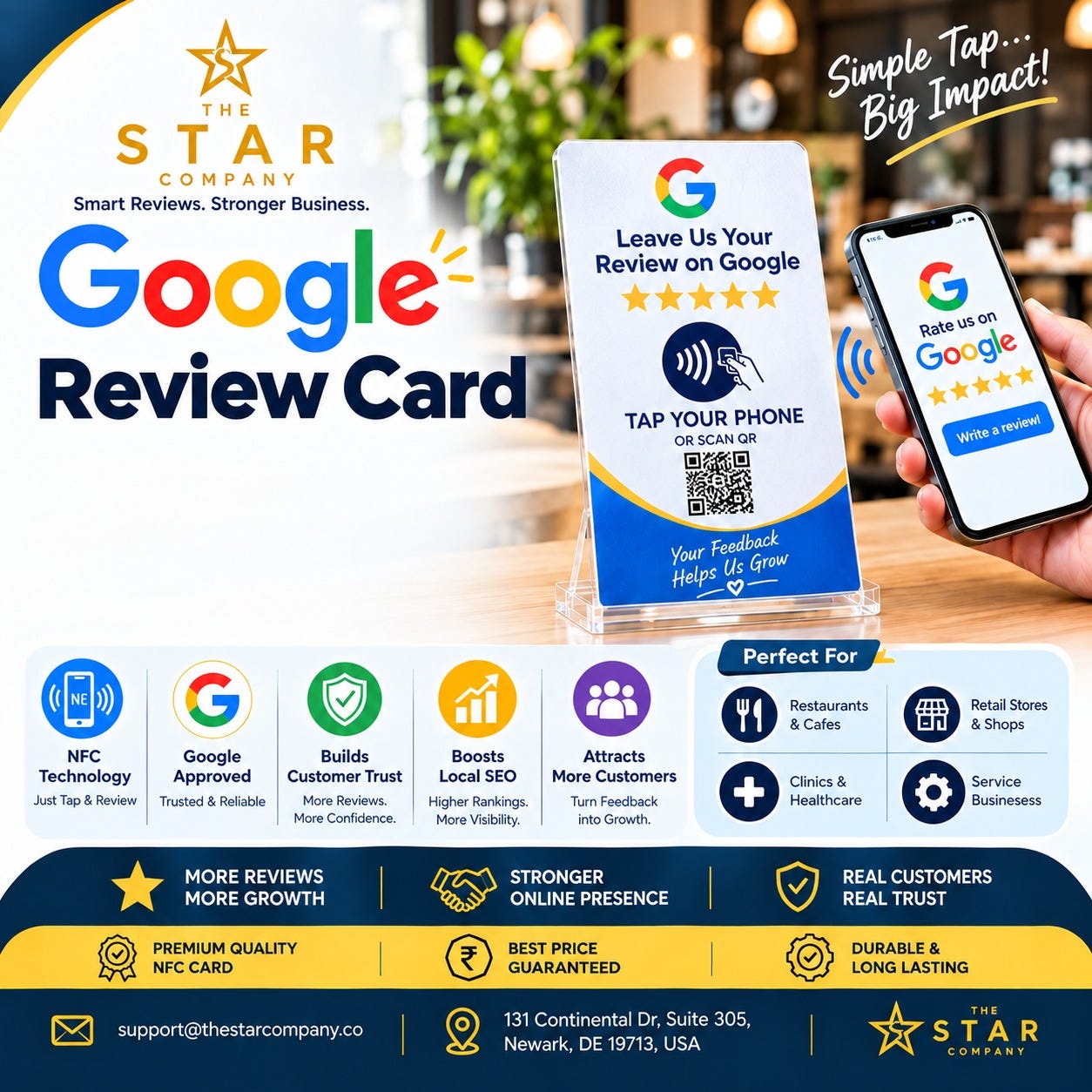
What Digital Review Cards Bring to the Customer Experience
Convenience matters when asking customers to share their experiences. If someone needs to search for a business online, identify the correct listing, and then locate the review section, they may decide to do it later. Often, later never comes.
A digital review card simplifies that journey by connecting customers with a configured online destination. Depending on the card's design, this connection may be available through an NFC tap, a QR code, or another supported method.
For businesses, this approach can make review requests easier to incorporate into everyday interactions. A shop assistant can point out a review card at checkout, while a restaurant can make one available near the payment counter.
Well-designed business review cards should support the customer experience rather than interrupt it. Their purpose is to make feedback accessible, not to pressure customers into participating.
The same principle applies to online review cards used by service providers, hospitality businesses, and independent professionals. A straightforward process respects customers' time while giving them a clear option to share their opinions.
Understanding NFC Review Technology
Near Field Communication, commonly known as NFC, is a short-range wireless technology that allows compatible devices to exchange information when brought close together.
Many people already encounter NFC when using contactless payment systems. NFC-enabled review cards use a similar principle to make a digital destination accessible through a simple interaction.
For example, a business may configure an NFC review card to direct customers to its Google review page. When a compatible smartphone interacts with the card, it may open the configured destination, depending on the phone's capabilities, settings, and browser behaviour.
The customer can then decide whether to read the page or submit a review.
Unlike a process that requires customers to type a web address manually, NFC can reduce the number of actions needed to reach the destination. However, it is important to remember that NFC compatibility varies, and some customers may prefer another way to access the same page.
This is why nfc review cards are best treated as one part of a flexible feedback system rather than the only method available.
Traditional Review Cards vs. NFC-Enabled Options
Printed cards, QR codes, and NFC-enabled products can all help customers find a business's review page. The right choice depends on the audience, environment, budget, and preferred customer experience.
Printed instructions
Traditional cards can display a short web address or instructions explaining how to find a review page. They are simple to understand but may require customers to perform several steps themselves.
QR-code-based cards
A QR code allows customers to scan a printed pattern with a compatible smartphone camera or scanning application. It can provide direct access to a review destination without requiring a physical tap.
QR codes can be particularly useful when customers are unfamiliar with NFC technology or prefer to see the destination before opening it.
NFC-enabled cards
NFC-enabled cards provide a tap-based option for compatible devices. For businesses that want to make review access quick and convenient, this can be a useful addition to the checkout or service process.
Some google review cards combine multiple access methods, although the available features depend on the specific product. Businesses should confirm what a particular card supports before purchasing it.
Offering both QR-code access and NFC functionality, where available, can accommodate different customer preferences. Clear instructions remain important regardless of the technology used.
How Different Businesses Can Use Review Cards
The usefulness of a review card becomes clearer when it is considered within the customer journey.
Restaurants and cafés
A restaurant could place a review card near the payment counter or make it available when customers settle their bills. Staff might politely mention that feedback is welcome without interrupting the dining experience.
Retail shops
Retailers can make a card accessible at checkout, allowing customers to find the business's review page after completing a purchase. The request should remain optional and should not delay the payment process.
Salons and personal care businesses
Salons often build relationships through repeat appointments and personal service. A receptionist can mention the option of leaving feedback when a customer finishes an appointment, giving them the choice to respond in their own time.
Hotels and hospitality providers
Hotels may provide review access at reception or include instructions in appropriate post-stay communications. Guests can share feedback about their experience without needing to search for the property online.
Professional service businesses
Consultants, repair services, fitness studios, and other professionals can introduce review cards after completing a service. The request should be relevant to the interaction and respectful of the customer's decision.
Across these settings, google review cards for business can provide a consistent way to make feedback accessible. However, the card itself cannot replace attentive service, reliable communication, or a genuine interest in customer satisfaction.
Making Review Requests Feel Natural Rather Than Pushy
The way a business asks for a review often matters as much as the tool it uses.
Customers generally appreciate being given a clear choice. They are less likely to feel comfortable when staff repeatedly request ratings or make the interaction seem like an obligation.
A natural request might be as simple as, "We welcome honest feedback about your experience. If you have a moment, you can share it using this card."
This wording explains the purpose without demanding a particular response.
Businesses should also avoid asking only customers who appear satisfied to leave public reviews while directing unhappy customers away from the same opportunity. Feedback processes work best when they allow customers to express their genuine experiences.
The goal of a google review nfc card or any other review tool should be to make honest feedback easier to provide, not to influence what customers say.
What to Consider Before Choosing a Review Card
Before selecting a review card, consider how it will be used and whether it fits the needs of the business.
- NFC compatibility: Confirm that the intended audience can use the card's tap-based functionality and understand how it works.
- QR-code availability: Consider whether a scannable code would provide a useful alternative for customers.
- Material and durability: A card used repeatedly at a checkout counter may need different materials from one kept at a reception desk.
- Design and instructions: Customers should understand what the card does and how to use it without needing lengthy explanations.
- Destination setup: Verify that the card opens the correct review page and that the destination is accessible on common devices.
- Updating the destination: Ask whether and how the destination can be changed if the business's review link changes.
The terms nfc google review card, google review nfc card, and nfc google review cards are often used to describe products designed to connect customers with a review destination through NFC. However, product features can differ, so businesses should check the specifications rather than assume every card works in the same way.
For businesses comparing available formats, The Star Company's Google review cards provide a relevant starting point for exploring options suited to a customer feedback process.
Common Mistakes That Can Undermine Customer Feedback
Even a convenient review card may be ineffective if it is poorly introduced or difficult to use.
One common mistake is placing the card somewhere customers rarely notice. A card hidden behind equipment or surrounded by unrelated materials may receive little attention.
Another problem is providing unclear instructions. Customers should understand whether they need to tap their phone, scan a QR code, or follow a printed link.
Businesses should also avoid pressuring customers to leave reviews. Repeated requests can make an otherwise positive interaction uncomfortable, while requests for specific ratings undermine the purpose of honest feedback.
Finally, collecting reviews without responding to them misses an important opportunity. A thoughtful response can acknowledge a customer's experience, clarify a concern, or show that the business takes feedback seriously.
A negative review should not automatically be treated as a problem to eliminate. It may reveal an issue that the business needs to investigate and resolve.
Building a More Thoughtful Feedback Process
A review card is only one component of a broader customer relationship strategy. Businesses still need to deliver dependable service, communicate clearly, and pay attention to what customers say.
A useful feedback process includes several practical habits:
- Make the review page easy to access.
- Ask for feedback at an appropriate moment.
- Give customers the freedom to decide whether to participate.
- Read reviews regularly and respond professionally.
- Look for recurring themes that may reveal opportunities for improvement.
- Use feedback to make meaningful changes to products, services, or communication.
A review card can support these habits by removing friction from the process. It cannot replace the work involved in understanding customers and improving their experiences.
Businesses should also ensure that their review requests comply with the applicable platform policies. For Google reviews, this means encouraging genuine experiences without offering incentives in exchange for reviews or attempting to manipulate ratings.
Conclusion
Strong customer relationships are built through everyday experiences, thoughtful communication, and a willingness to listen. Online feedback can help businesses understand those experiences, but customers need a convenient and comfortable way to share their opinions.
A review card, whether it uses printed instructions, a QR code, or NFC technology, can make that process more accessible. For businesses considering a google reviews card or other digital feedback tool, the priority should be ease of use, clear instructions, and respect for customer choice.
The most effective approach is not to chase reviews at every opportunity. It is to create experiences worth discussing and make it straightforward for customers to talk about them.
When supported by genuine service and a thoughtful response process, digital review tools can become a practical bridge between customer feedback and better business relationships.
