Fresh-to-Frozen Pivot: Logistics Lessons for Growing Brands
Author : Jimmy Patel | Published On : 21 Aug 2026
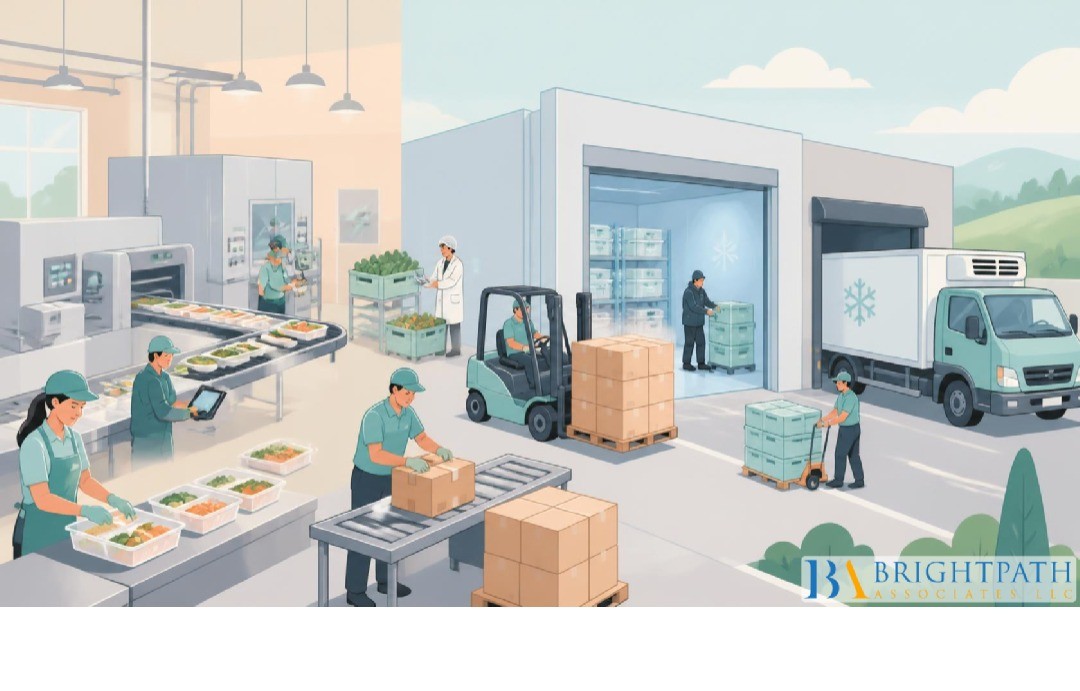
Moving a food product from fresh distribution to frozen can look like a straightforward growth strategy. Longer shelf life, broader geographic reach, reduced product losses, and access to new retail markets can make the frozen category attractive for growing brands. Yet the operational reality is considerably more complex.
A fresh-to-frozen transition changes almost every part of the supply chain. Production processes, packaging, cold storage, transportation, inventory management, quality control, and workforce requirements all need to evolve. For companies experiencing rapid growth, the transition can also expose weaknesses that were previously hidden by smaller production volumes.
The central lesson is that freezing a product is not simply a preservation decision. It is an opportunity—and a challenge—to redesign the entire operating system around scalability, visibility, and reliability.
Cold-Chain Reliability Becomes a Strategic Priority
Fresh products typically operate within a relatively narrow window between production and consumption. Frozen products provide additional flexibility, but they introduce strict temperature-control requirements across processing, storage, transportation, distribution, and retail.
A temperature problem at one point in the chain can compromise product quality and create financial losses. For a growing brand, that means cold-chain reliability must be designed into the operation rather than treated as an issue to solve after expansion begins.
Digital sensors and connected control systems can provide continuous visibility into temperature conditions. Instead of discovering a problem after a shipment arrives, operations teams can receive alerts when conditions move outside predetermined parameters.
This creates an important shift from reactive management toward preventive management. Historical temperature data can also reveal recurring problems, such as deviations during loading, unloading, transportation, or storage.
Automation Should Support Growth, Not Simply Add Technology
One of the most important lessons from the fresh-to-frozen transition is that automation should be connected to a company's growth strategy.
Production volumes that are manageable with manual processes can become difficult to control as demand increases. Repetitive activities such as filling, sealing, labeling, sorting, product movement, and packaging can create bottlenecks when production scales.
Automation can improve consistency and throughput while reducing unnecessary manual intervention. However, businesses should avoid selecting technology simply because it appears advanced.
The right solution depends on production volumes, product characteristics, changeover requirements, labor availability, facility design, and future expansion plans. Companies operating in the Industrial Automation Industry increasingly need to think about automation as an adaptable infrastructure rather than a collection of isolated machines.
PLC Systems Can Create a More Connected Production Environment
Programmable logic controllers are an important foundation for many automated manufacturing environments. During a fresh-to-frozen transition, PLCs can coordinate conveyors, packaging equipment, freezing processes, sensors, safety systems, and other machinery.
A properly configured PLC environment allows equipment to operate according to coordinated sequences. This can improve repeatability and reduce interruptions caused by disconnected processes. Professional PLC programming can also introduce interlocks and operating conditions that help prevent equipment from running when required parameters are not satisfied.
For growing businesses, the value extends beyond today's production line. A well-designed control architecture can provide a foundation for integrating additional machines and processes as production capacity expands. The key consideration is scalability. A system that works perfectly at today's volume may become a constraint when demand doubles.
Robotics Can Address Repetitive and Demanding Tasks
Frozen manufacturing environments can create physically demanding working conditions. Material handling, palletizing, case packing, sorting, and repetitive movement are examples of tasks where robotics can potentially improve productivity while reducing the physical burden on employees.
Robotics integration can also improve consistency in high-volume operations. Machines can perform repetitive tasks at predictable speeds, helping production teams maintain throughput during periods of increased demand.
However, frozen environments present specific engineering challenges. Low temperatures, moisture, sanitation requirements, cleaning procedures, and product variation must all be considered when selecting robotic equipment. The objective should therefore be to integrate robotics around the actual operating environment rather than treating automation as a generic solution.
SCADA Provides Visibility Across Complex Operations
As production systems become more sophisticated, managers need a clear view of what is happening across equipment and processes. SCADA systems can provide centralized visibility into equipment status, alarms, production conditions, and operational performance. This information can help managers identify recurring problems rather than responding to individual failures in isolation.
For example, if a freezing system repeatedly experiences interruptions, historical data can help engineers determine whether the problem relates to equipment performance, operating conditions, maintenance practices, or another factor. Instead of waiting for equipment to fail, organizations can use operational information to identify patterns and investigate potential problems earlier.
Building a Supply Chain That Can Grow With the Brand
The fresh-to-frozen transition offers an important lesson for growing companies: growth amplifies operational weaknesses. Manual inventory processes, informal transportation coordination, limited production visibility, and disconnected equipment may function adequately at a small scale. As volume increases, those same practices can become bottlenecks and sources of risk.
The solution is not necessarily to automate everything. It is to identify where automation, data, controls, robotics, and skilled talent can create the greatest operational value.
The ultimate goal is an integrated environment in which production, quality, warehousing, transportation, technology, and people work together. For a deeper look at the operational and technology lessons involved in making this transition, read Fresh-to-Frozen Pivot Logistics Lessons for Growing Brands.
