Freight Brokerage: Strategies for Growth and Efficiency
Author : Lori Spatt | Published On : 24 Feb 2026
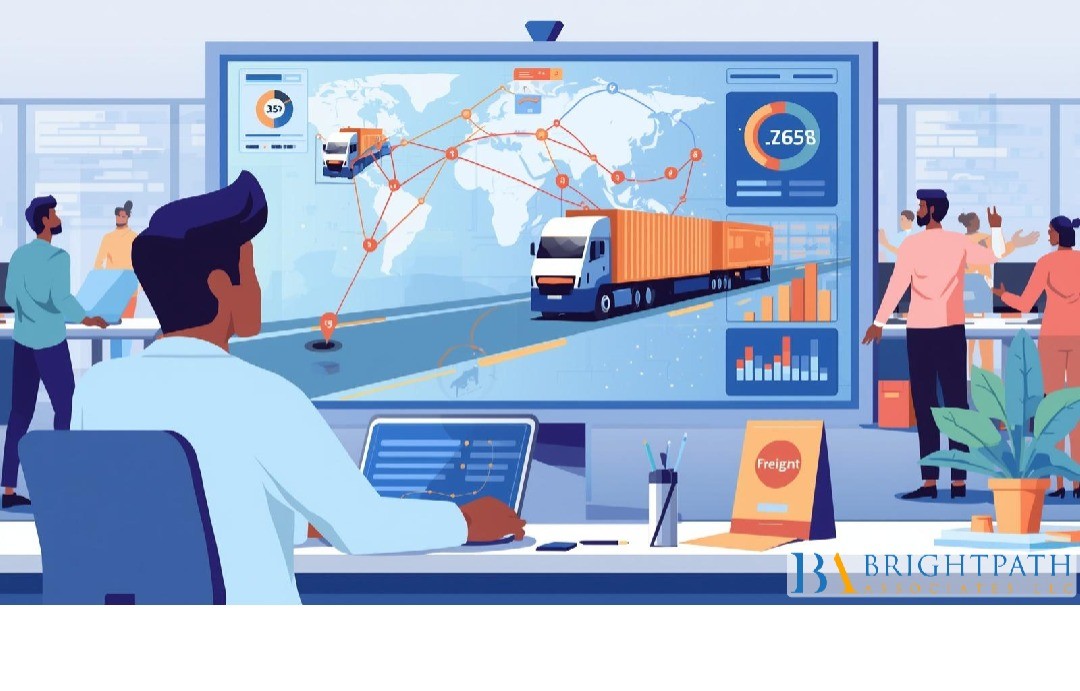
Freight brokerage has evolved far beyond transactional load matching. Today, it’s a critical strategic function that directly impacts operational efficiency, customer trust, and long-term profitability for companies within the broader Packaging and Freight Delivery industry. As competitive pressures intensify across U.S. supply chains — driven by e-commerce growth, driver shortages, capacity constraints, and rising customer expectations — freight brokers are uniquely positioned to deliver value not just through shipments, but through insight, reliability, and innovation.
To understand the industry dynamics shaping how freight brokerage delivers market advantage, explore our in-depth insights here: Packaging or Freight Delivery Industry. This article synthesizes strategic approaches drawn from industry best practices, research, and operational trends to help leaders steer their brokerage operations toward sustainable growth and efficiency.
Strategic Role of Freight Brokerage in Today’s Market
At its core, freight brokerage connects shippers — businesses that need goods transported — with carriers that have capacity. However, the most successful brokerages today do much more:
-
They provide market intelligence and capacity forecasting
-
They optimize shipment execution using technology and data analytics
-
They build scalable operations that adapt to volatile freight rates
-
They align service delivery with customer expectations for visibility and reliability
Freight brokerage has moved from being a reactive intermediary to becoming an indispensable orchestrator of efficient logistics — especially for companies seeking smarter, less asset-intensive transportation solutions.
Invest in Technology to Drive Operational Efficiency
One of the most consistent themes among top-performing brokerages is a commitment to technology adoption. Freight brokers that strategically integrate digital tools and automation tend to outperform competitors in speed, accuracy, visibility, and customer satisfaction. Key technology investments include:
-
Transportation Management Systems (TMS) – automates quoting, booking, carrier selection, routing, and tracking, reducing manual workloads and errors.
-
Customer Relationship Management (CRM) – centralizes shippers and carriers’ data, enhances communication, and helps nurture leads over time.
-
Business Intelligence & Analytics – turns freight data into insights that reveal profitable lanes, carrier performance trends, and pricing opportunities.
-
API Integrations – seamlessly connects with shipper systems to reduce friction and accelerate transaction cycles.
Technology, when properly deployed, becomes more than a tool — it becomes a force multiplier that enables leaner operations and more strategic decision-making.
Elevate Carrier Relationships for Competitive Advantage
At the heart of successful freight brokerage lies a resilient and loyal carrier network. The ability to source dependable carriers — especially during periods of tight capacity — directly influences a brokerage’s reputation and long-term value proposition. To strengthen carrier relationships, brokerage leaders should focus on:
-
Consistent communication and transparency, which builds trust and prioritization with carriers.
-
Fair payment terms (like quick-pay incentives) that enhance loyalty.
-
Performance tracking programs that identify reliable partners and nurture long-term collaboration.
Fostering these relationships leads to preferential rates, higher service reliability, and the ability to meet shipper demands even under challenging market conditions — ultimately boosting both top- and bottom-line results.
Diversify Services to Expand Revenue Streams
Freight brokerages that rely solely on a narrow set of services risk stagnation. Diversification, when done strategically, unlocks new revenue opportunities and strengthens resilience against market downturns. Consider expanding into:
-
Intermodal services (combining rail and truck) — appealing to shippers focused on cost and sustainability.
-
Less-Than-Truckload (LTL) brokerage — taps into high-volume, smaller shipment markets.
-
Managed transportation solutions — providing ongoing logistics oversight as a premium service.
-
Specialized freight handling (e.g., refrigerated or hazardous goods) — higher margin opportunities for brokers with expertise.
These strategic expansions not only diversify revenue but also deepen client relationships by offering more comprehensive supply chain solutions.
Build a Scalable, Skilled Team
Growth in freight brokerage is closely tied to the quality and scalability of your team. While technology and carrier networks matter, nothing replaces strategic human capital — especially in areas like sales, customer service, and operations management. Successful brokerages invest in:
-
Structured sales pipelines that consistently nurture and convert prospects.
-
Training and development programs that deepen market knowledge and negotiation prowess.
-
Leadership development to guide teams through market complexity and strategic decisions.
A scalable team structure — with clearly defined roles and growth pathways — enhances capacity without proportionally increasing costs, positioning your brokerage for sustainable expansion.
Conclusion: Turning Strategy into Competitive Edge
Freight brokerage strategy is no longer a checklist of operational tasks — it is a comprehensive framework that integrates technology, relationships, human capital, financial discipline, and customer experience.
For leaders in the Packaging & Freight Delivery industry, these strategic priorities define not just how you operate today but how you win tomorrow. If you’d like to explore the foundational concepts that inspired this strategic synthesis, revisit the original thought leadership here: Freight Brokerage Strategies for Growth and Efficiency.
