Financial Case for Investing in Carbon Sequestration Assets
Author : Kabir Pathan | Published On : 29 Sep 2026
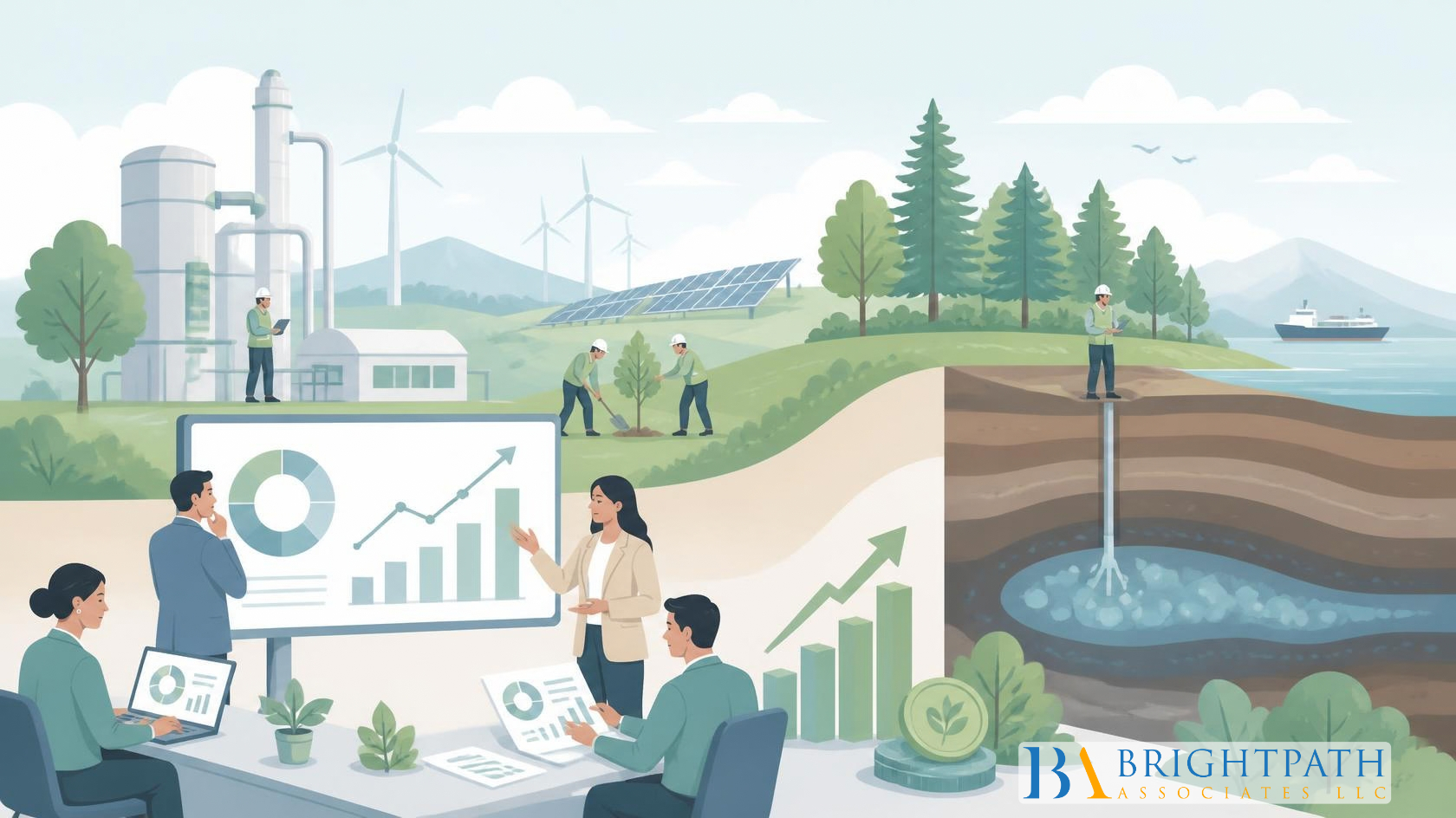
For decades, the economics of forestry have largely centered on timber, fiber, land productivity, and the manufacturing of products such as lumber, pulp, paper, packaging, and engineered wood. Today, another dimension is becoming increasingly relevant: the economic value of carbon sequestration.
Forests naturally absorb and store atmospheric carbon through trees, roots, soil, and organic matter. As businesses, investors, and industrial organizations place greater emphasis on sustainability and resource resilience, the ability of forest assets to store carbon is increasingly being considered alongside their traditional commercial uses.
For companies operating across the paper and forest products value chain, this creates an important strategic question: Can carbon sequestration become part of a broader business model without compromising the productivity and commercial value of forest resources?
Carbon Sequestration Is More Than a Sustainability Initiative
Carbon sequestration is often discussed primarily as an environmental strategy. However, for forest-based businesses, it can also influence asset valuation, investment planning, land management, and revenue diversification.
Sustainably managed forests can potentially support several economic activities at the same time. Timber production, carbon storage, ecosystem services, recreation, renewable materials, and conservation objectives may coexist depending on the characteristics of the land and management strategy.
This broader perspective is particularly relevant to the Paper & Forest Products Industry, where companies increasingly need to balance resource availability, manufacturing economics, sustainability expectations, and regulatory requirements. Instead of viewing carbon as a standalone opportunity, companies can evaluate it as one component of a larger natural-resource portfolio.
The Economics of Forest-Based Carbon Assets
Not every forest asset has the same carbon or financial potential. Factors such as species composition, forest age, soil quality, climate, geographic location, growth rates, management practices, and land-use restrictions can significantly affect outcomes. For investors and forest owners, this means traditional forestry analysis may need to be supplemented with additional considerations.
The financial model may include timber revenue, potential carbon-credit income, management costs, land appreciation, conservation opportunities, and the value of future wood products. At the same time, organizations need to account for risks such as wildfire, drought, pests, disease, storms, and changes in market conditions.
This makes carbon sequestration investment fundamentally different from simply purchasing carbon credits. The underlying forest remains a physical asset with biological, operational, and market characteristics that need to be evaluated over a long time horizon.
Timber and Carbon Can Be Part of the Same Strategy
One common assumption is that harvesting timber and maximizing carbon storage are always opposing objectives. In practice, the relationship can be more nuanced. Harvested wood can continue to store carbon when it becomes a durable product such as structural timber, furniture, or other long-lived materials. Meanwhile, responsibly managed forests can regenerate and continue absorbing carbon.
Harvest timing, regeneration practices, product destination, forest growth rates, and management intensity can all influence both financial and environmental outcomes. A forest managed for a combination of sustainable timber production and long-term carbon management may have a different risk and return profile from land managed exclusively for carbon accumulation.
Timber markets also introduce another layer of diversification. Construction activity, housing demand, infrastructure spending, engineered wood adoption, supply constraints, and interest rates can all affect lumber prices and forest economics.
Sustainable Materials Add Another Dimension
Engineered wood, renewable packaging, bio-based chemicals, advanced biomaterials, and other forest-derived applications are expanding the potential uses of responsibly managed resources. Products such as cross-laminated timber and laminated veneer lumber demonstrate how wood can be converted into higher-value materials while retaining biogenic carbon in durable products.
This creates an opportunity for companies to think beyond the traditional “forest-to-product” model. A forest asset can potentially become part of a broader sustainable-materials ecosystem in which responsible resource management supports manufacturing, construction, packaging, and other applications.
For business leaders, this makes investment decisions increasingly interconnected. Forestry strategy can influence manufacturing strategy, while product innovation can influence how forests are managed.
Carbon Credits Require Careful Financial Analysis
Carbon credits may provide an additional revenue stream for qualifying projects, but they should not automatically be treated as guaranteed income. Credit economics can depend on project methodology, verification requirements, permanence, additionality, market demand, transaction costs, monitoring requirements, and prevailing credit prices.
Organizations considering carbon-related investments therefore need financial models that account for uncertainty rather than assuming optimistic credit prices or uninterrupted revenue. For a more detailed discussion of these considerations, see Financial Case for Investing in Carbon Sequestration Assets.
Measurement, reporting, and verification are also important. The credibility of carbon claims can influence the value and marketability of a project, making strong data and transparent management practices increasingly important.
A Broader View of Forest-Asset Value
Carbon sequestration should not necessarily be viewed as a replacement for traditional forestry economics. Instead, it can be evaluated as one element of a broader strategy involving timber, paper and pulp, engineered wood, renewable materials, recycling, sustainable packaging, and ecosystem services.
The strongest business models will likely depend on careful asset analysis, realistic financial assumptions, responsible forest management, technology adoption, regulatory awareness, and capable leadership.
If your organization is navigating growth, sustainability initiatives, technology transformation, or leadership challenges within the paper and forest products sector, connect with BrightPath Associates LLC to discuss your executive hiring and talent strategy needs.
