Farming 5.0: Synthesizing Biotechnology, Robotics, and Global Macroeconomics
Author : Alex Turner | Published On : 07 Oct 2026
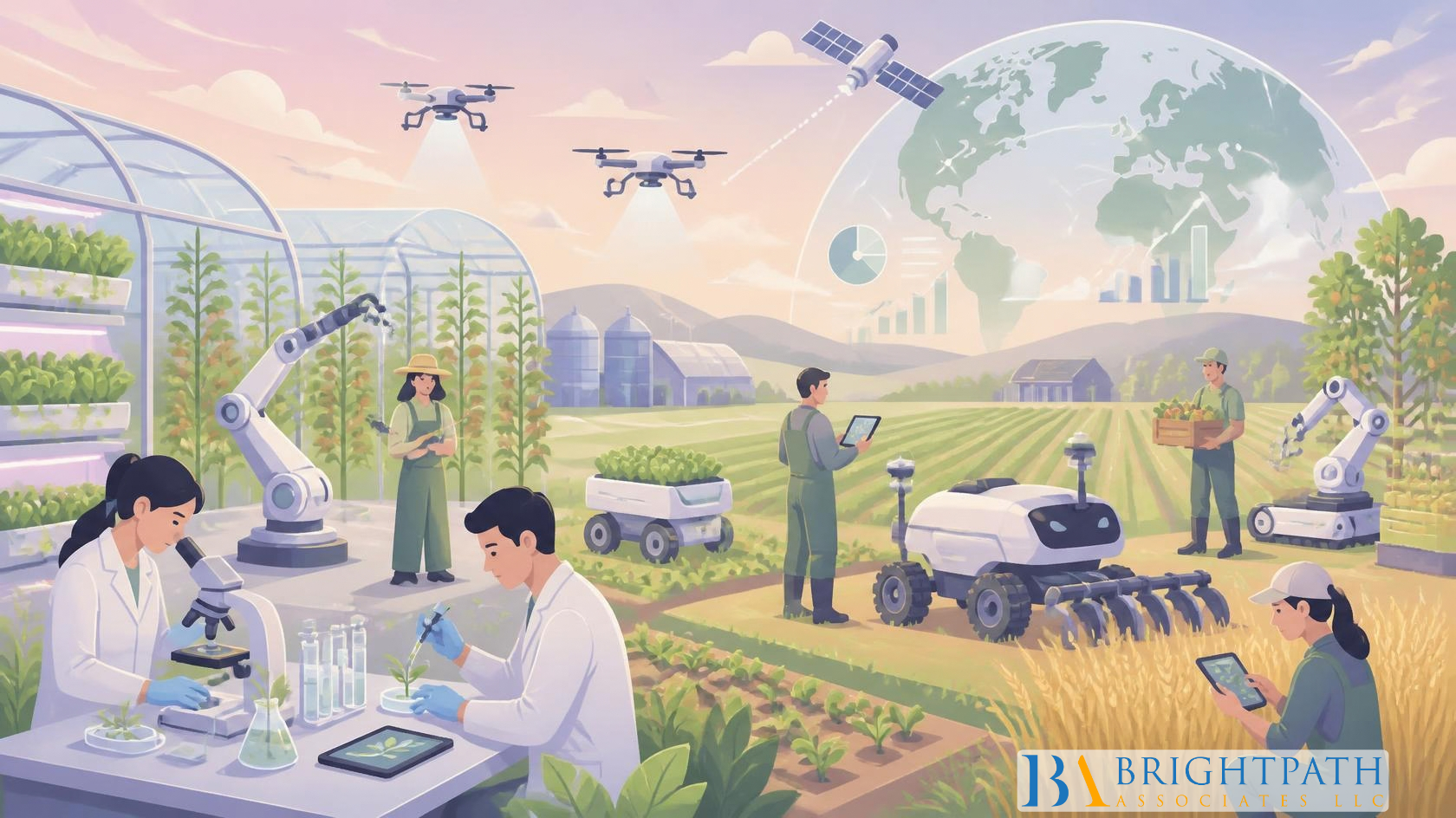
Agriculture is entering an era in which biology, automation, data, and economics are becoming increasingly interconnected. Farming is no longer defined only by land, equipment, labor, and seasonal cycles. Modern agricultural businesses are increasingly using biotechnology, robotics, artificial intelligence, precision agriculture, digital platforms, and advanced analytics to improve productivity while responding to increasingly complex economic and environmental pressures.
Unlike earlier waves of agricultural modernization that primarily focused on mechanization or automation, Farming 5.0 is about integrating multiple capabilities into one connected operating model. The goal is not simply to introduce more technology but to help agricultural businesses make better decisions about crops, resources, labor, investment, and markets.
For companies operating across the Farming Industry, this transition is creating both significant opportunities and new leadership challenges.
Beyond Mechanization: The Connected Farm
The traditional agricultural model depended heavily on human experience and physical machinery. Farmers made decisions based on field observations, historical knowledge, weather patterns, and market conditions.
Sensors can monitor soil moisture. Drones can capture crop imagery. Connected machinery can collect operational information. Weather platforms can provide localized forecasts. Farm management software can combine production, labor, inventory, and financial information.
The result is a more connected farm in which decisions can increasingly be supported by real-time and historical data. The important question is not whether a farm has adopted technology. It is whether that technology is producing information that can improve actual business decisions.
Biotechnology Is Changing the Biological Foundation of Agriculture
Biotechnology represents one of the most important elements of Farming 5.0 because it addresses agriculture at the biological level. For agricultural businesses, these developments could influence productivity and risk management over the long term.
Advances in genetics, molecular science, biological inputs, and crop research can contribute to crops designed to perform under specific environmental or production conditions. Research can focus on characteristics such as disease resistance, drought tolerance, nutritional value, resource efficiency, and resilience.
However, biotechnology also requires responsible decision-making. Businesses must consider scientific evidence, regulatory requirements, market acceptance, consumer expectations, and environmental implications when adopting new biological technologies.
Robotics Can Address Labor and Efficiency Challenges
Agricultural robotics is also becoming increasingly relevant as farms confront labor availability and rising operating costs. This distinction is important because automation changes the nature of agricultural work rather than simply eliminating it.
Autonomous tractors, robotic harvesting systems, drones, automated irrigation, and robotic weed-control technologies can perform tasks that are repetitive, time-sensitive, or physically demanding.
Instead, robotics can augment agricultural workers. Machines can handle repetitive tasks while skilled employees focus on planning, supervision, maintenance, crop management, problem-solving, and other activities requiring human judgment.
As farms become more automated, businesses may need fewer workers performing repetitive physical tasks but more professionals capable of managing technology, interpreting data, maintaining equipment, and integrating automated systems into daily operations.
Leadership Will Determine Whether Technology Creates Value
One of the most important aspects of Farming 5.0 is often overlooked: technology requires leadership. Agricultural companies increasingly need executives and managers who can understand farming operations while also navigating technology, finance, sustainability, data, supply chains, and changing markets.
The future agricultural leader may need to evaluate a robotics investment, understand a precision-agriculture platform, interpret financial data, manage a technology-oriented workforce, and communicate sustainability performance to customers or investors.
This interdisciplinary requirement is creating a new talent challenge. The original BrightPath Associates analysis, Farming 5.0: Synthesizing Biotechnology, Robotics, and Global Macroeconomics, explores this convergence in greater detail, particularly the relationship between technology adoption, sustainability, economic conditions, and agricultural leadership.
Conclusion
Farming 5.0 represents a fundamental shift in how agriculture can be managed and developed. Biotechnology, robotics, precision agriculture, artificial intelligence, digital platforms, and advanced analytics are creating new possibilities for productivity and resilience.
At the same time, agricultural businesses must continue navigating commodity volatility, labor challenges, resource constraints, climate pressures, financing conditions, and changing consumer expectations. Technology can provide powerful tools, but leadership determines how effectively those tools are deployed.
The agricultural companies best positioned for the next phase of growth may be those that combine scientific innovation, operational discipline, economic awareness, sustainability, and exceptional talent.
For agricultural businesses preparing for this transformation, BrightPath Associates LLC helps identify executive and specialized talent capable of navigating the intersection of agriculture, technology, sustainability, and business growth. Connect with BrightPath Associates LLC to discuss your organization's current or future leadership hiring needs.
