Fabric: The Factor That Can Make or Break Fashion Manufacturing Profitability
Author : Coats Digital | Published On : 02 Jun 2026
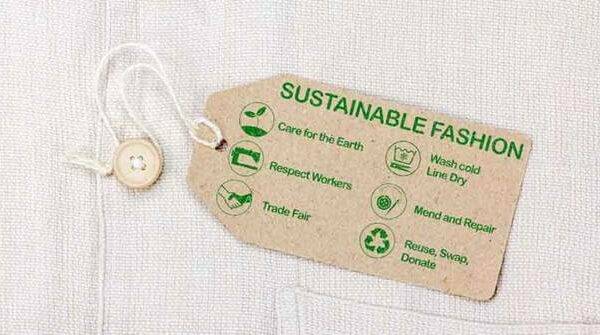
In fashion manufacturing, success is often measured by how quickly products reach the market, how efficiently factories operate, and how well brands respond to changing consumer demands. Yet behind all these factors lies one resource that quietly influences every stage of production: fabric.
While it may not receive the same attention as technology, automation, or supply chain innovation, fabric remains one of the most important elements in garment manufacturing. It is also one of the most expensive. For many manufacturers, fabric accounts for more than half of the total cost of producing a garment, making it a critical factor in both profitability and sustainability.
As the industry becomes more competitive and environmentally conscious, businesses are beginning to recognise the importance of Fabric Optimisation in achieving long-term success.
Every Order Starts With a Prediction
One of the most challenging aspects of apparel manufacturing happens before production even begins.
Once an order is received, manufacturers must estimate how much fabric will be needed to complete it. The estimate determines purchasing decisions, production planning, inventory levels, and a significant portion of the overall manufacturing budget.
The problem is that these decisions are often made with limited information.
At the fabric booking stage, complete size breakdowns may not yet be available. Production variables can still change. Customer requirements may evolve as the order progresses. Despite these uncertainties, fabric needs to be ordered quickly to meet increasingly tight deadlines.
This leaves manufacturers in a difficult position. They need enough fabric to avoid shortages but not so much that excess material becomes a costly burden.
Why More Fabric Isn't Always Better
To protect themselves against production disruptions, manufacturers often order additional fabric as a safety measure.
It is an understandable approach. Running short on fabric can delay production, increase costs, and damage relationships with customers. A little extra material can provide peace of mind.
However, what protects production schedules can sometimes hurt profitability.
When estimates are higher than actual requirements, unused fabric remains at the end of production. In some cases, this material can be reused. In many others, it cannot.
Fashion is an industry driven by constant change. Fabrics are often developed for specific collections, colours, or customer specifications. Once a season ends, leftover material may have little or no future value.
What was purchased as insurance can quickly become dead stock.
The Waste Problem No One Wants
Excess fabric is more than an inventory issue.
It is also a sustainability challenge.
The fashion industry has been criticised for the amount of waste generated throughout its supply chain, and unused fabric plays a significant role in that conversation. Materials that are never used still consume resources during production, transportation, and storage. When they eventually end up in landfills or disposal facilities, the environmental impact grows even larger.
This is one reason why brands are placing greater emphasis on reducing waste and improving material efficiency.
For manufacturers, better Fabric Optimisation offers an opportunity to address both profitability and sustainability at the same time.
The Hidden Gap Between Estimates and Reality
A common challenge across the apparel industry is the difference between the amount of fabric ordered and the amount actually consumed during production.
This difference is often called the consumption gap.
Although it may seem insignificant on an individual order, the cumulative impact can be substantial. Small overestimations repeated across hundreds of styles and thousands of garments can result in considerable financial losses over time.
The larger the gap, the greater the amount of money tied up in unnecessary inventory.
Reducing this gap is not simply about cutting costs. It is about improving decision-making throughout the production process.
Why Fabric Planning Is So Difficult
If estimating fabric requirements were easy, excess inventory would not be such a widespread issue.
The reality is that fabric consumption depends on many different variables. Garment construction, marker efficiency, size distribution, fabric width, and production methods can all influence the final outcome.
Manufacturers typically rely on patterns, markers, standard size ratios, and historical assumptions to make their estimates. These methods provide a useful foundation, but they are not always accurate enough for today's fast-moving market.
As lead times continue to shrink, manufacturers have less time to refine estimates before committing to fabric purchases.
The pressure to move quickly often leaves little room for detailed analysis.
Learning From the Past to Improve the Future
One of the most valuable tools available to manufacturers is historical production data.
Every completed order contains information that can help improve future planning. Previous size distributions, marker efficiencies, fabric consumption rates, and wastage levels all provide useful insights.
By analysing these patterns, manufacturers can make more informed decisions rather than relying solely on assumptions.
For example, if a particular customer consistently orders certain size ratios, that information can improve future forecasts. Similarly, understanding how much fabric was actually consumed on previous styles can help determine more realistic allowances.
This data-driven approach is becoming a cornerstone of modern Fabric Optimisation strategies.
Technology Is Making Accuracy Possible
The increasing complexity of fashion manufacturing has made manual planning more challenging than ever.
Fortunately, advances in technology are helping manufacturers improve accuracy without slowing down operations.
Modern planning systems can analyse historical data, automate calculations, and provide better visibility into fabric consumption patterns. These tools allow manufacturers to make faster and more informed decisions while reducing the likelihood of costly estimation errors.
Technology cannot eliminate uncertainty entirely, but it can significantly reduce it.
In an industry where margins are often tight, even small improvements in accuracy can have a meaningful impact.
Looking Ahead
The future of fashion manufacturing will be shaped by companies that can use resources more intelligently.
Fabric will continue to represent one of the industry's largest costs, which means manufacturers cannot afford to treat fabric planning as a routine administrative task. It has become a strategic function that influences profitability, operational efficiency, and sustainability performance.
Businesses that invest in better forecasting, stronger data analysis, and improved planning processes will be better equipped to navigate the challenges ahead.
Because in fashion manufacturing, profitability is not determined only by what happens on the production floor.
It often begins with a simple question asked much earlier in the process:
How much fabric do we really need?
And finding the right answer is exactly what Fabric Optimisation is all about.
