End of Intuitive Farming: Why Data Maturity Dictates Future Solvency
Author : Alex Turner | Published On : 04 Sep 2026
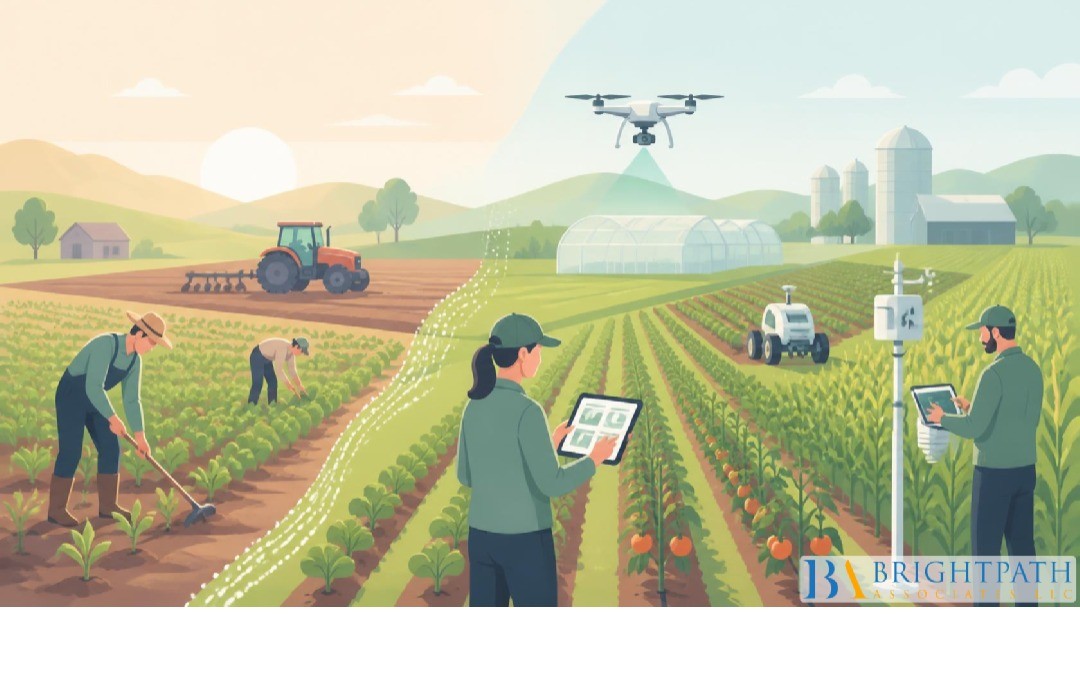
For generations, farming has depended on experience. Farmers learned to read the soil, recognize weather patterns, understand crop behavior, and make decisions based on years of observation. Intuition was not simply a preference; it was a practical form of intelligence built through decades of hands-on experience.
Modern farming operations are dealing with volatile weather, changing input costs, tighter margins, labor shortages, sustainability expectations, shifting consumer demand, and increasingly complex supply chains. At the same time, farms are generating more information than ever through sensors, machinery, satellite imagery, farm management platforms, weather systems, financial software, and connected equipment.
The Shift From Intuitive Farming to Data-Driven Agriculture
Data-driven agriculture does not mean eliminating human judgment. Instead, it means giving experienced decision-makers better information before they make important decisions.
A farm manager may have decades of experience knowing when a field is ready for planting. However, combining that knowledge with soil data, historical yield information, weather forecasts, moisture readings, equipment performance, and market conditions can produce a more informed decision.
Large agribusinesses may have dedicated analytics teams and sophisticated technology budgets. Smaller farming enterprises often operate with limited personnel and resources. Yet they face many of the same economic pressures.
A company with relatively simple technology but strong data practices can sometimes make better decisions than a technologically advanced operation that collects enormous amounts of information without knowing how to interpret it.
What Does Data Maturity Actually Mean?
Data maturity is not simply about purchasing new software. It describes how effectively an organization collects, organizes, understands, shares, and acts on information.
A less mature farming operation may keep important information scattered across spreadsheets, notebooks, machinery systems, emails, and individual employees' knowledge. Decisions can become dependent on whoever happens to have the right information at the right moment.
Production information can be connected with financial performance. Equipment data can help inform maintenance decisions. Weather information can influence operational planning. Inventory data can provide greater visibility into purchasing requirements. Historical performance can become a reference point for future decisions.
Why Data Quality Can Affect Farm Profitability
One of the biggest misconceptions surrounding agricultural technology is that collecting more information automatically creates more value. Poor-quality information can produce poor decisions just as easily as insufficient information.
Consider a farming business attempting to determine which crops or fields are generating the strongest returns. If production figures are incomplete, labor costs are inconsistently recorded, or input expenses are not accurately attributed, management may reach the wrong conclusion.
Data maturity therefore begins with fundamentals: accurate records, standardized processes, accessible information, and clearly defined ownership. Once those foundations are established, analytics and automation can become significantly more valuable.
This is why the future competitive advantage may not belong exclusively to farms with the most technology. It may belong to farms that can turn technology-generated information into timely business decisions.
The Human Element Is Becoming More Important, Not Less
There is another important implication. As agriculture becomes more data-driven, the skills required to lead farming businesses are changing.
Agricultural leaders increasingly need to understand technology without necessarily being technology specialists. They need to ask the right questions of data, challenge assumptions, evaluate financial implications, and translate technical information into operational decisions.
This creates a new leadership requirement for agricultural companies. The strongest candidates may not simply be people with traditional farming expertise or technical backgrounds. Increasingly, businesses need leaders who can bridge both worlds.
An effective agricultural executive might understand crop production while also being comfortable working with digital systems, performance metrics, forecasting tools, automation, and business intelligence.
Data Maturity Is Also a Talent Issue
A company can purchase sophisticated farm-management software and still fail to achieve meaningful results if employees do not understand how to use it or if leadership does not incorporate the resulting insights into decision-making.
Agricultural businesses may need professionals who understand operations, technology, finance, supply chains, sustainability, or data analytics—and, ideally, the relationships between them. The ability to recruit these hybrid leaders could become a competitive advantage for farming businesses preparing for the next decade.
BrightPath Associates works with agricultural organizations seeking leadership and specialized professionals across areas including farm operations, agronomy, supply chain, technology, finance, sustainability, and other functions. Learn more about its approach to the Farming Industry.
The Future Belongs to Farms That Can Learn Faster
Farming will always require judgment. Weather will remain unpredictable. Markets will fluctuate. Biological systems will continue to behave in ways that cannot be perfectly modeled. Experienced agricultural professionals will remain essential.
Tomorrow's strongest farming organizations will increasingly combine practical knowledge with reliable data, technology with human judgment, and agricultural expertise with modern business intelligence.
The question is no longer whether farming will become more data-driven. That transition is already underway. The more important question is which agricultural businesses will build the people, processes, and leadership capabilities necessary to turn information into resilience and profitability.
For a deeper examination of how data maturity can influence the financial future of agricultural businesses, explore End of Intuitive Farming: Why Data Maturity Dictates Future Solvency.
