Electric Golf Cart Safety Standards & Regulations in UAE
Author : destino kart | Published On : 07 Apr 2026
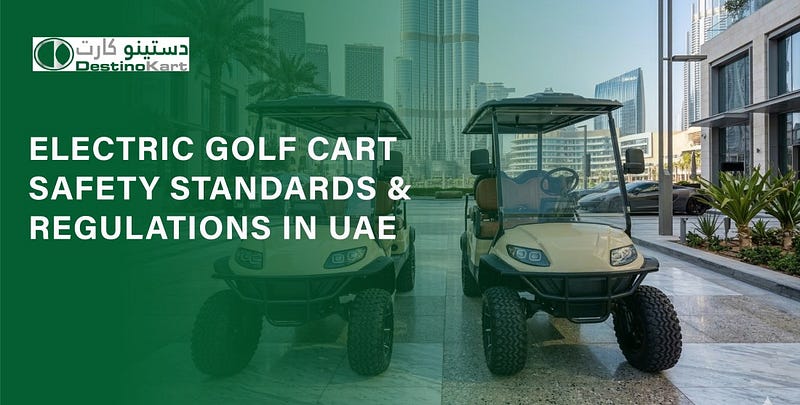
Electric Golf Cart Safety Standards & Regulations
Electric golf carts have become a staple in UAE’s golf courses, resorts, hotels, and gated communities, offering eco-friendly transport in low-speed environments. While not designed for public roads, adherence to safety standards ensures user protection amid rising popularity.
Usage Restrictions
Standard electric golf carts in the UAE are classified as off-road vehicles, permitted only in enclosed areas like golf clubs, hotels, and private developments. They are prohibited on public roads and pedestrian walkways to prevent accidents and comply with federal traffic laws, with violations leading to penalties. Gated communities allow internal path use but enforce local rules on access and speed.
Road-Legal Requirements
For public road use, carts must be modified to “low-speed vehicle” standards and registered with the emirate’s traffic authority, requiring vehicle inspection, UAE motor insurance, and clearance of fines. Essential modifications include headlights, taillights, indicators, mirrors, horn, reflectors, seatbelts, and speed limits suitable for low-speed zones. Registered carts demand a valid UAE driving license, unlike private premises where communities may set minimum ages or permits.
National EV Standards
The Ministry of Industry and Advanced Technology (MoIAT) enforces UAE.S 2698:2023 for electric vehicles over 25 km/h, focusing on crash safety, electrolyte leakage prevention, battery component intrusion avoidance, and electric shock protection. These align with GCC standards emphasizing battery performance, insulation, fire resistance, and heat tolerance for UAE’s climate. Though primarily for higher-speed EVs, golf cart importers must ensure compliance during customs clearance, including origin certificates and emission checks.
Battery and Electrical Safety
Golf cart batteries should meet global benchmarks like UL 2580 for lithium-ion (thermal stability, electrical safety) and SAE J537 for lead-acid, adapted to GCC heat to prevent overheating or failure. Post-accident guidelines cover electrical vehicle handling, including charging station safety. Importers face scrutiny on lithium batteries, requiring special declarations and right-hand drive configurations where applicable.
Operational Safety Guidelines
Pre-use checks involve inspecting controls, brakes, steering, and tires for wear. Drivers must obey 10–15 mph speed limits, avoid sharp turns to prevent tipping, wear seatbelts, keep limbs inside, and limit passengers. On courses, follow 90-degree rules, stay 30
feet from greens, and heed “cart path only” signs to protect turf and ensure visibility. Communities often mandate licensed drivers for liability.
Import and Compliance Tips
Vehicle imports need Federal Customs Authority approval, GCC standardization, and MoIAT conformity for EVs. Non-compliant carts risk denial, fines, or insurance issues; certified ones offer better resale and reliability in UAE conditions. For Sharjah users, consult local RTA equivalents and ESMA/MoIAT for updates, prioritizing battery heat resistance amid 2026’s sustainability push.
In summary, UAE prioritizes confined-area safety for electric golf carts, blending federal EV regs with community rules — compliance safeguards lives and supports green mobility.
