Edge Sensor for CNC Machines: Features, Uses & Benefits
Author : Surya makeyoueasy | Published On : 14 Aug 2026
Introduction
Accurate workpiece positioning is essential for achieving consistent results in CNC machining. An edge sensor for CNC machines helps operators quickly locate the edge or reference point of a workpiece, reducing setup time and improving machining accuracy. With reliable positioning, easy operation, and repeatable results, CNC edge sensors are valuable tools for VMCs, milling machines, and precision machining applications. At MakeYouEasy, we provide quality CNC accessories designed to improve machine setup, productivity, and overall machining performance.
What Is an Edge Sensor for CNC Machines?
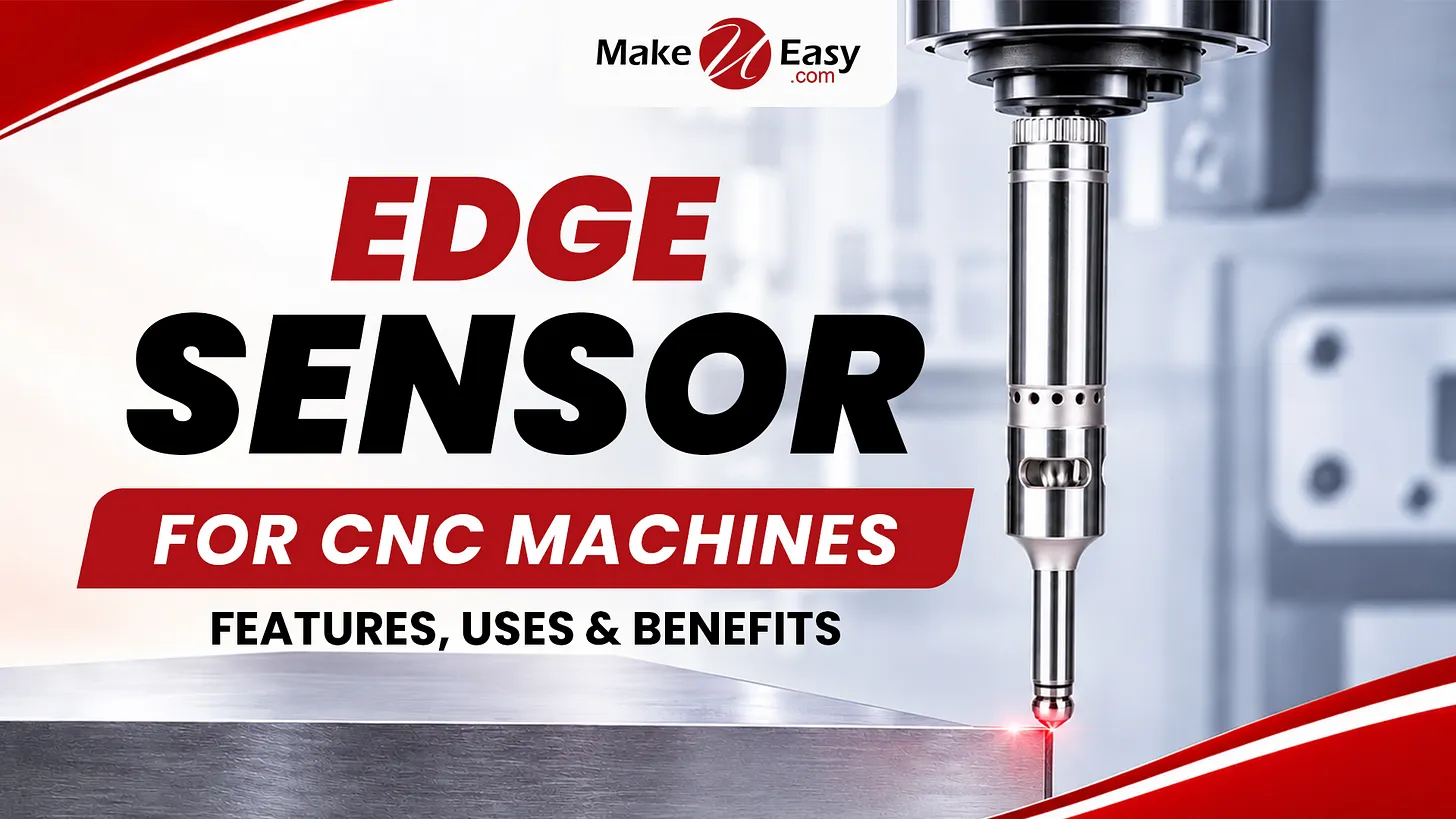
A CNC edge sensor is a precision setup device used to identify the exact edge or reference position of a workpiece on a CNC milling machine or machining center.
Instead of relying on manual estimation, the sensor helps the operator establish accurate workpiece coordinates before machining begins. This makes it easier to set the work offset, locate reference points, and maintain consistent positioning during production.
Edge sensors are commonly used in CNC milling, VMC machining, tool rooms, and precision engineering applications.
Key Features of a CNC Edge Sensor
1. Accurate Edge Detection
The primary function of an edge sensor is to help identify the workpiece edge accurately.
Benefits
-
Improved workpiece positioning
-
Better dimensional accuracy
-
Reduced setup errors
-
Consistent machining results
2. Faster CNC Machine Setup
Manual edge finding can take additional time, particularly when multiple workpieces need to be set up.
An edge sensor simplifies the process, helping operators establish reference positions more efficiently.
3. High Repeatability
A quality CNC edge finder provides repeatable positioning results, which is particularly important during batch production.
Consistent edge detection helps maintain the same machining reference across multiple components.
4. Compact Design
Most edge sensors are designed to fit easily into CNC tool holders and machine spindles without taking up unnecessary workspace.
5. Easy Operation
CNC edge sensors are designed for straightforward operation, making them suitable for both experienced machinists and routine production environments.
How Does a CNC Edge Sensor Work?
The basic process involves positioning the sensor close to the workpiece edge and using its sensing mechanism to identify the reference point.
A typical workflow includes:
-
Install the edge sensor into the appropriate tool holder.
-
Load the sensor into the CNC machine spindle.
-
Bring the sensor toward the workpiece edge.
-
Detect the reference position.
-
Record or calculate the required work offset.
-
Set the CNC coordinate system.
-
Begin the machining operation.
The exact operating procedure depends on the specific sensor and CNC machine, so always follow the manufacturer’s instructions.
Uses of Edge Sensors in CNC Machining
Workpiece Edge Finding
The most common application is locating the precise edge of a workpiece before machining.
Work Offset Setting
An edge sensor helps operators establish accurate work coordinates such as the X and Y reference positions.
Fixture Setup
Edge sensors can assist with positioning workpieces relative to fixtures and machine tables.
CNC Milling Setup
They are particularly useful for VMC and CNC milling operations where accurate workpiece referencing is essential.
Repetitive Production
For batch manufacturing, repeatable edge detection helps maintain consistent setup conditions between components.
Benefits of Using an Edge Sensor
1. Improved Machining Accuracy
Accurate edge detection helps establish reliable workpiece coordinates and reduces positioning errors.
2. Reduced Setup Time
Faster reference-point identification can shorten machine preparation time and improve overall productivity.
3. Better Repeatability
Consistent workpiece referencing is especially valuable when machining multiple components with the same program.
4. Reduced Human Error
An edge sensor reduces dependence on manual estimation during workpiece positioning.
5. Increased Productivity
Faster setup and reliable positioning allow operators to spend more time on actual machining and less time on preparation.
Edge Sensor vs Manual Edge Finding
FeatureCNC Edge SensorManual Edge FindingSetup SpeedFasterUsually slowerPositioningMore consistentOperator dependentRepeatabilityHighCan varySetup ErrorsReducedHigher possibilityProduction UseHighly suitableSuitable for basic setups
For professional CNC machining environments, an edge sensor can make workpiece setup more efficient and repeatable.
Applications
CNC edge sensors are commonly used in:
-
VMC Machines
-
CNC Milling Machines
-
Machining Centers
-
Tool Rooms
-
Precision Engineering
-
Automotive Component Manufacturing
-
General Engineering
-
Prototype Machining
-
Job Shops
-
Production Machining
How to Choose the Right CNC Edge Sensor
Before purchasing an edge sensor, consider these factors:
1. Machine Compatibility
Ensure the sensor is suitable for your CNC machine, spindle, and tool holder system.
2. Accuracy and Repeatability
Choose a sensor that provides the precision required for your machining applications.
3. Sensor Type
Different edge-finding technologies are available, so select one based on your machine and setup requirements.
4. Construction Quality
A robust design is important for frequent industrial use.
5. Application Requirements
Consider whether you need the sensor for occasional setup work, precision machining, or repetitive production.
Tips for Better Edge Sensor Performance
For reliable results:
-
Keep the sensor clean.
-
Check the sensor before each setup.
-
Ensure proper tool holder clamping.
-
Avoid unnecessary impact or excessive force.
-
Maintain correct machine conditions.
-
Verify the work offset before machining.
-
Follow the manufacturer’s operating instructions.
Common Mistakes to Avoid
Avoid these issues when using a CNC edge sensor:
-
Using an incompatible tool holder
-
Incorrectly setting the work offset
-
Ignoring sensor condition
-
Applying excessive force
-
Failing to verify the reference position
-
Using incorrect machine parameters
Proper setup helps protect the sensor and maintain machining accuracy.
Why Choose MakeYouEasy?
At MakeYouEasy, we provide premium CNC tooling and industrial accessories designed to support modern manufacturing requirements.
Our Product Range
-
CNC Edge Sensors
-
CNC Cutting Tools
-
BT Tool Holders
-
ER Collets
-
U Drills
-
Milling Cutters
-
Turning Inserts
-
Grooving Inserts
-
Thread Milling Cutters
-
Precision Measuring Instruments
Why Buy From MakeYouEasy?
-
Quality industrial products
-
Precision-focused CNC tooling
-
Competitive pricing
-
Fast Pan-India delivery
-
Reliable customer support
-
Solutions for modern machining applications
🌐 Explore our complete product range:
Conclusion
An Edge Sensor for CNC Machines is a valuable setup accessory for accurately locating workpiece edges and establishing reliable machining coordinates. By reducing setup time, improving repeatability, and minimizing positioning errors, it can contribute to better machining accuracy and productivity. Whether used on a VMC, CNC milling machine, or machining center, selecting a compatible and reliable edge sensor helps create a more efficient CNC setup process. MakeYouEasy offers CNC accessories and tooling solutions designed to support accurate, productive, and consistent machining.
Frequently Asked Questions (FAQs)
1. What is an edge sensor used for in CNC machining?
An edge sensor is used to accurately locate a workpiece edge and establish a machining reference position.
2. Does an edge sensor improve CNC machining accuracy?
Yes, accurate edge detection helps reduce positioning errors and improve workpiece setup consistency.
3. Can an edge sensor be used on a VMC machine?
Yes, compatible edge sensors are commonly used for workpiece setup on VMC and CNC milling machines.
4. How does an edge sensor reduce setup time?
It provides a faster and more repeatable method of locating workpiece reference points than manual estimation.
5. Where can I buy CNC edge sensors in India?
You can explore CNC edge sensors and other machining accessories at
