Edge Data Center Solutions for Faster Business Operations
Author : NPOD Data Center Solutions | Published On : 20 Nov 2026
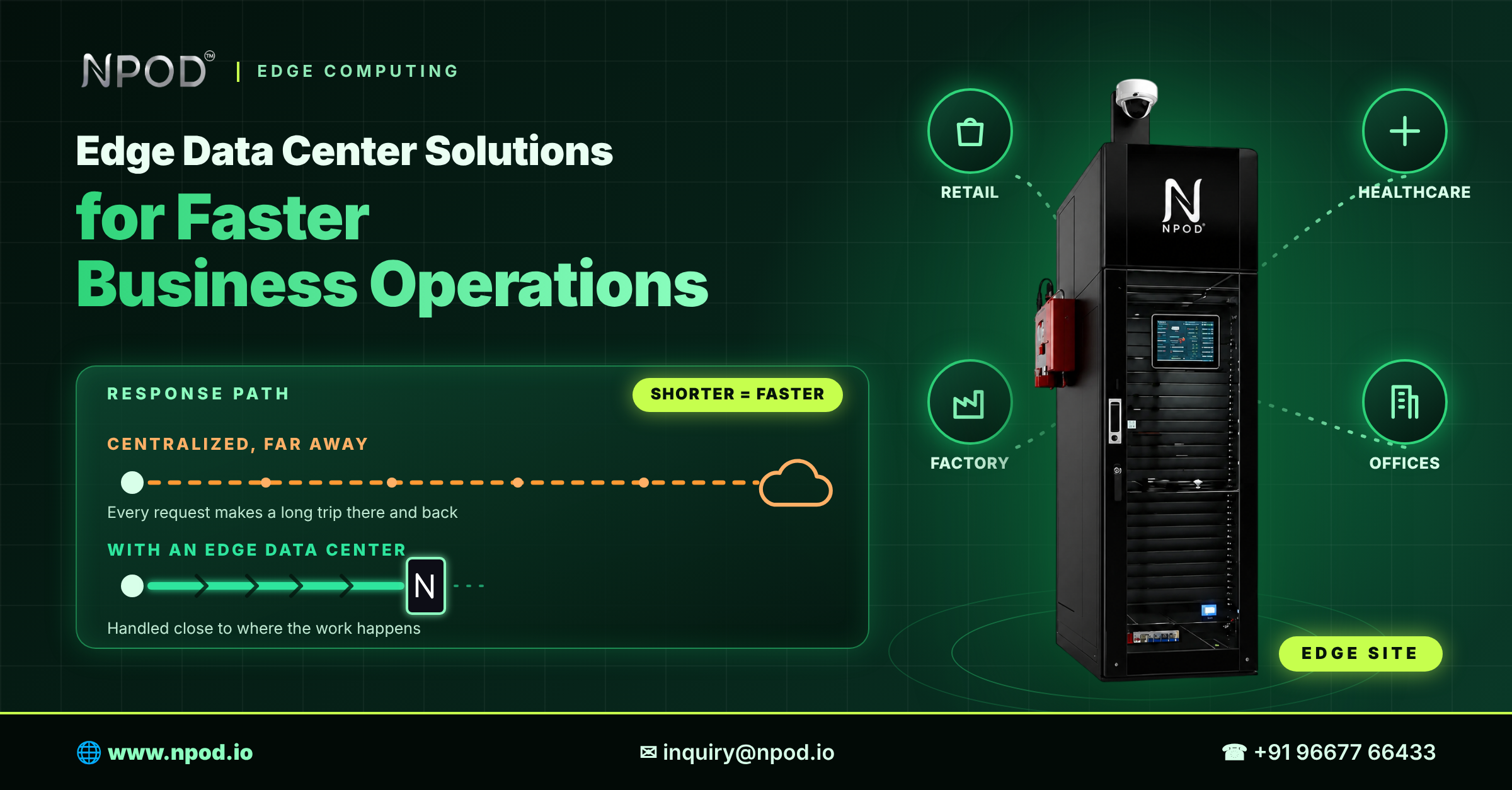
Businesses that depend on connected devices, automated systems and real-time applications need quick access to data. When every request travels to a distant central facility, delays can affect daily operations. Edge data center solutions help address this challenge by placing computing resources closer to users and devices. This allows selected workloads to be processed locally, reducing dependence on long-distance data transfers. Businesses exploring this approach can learn more about integrated edge infrastructure for distributed operations before planning a deployment.
Why Centralized Infrastructure Can Slow Down Business Operations
A centralized data center can support storage, applications and large computing workloads across an organization. However, businesses with multiple branches or production sites may face challenges when every local activity depends on a distant facility.
Consider a manufacturing company with plants in different cities. Machines, sensors and production systems generate data throughout the day. If all this information must travel to a central location before applications can respond, network delays may affect monitoring and automated processes.
Similar issues can appear in retail stores, healthcare facilities and remote offices. Slow application responses can interrupt workflows and make it harder for teams to access timely information.
An edge deployment addresses this problem by moving selected computing resources closer to the location where data is created.
How Edge Data Center Solutions Improve Performance
An edge data center is a localized infrastructure setup that processes and stores data near its source. Instead of sending every request to a central facility, businesses can handle suitable workloads at a nearby location.
This approach offers several practical benefits.
Faster Response for Local Applications
Applications that support production monitoring, connected equipment or local business services may need quick responses. Processing selected data closer to the source can reduce the time required for information to travel across a network.
Lower Dependence on Wide-Area Networks
Not every workload needs to communicate continuously with a central data center. Local processing can reduce unnecessary data transfers and help control bandwidth use.
Better Support During Network Interruptions
When suitable applications and data are available locally, some site-level activities can continue even if the connection to a central facility is interrupted. The exact level of continuity depends on application design and local system configuration.
What Should Businesses Check Before Deployment?
Choosing an edge setup involves more than selecting a rack or server. The supporting infrastructure must match the site's operating conditions and workload requirements.
1. Power Capacity and Backup
Start by reviewing the power needs of servers, network equipment and other connected systems. Check whether the proposed setup includes suitable power distribution and backup arrangements.
For critical operations, businesses should also understand how the system handles power failures and whether its design supports the required level of redundancy.
2. Cooling for Continuous Operation
Servers produce heat during operation. If cooling is not planned properly, high temperatures can affect equipment performance and reliability.
Review the expected IT load and the cooling arrangement before selecting an installation. Precision cooling can help maintain suitable operating conditions for equipment in compact infrastructure environments.
3. Physical Security and Fire Protection
Edge infrastructure may be installed in factories, branch offices or locations with limited IT staff. Physical protection therefore needs careful attention.
Check for access control, surveillance and suitable fire suppression. These measures help protect equipment from unauthorized access and reduce risks associated with incidents at the deployment site.
4. Remote Monitoring and Management
Managing many small infrastructure sites can become difficult when every location requires frequent physical visits.
A remote monitoring system can help IT teams review environmental conditions and infrastructure status from a central location. This makes it easier to identify issues and coordinate support across distributed sites.
5. Expansion Requirements
Business needs can change as new applications, devices and locations are added. The selected architecture should allow capacity to grow without requiring a complete redesign each time.
A modular approach can make expansion easier by allowing organizations to add infrastructure as requirements increase.
Why Integrated Infrastructure Makes Deployment Easier
An edge data center combines several systems that must work together. These may include power distribution, cooling, environmental monitoring, fire suppression, CCTV, access control and remote management.
When these components are planned separately, the business must coordinate multiple systems and installation activities. This can increase project complexity and create integration challenges.
Factory-integrated infrastructure brings key components together in a planned enclosure. It can reduce the amount of on-site coordination required and support a more organized deployment process.
For example, NPOD offers integrated edge infrastructure designed for enterprise, industrial and remote environments. Its approach brings essential infrastructure components into a single solution while supporting modular expansion.
Where Can Businesses Use Edge Infrastructure?
Edge deployments can support different operating environments:
-
Manufacturing: Local processing for production data and connected equipment.
-
Retail: Infrastructure closer to store systems and local applications.
-
Healthcare: Local IT resources for facilities that need responsive digital services.
-
Banking: Distributed infrastructure for branch-level technology requirements.
-
Telecommunications: Computing resources closer to network users and connected devices.
-
Remote offices: Local infrastructure for sites that need dependable access to business applications.
The right design depends on the workload, site conditions, connectivity and operational requirements.
Conclusion: Build Infrastructure Around Business Needs
Faster business operations depend on more than network speed. Applications also need computing resources in the right locations. Edge infrastructure can help distributed organizations process selected workloads closer to users and connected devices.
Before choosing a deployment, assess power, cooling, security, monitoring and future expansion needs. A well-planned integrated setup can simplify infrastructure management across multiple sites.
If your organization is planning distributed IT infrastructure, explore NPOD's edge data center approach and assess whether it fits your operational requirements.
Frequently Asked Questions
1. What are edge data center solutions?
They are localized IT infrastructure setups that process and store data closer to users, devices or business operations instead of relying only on a distant central data center.
2. Do edge data centers replace cloud infrastructure?
No. Many organizations use both. Edge infrastructure handles workloads that benefit from local processing while cloud platforms can support centralized storage, analytics and larger computing tasks.
3. What is important when selecting an edge data center?
Businesses should review workload requirements, power capacity, cooling, physical security, remote monitoring and future expansion before selecting a solution.
