Edge Computing Data Centers: A Practical Alternative to Traditional Server Rooms
Author : NPOD Data Center Solutions | Published On : 26 Oct 2026
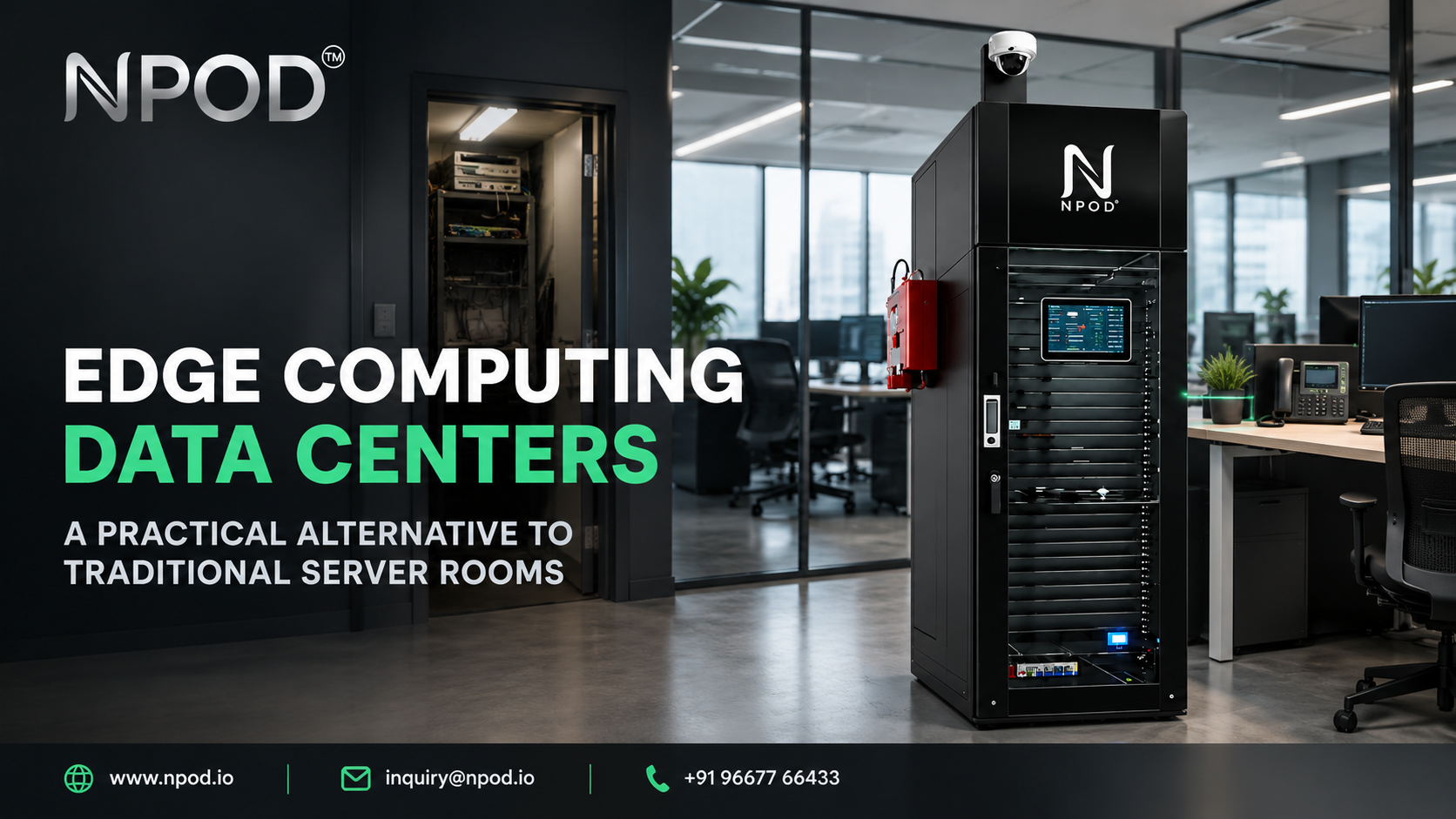
Opening a new branch should not mean starting another complex IT project. Businesses need reliable IT services across locations, but not every branch has the space, power, cooling or security required for a traditional server room.
Building a separate room at each site may involve electrical work, cooling installation, equipment protection and ongoing maintenance. Edge computing data centers offer another approach: placing selected computing resources closer to where data is generated or used, without necessarily constructing a conventional server room at every branch.
Why Traditional Server Rooms Are Difficult to Replicate
Several practical challenges make a dedicated server room difficult to provide at every location:
-
Limited space: Offices need room for employees, customers and daily operations. A storage cupboard may not provide adequate airflow or service access.
-
Cooling: Servers generate heat, and normal office air conditioning may not provide the airflow and temperature control required by IT equipment.
-
Power and backup: Existing electrical circuits may not support the planned IT load. Servers, cooling and UPS requirements must be assessed together.
-
Physical security: Equipment in shared areas may be vulnerable to unauthorised access or accidental damage. Appropriate access controls and fire protection may be necessary.
-
Repeated setup: Different branch layouts can require separate installation work, monitoring arrangements and maintenance procedures.
The problem is not simply finding space for a server. It is creating a suitable and manageable environment for IT equipment.
What Are Edge Computing Data Centers?
Edge computing data centers provide computing, storage and networking resources close to the users, devices or operations they support. Instead of sending every task to a distant central facility, selected workloads can be processed locally.
For example, a retail branch may need local resources for specific applications, while a factory may process machine-camera data near its production line. Required information can still be sent to central systems or cloud platforms for reporting and long-term storage.
Edge computing describes where data is processed; an edge data center provides the infrastructure to run that work. Deployments can use compact cabinets or larger enclosures, depending on workload requirements.
How Do They Work?
-
Generate data locally: Business applications, connected devices and machines produce data.
-
Process selected workloads nearby: Local IT resources handle tasks designed to run at that location.
-
Use the results: Applications can avoid sending every request to a distant data center before processing it.
-
Share relevant information: Required records and summaries can be transferred to central systems or cloud services.
-
Monitor equipment: Compatible remote tools can help IT teams track equipment status and environmental alerts.
Edge computing does not eliminate all latency or make every application independent of connectivity. Benefits depend on application design, network configuration and local computing capacity.
Why Choose an Integrated Edge Data Center?
Depending on the configuration, an edge or micro data center can bring several infrastructure components together:
-
IT rack or secure enclosure for servers and networking equipment.
-
Power distribution and appropriately sized UPS options.
-
Cooling designed for the installed IT load.
-
Environmental monitoring and alerts.
-
Physical security and specified fire-protection features.
-
Remote monitoring for supported equipment.
Integration can reduce the need to coordinate every component separately. However, site checks remain essential: available space, electrical capacity, cooling, connectivity, floor loading and equipment access must all be suitable.
A Practical Example: A Company With Multiple Branches
Imagine a company operating 15 branches. Some have spare rooms, while others occupy small rented offices where constructing a server room is impractical.
Rather than repeating the same setup everywhere, the company can assess each branch individually. It can identify which workloads must run locally, deploy appropriately sized edge infrastructure where needed, and keep other services on central or cloud platforms.
Remote monitoring can help the central IT team oversee equipment across locations. Not every branch necessarily needs its own edge data center; the architecture should match the work performed at each site.
How to Choose the Right Size
Before selecting an edge computing data center, businesses should:
-
List the servers, storage and networking equipment required locally.
-
Calculate IT power demand and backup requirements.
-
Check rack space, equipment dimensions and maintenance access.
-
Confirm cooling capacity and environmental monitoring needs.
-
Determine security, redundancy and remote-management requirements.
-
Allow for future growth and verify site readiness.
A product-specific fact: NPOD's published Micro Data Center range includes a configuration with 33U of IT space and 1.3 kW of available IT power, and another listed configuration with 94U and 12 kW. These are examples of specific configurations, not universal limits for edge data centers. The right model depends on the equipment and site.
Where NPOD Fits
NPOD's Edge Data Center offering describes integrated infrastructure that may include power distribution, precision cooling, environmental monitoring, physical security and remote monitoring, depending on configuration.
This may suit businesses that need local IT resources but want to avoid coordinating every supporting component separately. Workload, available space, power, cooling, security and future capacity should be evaluated before choosing a model.
Conclusion
Every branch may need IT services, but not every branch needs a traditional dedicated server room. Edge computing data centers offer a compact, integrated way to place selected computing resources closer to business operations. The right solution depends on each branch's workload, site conditions and reliability requirements.
Frequently Asked Questions
What makes a data center an edge computing data center?
It places computing resources close to the users, devices or operations they support, allowing selected workloads to be processed locally rather than relying entirely on a distant central facility.
Which companies design and deploy edge computing data centers?
Deployments may involve infrastructure manufacturers, data center solution providers, system integrators and installation partners. Assess their proposed capacity, cooling, power, security and ongoing support against your requirements.
What determines the size of an edge computing data center?
Size depends on equipment count, rack space, IT power load, cooling, redundancy, installation conditions and future growth. Some workloads fit compact cabinets, while larger deployments may require multiple racks or prefabricated facilities.
