Dynamic Pricing for Short-Term Rentals: How It Works and How to Use It in 2026
Author : revfactor marketing | Published On : 09 May 2026
The short-term rental industry has changed dramatically over the past few years. Hosts who once relied on flat nightly rates are now competing in a market driven by real-time demand, seasonal trends, guest behavior, and competitor pricing. In this environment, dynamic pricing has become one of the most important tools for Airbnb and vacation rental success.
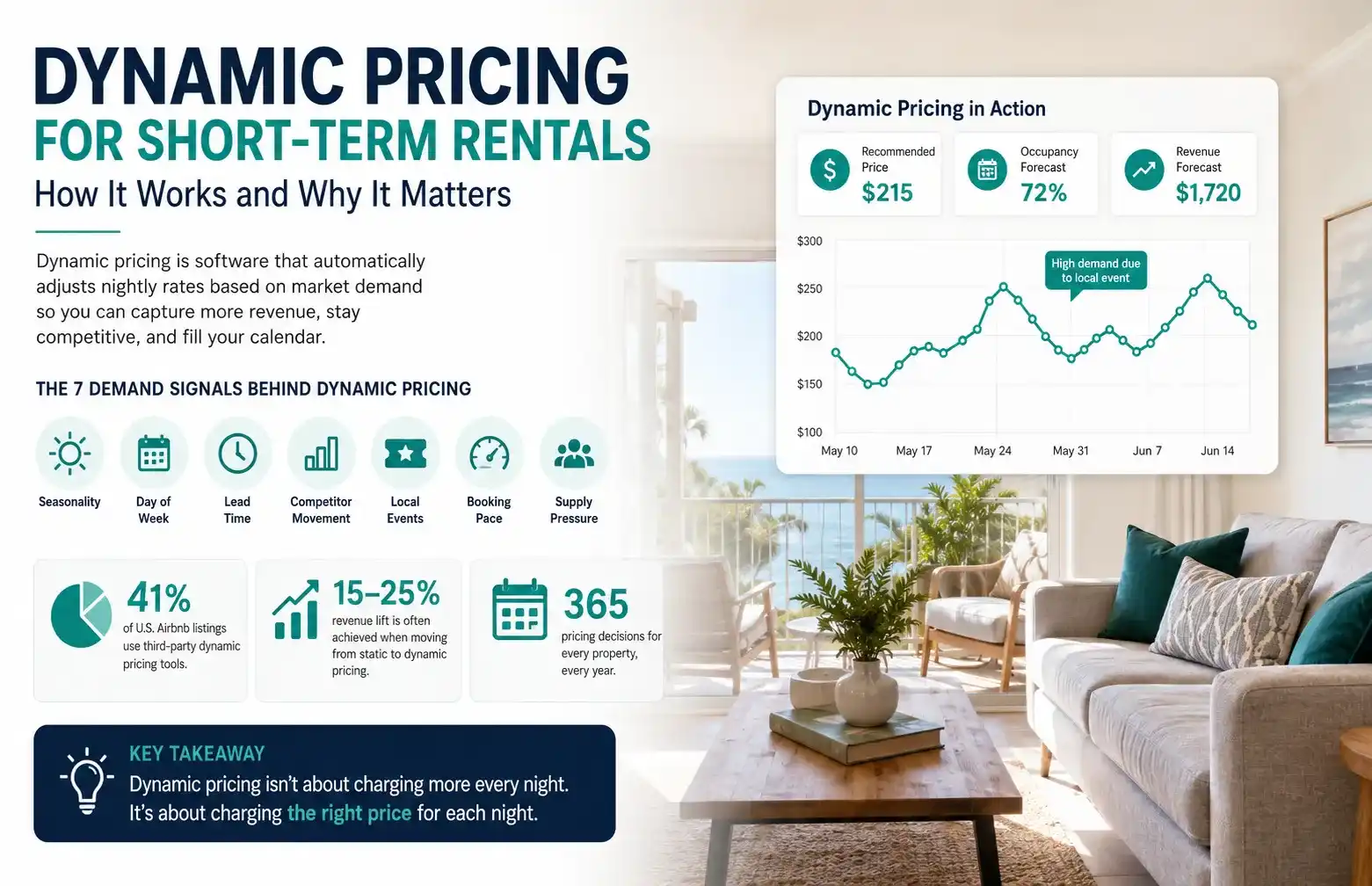
Dynamic pricing for short-term rentals is software that automatically adjusts nightly rates based on market conditions. Instead of charging the same amount every night of the year, hosts can use pricing tools to react to changing demand and optimize both occupancy and revenue.
In 2026, dynamic pricing is no longer considered an advanced strategy reserved for large property managers. It has become a critical part of modern revenue management for Airbnb and vacation rental hosts of every size.
What Is Dynamic Pricing for Short-Term Rentals?
Dynamic pricing is a pricing system that changes your nightly rate automatically according to market demand. The software evaluates multiple data signals daily and updates prices across your calendar.
Rather than relying on manual adjustments or static pricing, dynamic pricing tools analyze:
- Seasonality
- Day-of-week demand
- Booking lead time
- Competitor pricing
- Local events
- Booking pace
- Supply pressure in the market
Popular tools such as PriceLabs, Beyond Pricing, and Wheelhouse connect directly to Airbnb and Vrbo listings through API integrations. Once connected, the software continuously monitors market changes and adjusts pricing for future dates.
The purpose of dynamic pricing is not simply to charge higher prices. The real goal is to match each night with the price the market is willing to pay at that specific moment.
Why Static Pricing No Longer Works
Many new hosts begin with a simple pricing model. They choose one nightly rate and apply it across the entire year.
At first, this feels manageable and predictable. However, static pricing creates major problems because demand changes constantly.
For example, a $200 nightly rate may be far too low during a holiday weekend when guests would gladly pay $350. On the other hand, the same $200 rate may be too expensive during a slow Tuesday in February when travelers are looking for discounted stays.
This creates two expensive outcomes:
- Underpricing during high-demand periods
- Vacancies during low-demand periods
Static pricing ignores the reality that short-term rentals operate on perishable inventory. Once a night passes unsold, that revenue opportunity disappears forever.
Dynamic pricing exists because every night has a limited shelf life. Hosts cannot recover yesterday’s vacant night, which is why pricing accuracy matters so much.
The Real Purpose of Dynamic Pricing
One of the biggest misconceptions in the vacation rental industry is that dynamic pricing automatically guarantees more revenue.
In reality, the software itself is only the engine. The strategy behind it is what determines success.
Many hosts install a pricing tool and assume the system will handle everything automatically. But the software can only optimize the rules and pricing structure it receives.
The most successful hosts understand that:
- Dynamic pricing is software, not strategy
- The base rate is the foundation of the system
- Pricing must reflect market conditions, not emotional expectations
- Revenue matters more than vanity nightly rates
A property listed at $1,000 per night means nothing if it rarely books. The important metric is revenue per available night and overall annual profitability.
Professional revenue managers focus less on the advertised nightly rate and more on how efficiently the calendar performs over time.
The Seven Signals Dynamic Pricing Tools Analyze
Modern pricing software evaluates multiple data points simultaneously. These signals help determine whether rates should increase or decrease.
1. Seasonality
Seasonality is one of the strongest pricing drivers in the short-term rental industry.
Every destination has high and low seasons influenced by weather, tourism patterns, school schedules, and holidays. Beach markets, ski towns, mountain cabins, and city rentals all experience seasonal swings.
For example, a vacation rental market may produce nearly double the revenue during December compared to January.
Dynamic pricing systems recognize these seasonal trends and adjust rates automatically.
2. Day-of-Week Demand
Weekend demand is typically stronger than weekday demand in leisure markets.
Friday and Saturday nights usually command premium pricing because travelers prefer weekend getaways. Midweek nights often require lower pricing to remain competitive.
Dynamic pricing tools automatically increase weekend rates and soften weekday pricing when necessary.
3. Booking Lead Time
Lead time refers to how far in advance guests are booking.
A property that remains unbooked close to arrival may require lower rates to attract last-minute reservations. Conversely, if dates are filling quickly months ahead of schedule, the software may increase prices.
Lead time analysis helps pricing tools react intelligently as the booking window changes.
4. Competitor Pricing
Comp set analysis is one of the most important components of revenue management.
Guests compare multiple listings before making booking decisions. If nearby properties with similar amenities are priced lower, your listing may struggle to convert.
Dynamic pricing tools constantly monitor competitor calendars and pricing movement.
The best hosts understand that pricing based on personal financial goals is ineffective. Guests do not see your mortgage payment or operational expenses. They only compare your listing against alternatives in the market.
5. Local Events
Concerts, festivals, sports events, conferences, and holidays can create sudden demand spikes.
Dynamic pricing software identifies these demand surges and increases rates accordingly.
Without dynamic pricing, many hosts unknowingly leave significant money on the table during major event weekends.
6. Booking Pace
Booking pace measures how quickly reservations are being secured compared to historical trends.
If bookings are arriving faster than expected, the system may push prices upward. If the calendar remains empty, rates may decline to stimulate demand.
This allows hosts to respond proactively rather than waiting too long to adjust pricing.
7. Market Supply Pressure
Supply pressure reflects how many competing listings are available in the market.
When inventory increases dramatically, pricing competition becomes more aggressive. During periods of lower supply, rates can rise more confidently.
Dynamic pricing software monitors these market-wide shifts continuously.
Why Base Rate Configuration Matters
The base rate is arguably the most important setting inside any pricing tool.
Many hosts make the mistake of setting their base rate according to what they “want” to earn rather than what the market supports.
Dynamic pricing tools optimize from the starting point you provide. If the base rate is unrealistic, the software may struggle to generate healthy occupancy.
An incorrectly configured floor price can damage revenue all year long.
Successful hosts regularly review:
- Market averages
- Competitor performance
- Occupancy trends
- Revenue per available night (RevPAR)
- Seasonal adjustments
The software performs best when paired with intelligent revenue management decisions.
Dynamic Pricing Adoption Is Growing Rapidly
Research from Lighthouse and Key Data shows that dynamic pricing adoption across U.S. Airbnb listings continues to rise.
Professional property managers use dynamic pricing at significantly higher rates than individual hosts. Larger operators understand that pricing optimization directly impacts profitability.
As competition increases in the short-term rental industry, manual pricing becomes increasingly difficult to sustain.
Hosts relying entirely on static pricing often struggle against professionally managed listings that adjust rates daily.
Revenue Management vs. Occupancy Obsession
One of the most important lessons in short-term rental pricing is understanding that high occupancy alone does not equal success.
Some properties intentionally operate at lower occupancy while achieving significantly higher revenue.
For example, a property running at 40% occupancy with premium pricing may outperform a fully booked property charging heavily discounted rates.
This is where revenue management becomes critical.
The goal is not simply to fill every night. The goal is to maximize profitable revenue across the calendar.
Dynamic pricing allows hosts to:
- Capture peak demand at premium rates
- Protect profitability during high-demand periods
- Encourage bookings during slower periods
- Avoid unnecessary discounting
- Improve long-term revenue performance
The Importance of Property Lifecycle Pricing
Not every property should follow the same pricing strategy.
A brand-new Airbnb listing behaves differently from an established property with hundreds of reviews.
New listings often need:
- Competitive introductory pricing
- Faster booking momentum
- Early reviews and conversion signals
- Aggressive calendar optimization
Established listings can usually maintain stronger pricing power because guests trust their review history.
Dynamic pricing systems work best when pricing strategy reflects the maturity stage of the property.
Common Dynamic Pricing Mistakes
Many hosts install pricing software but fail to use it effectively.
Common mistakes include:
Ignoring the Data
Some hosts never review pricing performance after setup. Dynamic pricing requires monitoring and adjustment.
Setting Unrealistic Minimum Prices
Overly aggressive floor prices can suppress occupancy and reduce annual revenue.
Focusing Only on Nightly Rate
A high nightly rate means little if occupancy collapses.
Copying Competitors Blindly
Every property has different amenities, reviews, and positioning. Pricing should reflect actual market value.
Assuming Software Solves Everything
Software helps automate pricing decisions, but revenue strategy still requires human judgment.
How to Start Using Dynamic Pricing Successfully
For hosts considering dynamic pricing in 2026, the best approach is to begin with a structured setup.
Step 1: Analyze Your Market
Study comparable listings, occupancy patterns, and seasonal demand.
Step 2: Choose the Right Tool
Popular options include:
- PriceLabs
- Beyond Pricing
- Wheelhouse
Each platform offers different features, automation levels, and customization options.
Step 3: Configure Your Base Rate Carefully
Use realistic market data rather than emotional pricing targets.
Step 4: Set Minimum and Maximum Limits
Protect your revenue floor while allowing flexibility during peak demand.
Step 5: Monitor Performance Regularly
Review occupancy, average daily rate (ADR), and RevPAR consistently.
Dynamic pricing works best when software automation and strategic oversight operate together.
Final Thoughts
Dynamic pricing has transformed the short-term rental industry. In 2026, successful Airbnb and vacation rental hosts increasingly rely on data-driven pricing systems to remain competitive.
The modern short-term rental market changes too quickly for static pricing to keep up. Demand fluctuates daily based on seasonality, competitor behavior, local events, and guest booking trends.
Dynamic pricing software helps hosts respond intelligently to those changes.
However, the software alone is not the strategy.
The most profitable hosts understand how to configure pricing tools properly, interpret market signals, and make revenue-focused decisions over the long term.
Ultimately, dynamic pricing is about more than increasing nightly rates. It is about aligning every night on the calendar with the true value the market is willing to pay.
Hosts who learn this discipline position themselves for stronger occupancy, healthier margins, and more sustainable growth in the evolving short-term rental industry.
