Duplex Steel S31803 Pipes Manufacturers
Author : Himanshu Sanghvi | Published On : 21 Sep 2026
Duplex Steel S31803 Pipes: Metallurgical Structure, Specification Control and Industrial Service Requirements
Duplex Steel S31803 Pipes are manufactured from a ferritic-austenitic stainless steel grade developed to combine the corrosion resistance associated with austenitic stainless steels with substantially higher mechanical strength. UNS S31803, commonly associated with Duplex 2205 and Werkstoff 1.4462, contains a balanced two-phase microstructure in which ferrite and austenite contribute different performance characteristics. Its combination of chromium, nickel, molybdenum and nitrogen provides resistance to general corrosion, pitting, crevice corrosion and chloride stress-corrosion cracking while maintaining high yield strength.
The S31803 designation also requires careful specification control because the modern Duplex 2205 family includes the more tightly controlled UNS S32205 composition. Both designations are commonly associated with 1.4462 commercially, but their chemical requirements are not identical. Consequently, procurement documents should state the exact UNS grade and governing product specification instead of relying only on the commercial expression “Duplex 2205.”
The Metallurgy Behind S31803 Pipe Performance
The defining feature of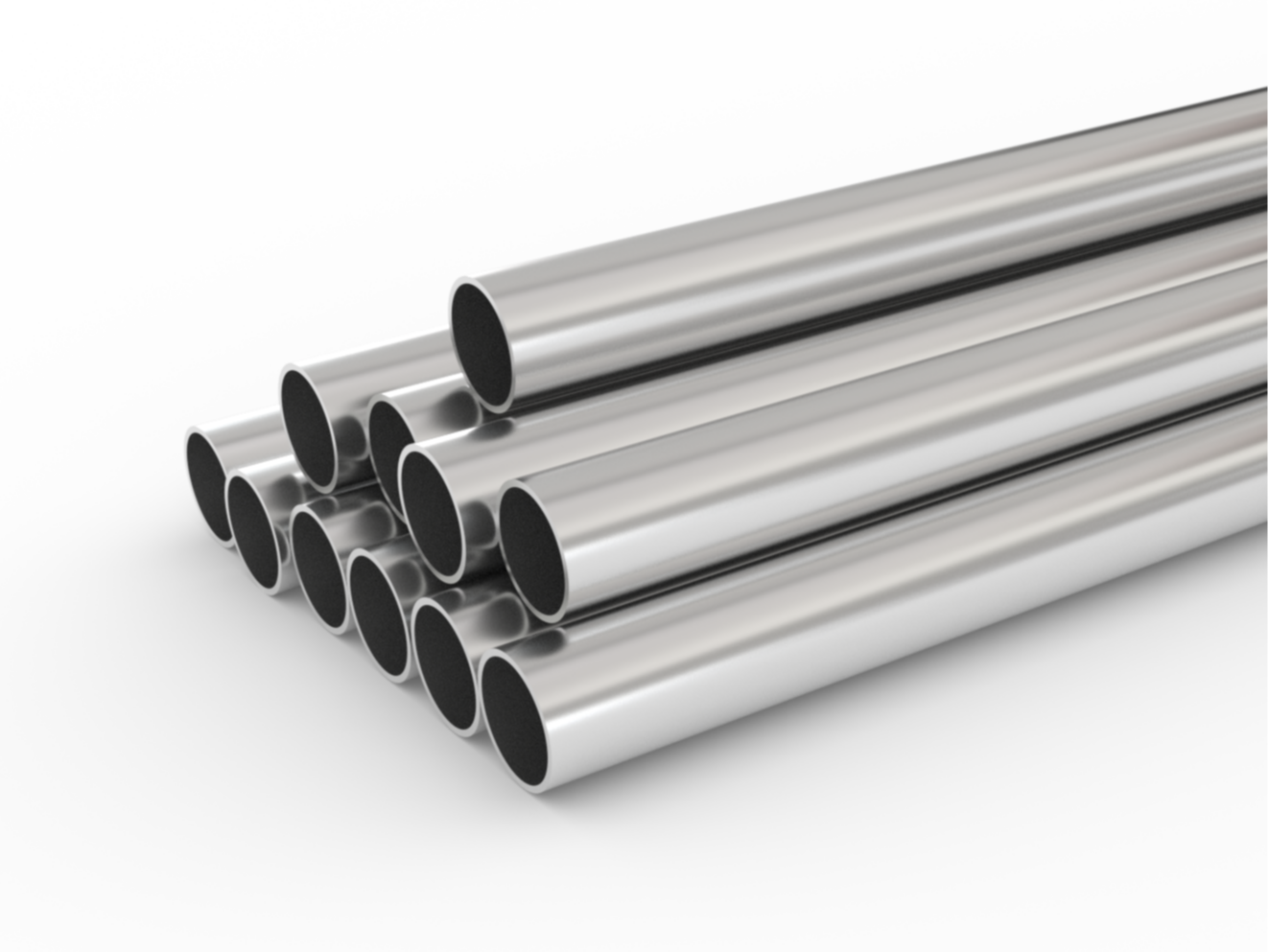 is its duplex microstructure. Unlike fully austenitic grades such as 304L or 316L, the material contains both ferritic and austenitic phases. Proper phase balance is important because it determines the combination of strength, toughness, corrosion resistance and weldability available in the finished pipe.
Chromium provides the principal passive-film-forming capability, while molybdenum improves resistance to localized corrosion. Nitrogen strengthens the alloy and contributes to austenite formation, helping maintain the desired duplex structure. Nickel also stabilizes austenite and supports the phase balance established during thermal processing.
A typical S31803 chemistry contains approximately 21–23% chromium, 4.5–6.5% nickel, 2.5–3.5% molybdenum and 0.08–0.20% nitrogen, with carbon restricted to a maximum of approximately 0.030%. Exact limits depend on the applicable specification.
This composition explains why Duplex Steel S31803 Pipes Manufacturers must control the complete metallurgical route rather than simply achieving the required chemical analysis. Heat treatment, cooling rate, forming history and welding can influence ferrite-austenite balance and consequently affect corrosion and mechanical performance.
Pipe Form, Manufacturing Route and Dimensional Control
S31803 pipe may be manufactured in seamless or welded configurations depending on the applicable product specification and project requirement. ASTM A790 covers seamless and welded ferritic/austenitic stainless steel pipe for general corrosive service, while ASTM A789 addresses seamless and welded ferritic/austenitic stainless steel tubing. For certain welded constructions, ASTM A928 may also be relevant.
The manufacturing route affects the engineering characteristics of the finished product. Seamless pipe is produced through processes involving billet preparation, piercing, hot working, sizing and finishing. Welded pipe generally begins with strip or plate that is formed into a cylindrical section before longitudinal welding and subsequent sizing or finishing operations.
Dimensional requirements normally include:
-
Nominal pipe size or outside diameter
-
Wall thickness or schedule
-
Length
-
Dimensional tolerances
-
End configuration
-
Surface condition
-
Heat-treatment condition
-
Required inspection
-
Certification and traceability
Available dimensions should never be treated as universal S31803 characteristics because permitted dimensions depend on the applicable product standard, manufacturing route and project specification.
Strength and Corrosion Resistance Work Together
One of the principal engineering advantages of S31803 is its high yield strength compared with conventional austenitic stainless steels. Representative minimum requirements associated with ASTM A790/A789 include approximately 450 MPa yield strength, 620 MPa tensile strength and 25% elongation, although the applicable product specification and product form must be checked before using these values for design.
The high strength can permit designers to achieve required mechanical performance with lower wall thickness in some applications, subject to pressure-code calculations and applicable allowable stresses. This does not mean that S31803 automatically permits thinner pipe. Wall thickness remains a function of design pressure, temperature, diameter, corrosion allowance, external loading, fabrication requirements and the governing design code.
Corrosion resistance is equally important. S31803 demonstrates strong resistance to chloride-related stress corrosion cracking and good resistance to pitting and crevice corrosion. These characteristics make the alloy particularly relevant to equipment and piping exposed to saline water, brackish water, process chemicals and selected sour-service environments.
Why Nitrogen and Heat Treatment Matter
Nitrogen has an unusually important role in duplex stainless steel. It acts as an austenite stabilizer while also increasing strength and contributing to localized-corrosion resistance. The nitrogen content therefore cannot be considered merely a minor compositional detail.
Heat treatment is similarly critical. Duplex stainless steels are normally solution treated and rapidly cooled to establish an appropriate ferrite-austenite balance. Excessive exposure to intermediate or elevated temperatures can promote undesirable secondary phases, including sigma phase, which can significantly reduce toughness and corrosion resistance.
For this reason, fabrication procedures involving welding, forming and heat exposure require control. The material should not be subjected to uncontrolled thermal cycles simply because the base alloy has good high-temperature capability. S31803 is generally not intended for continuous high-temperature service where harmful precipitation can compromise the duplex microstructure.
S31803 and S32205: An Important Specification Distinction
The relationship between S31803 and S32205 is one of the most important issues when purchasing Duplex 2205 pipe.
S31803 represents the original 22% chromium duplex composition, whereas S32205 introduced a more tightly controlled chemistry with higher minimum chromium, molybdenum and nitrogen requirements. Both have the same 1.4462 material number in many European references and are frequently grouped commercially under Duplex 2205. However, the two UNS designations should not be treated as automatically identical for every specification.
For example, an ASTM A790 S31803 chemistry can permit approximately 21–23% chromium, 2.5–3.5% molybdenum and 0.08–0.20% nitrogen, whereas the S32205 range is more tightly controlled around higher minimum levels.
Therefore, Duplex Steel S31803 Pipes Suppliers should identify the exact UNS designation on quotations, material certificates and inspection documentation. A commercial description such as “Duplex 2205” is insufficient when the engineering specification specifically calls for S31803.
International Standards and Material Identification
Several standards can appear in technical documentation for duplex S31803 pipe, but each has a specific role.
ASTM A790 is one of the principal pipe specifications for seamless and welded ferritic/austenitic stainless steel pipe. It establishes requirements associated with material, manufacturing and testing.
ASTM A789 is primarily associated with duplex stainless steel tubing rather than conventional pipe. The distinction between pipe and tube should therefore be maintained in procurement documentation.
ASME SA790 and SA789 are corresponding ASME material specifications used where applicable under ASME construction requirements. The exact edition and project code should always be confirmed.
For European procurement, EN 1.4462 and the designation X2CrNiMoN22-5-3 are commonly associated with the Duplex 2205 family. European product standards may include EN 10216-5 for seamless tubes and EN 10217-7 for welded tubes, depending on the product and application.
Standards should therefore be specified according to product form, application and jurisdiction rather than presented as interchangeable equivalents.
Welding Requires Metallurgical Discipline
Welding S31803 requires greater control than welding conventional austenitic stainless steel because the thermal cycle can alter the ferrite-austenite balance. Excessive ferrite formation or precipitation of unwanted phases can adversely affect toughness and corrosion resistance.
Welding procedure qualification should therefore consider heat input, interpass temperature, filler-metal selection, shielding, joint preparation and post-weld requirements. The objective is not simply to create a mechanically sound weld; the weld and heat-affected zone must retain an appropriate metallurgical structure.
This is particularly important in process piping, offshore systems and chemical-service equipment where welded joints may experience the same corrosive environment as the parent pipe.
Inspection and Certification of S31803 Pipe
Quality verification should establish that the supplied pipe meets both material and dimensional requirements. Typical inspection may include chemical analysis, tensile testing, dimensional inspection, hardness testing where required, hydrostatic or other pressure testing as specified, surface examination and non-destructive examination where applicable.
For duplex stainless steel, metallurgical verification can be particularly valuable. Ferrite content and microstructural examination may be specified for critical applications because corrosion and mechanical performance are closely connected to phase balance.
Material certificates should identify the heat number and correlate the supplied pipe with its chemical analysis, mechanical test results, heat treatment and applicable standard. Positive material identification can provide an additional verification of alloy identity when required by the quality plan.
Duplex Steel S31803 Pipes Stockists therefore require strong segregation and traceability systems when maintaining inventory. S31803, S32205 and other duplex grades can appear similar externally, making clear identification and documentation essential.
Industrial Applications Driven by Service Conditions
The engineering combination of strength and corrosion resistance gives S31803 a broad industrial role. Applications include chemical-processing piping, oil and gas process systems, offshore equipment, heat exchangers, pressure vessels, desalination-related systems and piping exposed to chloride-bearing environments.
In oil and gas service, resistance to chloride stress corrosion cracking and selected hydrogen-sulphide environments can make duplex stainless steel useful where conventional austenitic grades face limitations. Where sour service is involved, however, material selection must comply with the applicable requirements of NACE MR0175/ISO 15156 rather than relying on the alloy designation alone.
For heat-exchanger systems, the material can be useful where cooling water contains chlorides or where a combination of mechanical loading and corrosion resistance is required. Offshore applications similarly benefit from the alloy's combination of strength and resistance to marine environments, subject to detailed service evaluation.
Procurement Requirements for Indian and International Projects
Duplex Steel S31803 Pipes Exporters handling international projects should treat specification accuracy as a central procurement requirement. An enquiry should establish the UNS designation, applicable ASTM or ASME specification, pipe type, dimensions, schedule, length, heat-treatment condition, testing requirements and certification.
For Duplex Steel S31803 Pipes Manufacturers in India, process control should extend from raw material chemistry through forming, welding where applicable, heat treatment, finishing and inspection. Traceability should remain intact throughout production so that the final pipe can be connected to the relevant heat and test records.
Duplex Steel S31803 Pipes Suppliers in India should ensure that quotations and certificates clearly distinguish S31803 from S32205 when the project specification identifies one particular UNS grade. This distinction is especially relevant when buyers use the general commercial term Duplex 2205.
For Duplex Steel S31803 Pipes Stockists in India, inventory management should include physical marking, grade segregation and certificate control. Mixing different duplex grades within the same storage system without clear identification can create significant quality-control problems.
Duplex Steel S31803 Pipes Exporters in India must additionally maintain consistency among product marking, inspection certificates, packing documentation and shipping records. International buyers may require third-party inspection, EN 10204 certification, additional testing or project-specific documentation, so these requirements should be established before production or dispatch.
Engineering Selection Should Follow the Actual Service
The selection of S31803 pipe should begin with the operating environment rather than the material name. Pressure, temperature, chloride concentration, chemical composition, hydrogen-sulphide exposure, flow conditions, welding requirements and expected service life all influence suitability.
The grade provides a useful balance between corrosion resistance and mechanical strength, but it is not universally interchangeable with either austenitic stainless steel or super-duplex grades. Where corrosion severity exceeds the capability required from S31803, a higher-alloyed duplex or super-duplex material may be considered. Conversely, where service conditions are less demanding, a conventional stainless steel may satisfy the design requirements.
The important distinction is that material selection should be based on documented engineering requirements and the applicable design and material standards.
Specification Accuracy Defines the Finished Pipe
Duplex Steel S31803 Pipes Exporters in India and other supply-chain participants ultimately depend on the same technical principle: the grade designation alone does not define the complete product. A reliable specification connects chemistry, duplex microstructure, manufacturing route, dimensions, heat treatment, testing and traceability.
S31803 remains an important duplex stainless steel designation because its ferritic-austenitic structure provides a valuable combination of strength and corrosion resistance. Its use is particularly relevant where chloride exposure, mechanical loading and demanding industrial conditions occur together. Correct differentiation between UNS S31803 and UNS S32205, appropriate selection of ASTM or ASME product specifications, and controlled manufacturing and inspection are therefore fundamental to obtaining the intended engineering performance.
