Driving & Car Rental Support in Japan for Easy Road Trips
Author : Japan Hand | Published On : 17 Sep 2026
Japan has an extensive public transportation network, yet driving can offer greater freedom when visiting rural towns, mountain areas, coastal routes, and destinations away from major train lines. Renting a car allows travelers to create flexible schedules and reach places that may require several transfers by public transport. However, driving in another country involves understanding local road rules, rental procedures, parking systems, toll roads, and navigation. Driving & Car Rental Support in Japan can help international visitors handle these practical details more confidently.
Road travel can be especially useful for families, groups, and travelers carrying luggage between several destinations. Hokkaido, Okinawa, Nagano, Kyushu, and parts of the Japanese countryside offer many locations where a private vehicle can make transportation more convenient. Before renting, travelers should consider the driving distance, seasonal weather, road conditions, and availability of parking at their accommodation. Preparing these details in advance can make a Japanese road trip more organized and comfortable.
Understanding Japanese Driving Requirements
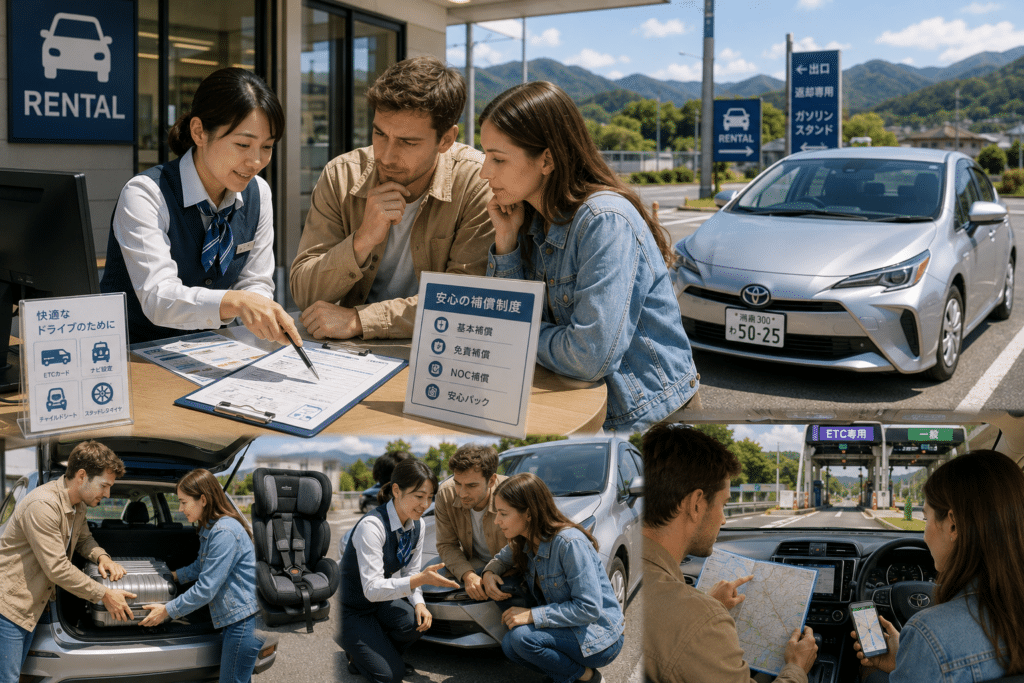
International visitors should check the driving documents required before arriving in Japan. Depending on the country where a visitor's license was issued, travelers may need an International Driving Permit or an official Japanese translation of their driving license. The requirements differ according to the issuing country, so confirming the applicable rules before departure is important. Travelers should carry the necessary documents whenever they drive a rental vehicle.
Driving & Car Rental Support in Japan can also be useful for visitors who are unfamiliar with Japanese road customs. Vehicles generally travel on the left side of the road, while the steering wheel is commonly positioned on the right. Traffic signs and road markings may differ from those travelers know at home. Speed limits, pedestrian crossings, traffic signals, and rules concerning mobile phone use should be understood before beginning a long journey. Taking time to learn these basics can make driving less stressful.
Choosing a Suitable Rental Vehicle
Selecting the right vehicle depends on the number of passengers, luggage, destination, and season. A compact car can work well for city outskirts and smaller roads, while larger vehicles may provide additional space for families or groups. Travelers visiting snowy regions should pay particular attention to seasonal vehicle requirements and available equipment. During winter, some rental companies provide vehicles equipped for snow conditions, but availability can be limited during busy periods.
Another important part of Driving & Car Rental Support in Japan is understanding the rental agreement. Visitors should review insurance coverage, fuel policies, mileage conditions, additional driver fees, cancellation rules, and return requirements before collecting the vehicle. Travelers should also check whether the rental company provides navigation systems in English or other languages. Taking photographs of the vehicle before departure can help document its condition and clarify any existing damage when the car is returned.
Navigating Japanese Roads
Navigation is one of the most important considerations for international drivers. Major highways and urban roads may be easy to follow, but rural routes can include narrow streets, steep hills, tunnels, and winding mountain roads. Japanese addresses can also be difficult for visitors to interpret because they are structured differently from addresses in many other countries. A reliable navigation system can make it easier to identify destinations, fuel stations, parking areas, and service facilities.
Driving & Car Rental Support in Japan can help travelers understand routes before setting off. It is useful to identify toll roads, rest areas, fuel stations, parking facilities, and alternative routes in advance. Travelers should avoid relying entirely on a phone connection when driving through remote areas, where coverage may vary. Downloading important maps or saving accommodation details can provide additional support if connectivity becomes limited during the journey.
Toll Roads and Parking
Japan has an extensive network of expressways, and many routes require toll payments. Rental cars may be available with electronic toll collection equipment, depending on the provider and vehicle. Travelers should understand how toll charges are handled and whether an electronic toll card can be rented. This can make highway travel more convenient, especially when crossing several regions during a single road trip.
Parking also requires attention, particularly in large cities and popular tourist areas. Many Japanese parking facilities operate through automated systems and may have specific payment procedures. Rural attractions can offer free or low-cost parking, while central areas can become expensive during busy periods. When planning Driving & Car Rental Support in Japan, travelers should check parking arrangements at hotels, attractions, restaurants, and shopping areas before arriving. This can prevent unnecessary driving around crowded neighborhoods searching for a suitable space.
Seasonal Driving Considerations
Japan's driving conditions vary considerably throughout the year. Winter can bring heavy snow and icy roads to Hokkaido, Tohoku, Nagano, and other mountain regions. Drivers unfamiliar with snow should take additional care and understand how weather affects braking distance and road visibility. Some mountain routes may also be restricted or temporarily closed during severe weather. Checking local road conditions before departure is particularly important when traveling through snowy areas.
Driving & Car Rental Support in Japan becomes especially valuable when road conditions change unexpectedly. Summer can also bring heavy rain and typhoons that affect roads, bridges, and transportation networks. Travelers should monitor official weather and road information when planning longer journeys. If conditions become unsafe, delaying a trip may be more appropriate than attempting to maintain the original schedule. A flexible itinerary gives drivers more options when seasonal weather disrupts travel plans.
Making Road Trips More Comfortable
A successful Japanese road trip involves more than simply collecting a rental car and following a map. Travelers should plan realistic driving distances and allow regular breaks, particularly on long highway journeys. Rest areas along major routes can provide food, drinks, toilets, and opportunities to stretch. Drivers should also avoid planning overly ambitious schedules that require several hours of continuous driving each day.
The final element of Driving & Car Rental Support in Japan is preparing for the return journey. Travelers should confirm the exact return location, opening hours, fuel requirements, and vehicle inspection process. If the car must be returned to a different branch, additional fees or restrictions may apply. Keeping the rental agreement and emergency contact information accessible can also make it easier to respond to unexpected situations during the trip.
Conclusion
Driving gives visitors another way to experience Japan, particularly when traveling through countryside, coastal communities, mountain regions, and areas with limited public transportation. However, international drivers need to understand licensing requirements, road rules, navigation, tolls, parking, insurance, and seasonal conditions before starting their journey. Proper preparation can make the rental process smoother and reduce avoidable difficulties on the road.
Driving & Car Rental Support in Japan can make road travel easier to organize by helping visitors prepare for rental procedures, navigation, vehicle selection, parking, toll roads, and changing conditions. With appropriate documents, a suitable vehicle, realistic routes, and awareness of local driving practices, travelers can enjoy greater freedom while exploring Japan by car. Whether planning a short countryside trip or a longer multi-region adventure, thoughtful preparation can make the journey more comfortable and enjoyable.
