Digitizing Floor: Integrating IIoT Sensors Without Overhauling Legacy Machines
Author : Daniel Sparks | Published On : 17 Sep 2026
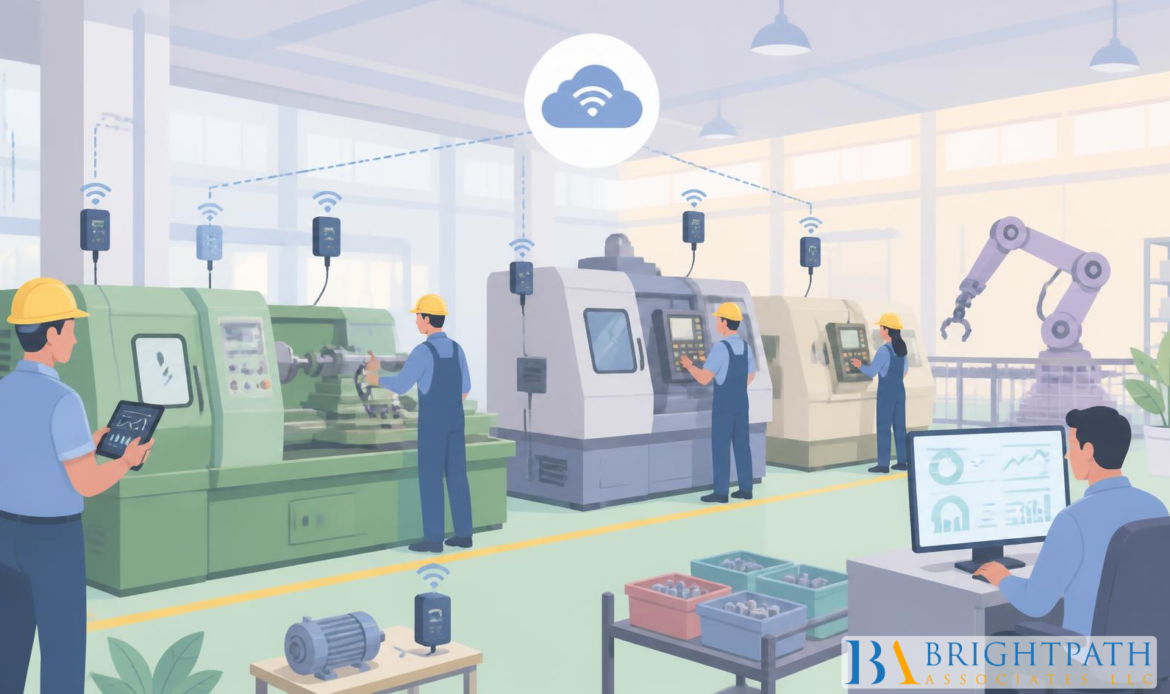
For many small and mid-sized plastics manufacturers, digital transformation presents a difficult question: How do you modernize a factory when the machines you already own still have years of productive life left?
Replacing an entire production line may sound attractive from a technology perspective, but it can be difficult to justify financially. Injection molding machines, extrusion systems, blow molding equipment, material handling systems, and auxiliary equipment can remain commercially valuable long after their original controls and connectivity capabilities become outdated.
Instead of treating legacy machinery as an obstacle to modernization, manufacturers can add a digital layer around existing equipment. Sensors, industrial gateways, connectivity platforms, and analytics can provide visibility into machines without requiring companies to immediately replace the underlying production assets.
The Legacy Machine Problem Is Really a Visibility Problem
Older machinery is not necessarily inefficient simply because it is old. A well-maintained machine may continue producing quality parts for years. The bigger challenge is often that the machine does not provide enough operational data.
Modern manufacturing decisions increasingly depend on understanding variables such as temperature, vibration, pressure, energy consumption, cycle time, utilization, and equipment condition. When those signals are unavailable or remain trapped inside disconnected control systems, managers are forced to rely on manual records, operator observations, or historical assumptions.
A sensor attached to a motor or gearbox can monitor vibration and temperature. Energy meters can reveal electricity consumption. Additional sensors can monitor environmental or process conditions. The resulting data can be transmitted through industrial gateways to local or cloud-based analytics platforms.
Why This Matters Particularly in Plastics Manufacturing
Material characteristics, temperature profiles, pressure, cooling conditions, machine speed, cycle times, and equipment condition can influence both quality and production economics. A small deviation may eventually become scrap, rework, downtime, or a customer complaint.
For example, unusual vibration may indicate developing mechanical deterioration. Temperature variation could point toward process instability. Changes in cycle time may indicate declining equipment performance or production bottlenecks.
A plant manager may want to know why one machine consistently experiences more downtime than another. A maintenance leader may need earlier indications of equipment deterioration. A production executive may want to understand why energy consumption changes between comparable production runs.
Start Small Instead of Digitizing Everything
One of the biggest mistakes SMEs can make is treating digital transformation as an all-or-nothing project. A manufacturer does not necessarily need to connect every machine, every sensor, and every process on day one.
A company experiencing repeated downtime might begin with condition monitoring. Another manufacturer struggling with energy costs could begin with machine-level energy measurement. A facility dealing with inconsistent quality might monitor selected process variables and compare them against quality outcomes.
This phased model allows manufacturers to treat technology investment as a sequence of business decisions rather than one enormous capital expenditure. The original machinery can continue operating while the digital infrastructure develops around it.
Technology Still Needs the Right People
There is another part of factory digitization that is easy to overlook: talent. IIoT introduces a need for professionals who understand both traditional manufacturing and emerging digital technologies.
Engineers and managers may increasingly need familiarity with industrial sensors, connectivity, automation, analytics, cybersecurity, and digital platforms while still understanding the realities of molding, extrusion, tooling, maintenance, quality, and production management.
BrightPath Associates supports plastics manufacturers, processors, converters, recyclers, and related organizations seeking specialized and executive talent across operations, engineering, R&D, maintenance and reliability, supply chain, quality, sustainability, and manufacturing leadership.
Companies evaluating their leadership requirements can explore Plastics Industry executive search and leadership hiring as they plan their next phase of manufacturing transformation.
The Future Factory May Not Require a New Factory
Digital transformation is often associated with futuristic equipment, fully automated production lines, and massive capital investments. For many plastics SMEs, the more realistic future may look different.
It may involve a factory where machines that have been operating for years remain productive, but are surrounded by a new layer of sensors, connectivity, analytics, and intelligent decision-making. The goal is not to make every machine new. It is to make the existing manufacturing environment more visible, measurable, predictable, and responsive.
For plastics manufacturers exploring this approach, BrightPath Associates' analysis, Digitizing the Floor: Integrating IIoT Sensors Without Overhauling Legacy Machines, provides additional perspective on building digital capabilities around existing industrial assets. The bigger question for leadership is no longer simply whether an organization can afford to replace its legacy equipment.
It is whether the organization can afford to operate that equipment without knowing what its data is trying to tell them. As plastics manufacturing becomes increasingly connected, the competitive advantage may belong not to companies with the newest machines, but to those that learn how to extract more intelligence from the machines they already have.
