Digital Twins for SMEs: Practical Steps to Simulate and Optimize Your Factory Floor
Author : Ayesha Diaz | Published On : 18 Sep 2026
For decades, factory improvement often depended on a familiar cycle: identify a problem, make a physical change, observe the result, and adjust again. That approach can work, but it becomes expensive when the factory is complex, equipment is highly specialized, or production downtime carries a significant cost.
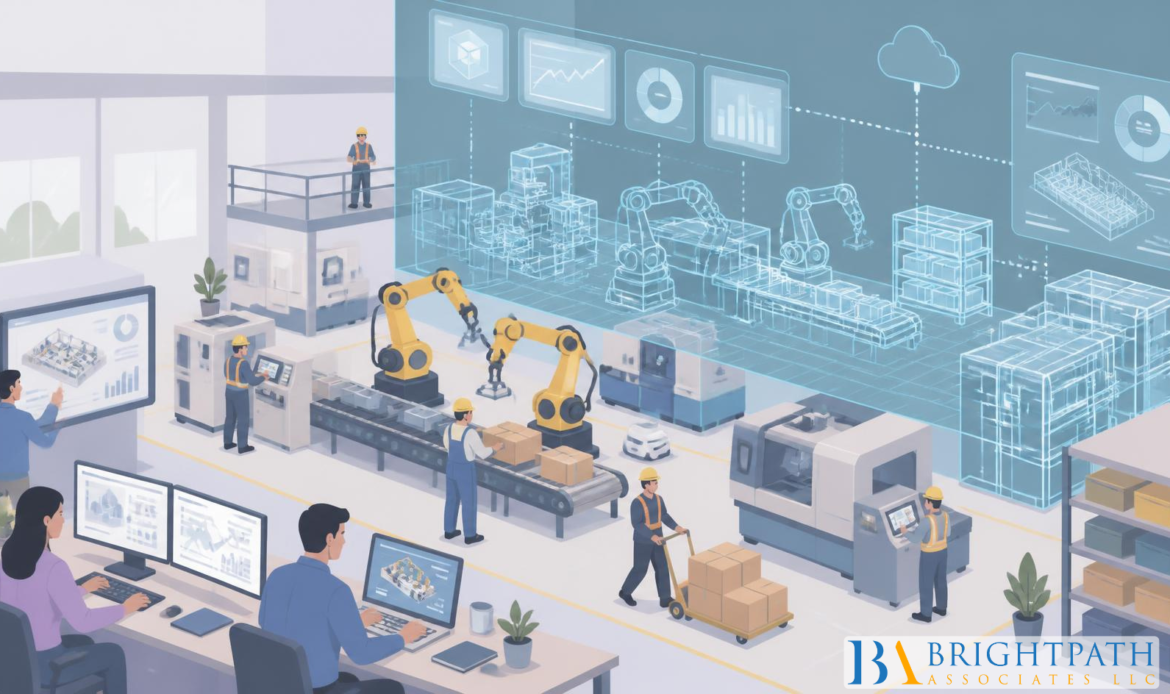
A digital twin creates a dynamic digital representation of a physical machine, production cell, process, or factory environment. Unlike a conventional 3D model, it can incorporate operational information from equipment, sensors, production systems, maintenance records, and other sources. This enables manufacturers to examine how their factory is performing and simulate possible changes before implementing them physically.
For large manufacturers, digital twins have become part of broader smart-factory strategies. But the technology is increasingly relevant to small and mid-sized machinery companies as well. The key is not attempting to digitize an entire factory at once. It is identifying a business problem where better simulation and data-driven decision-making can produce measurable value.
The Digital Twin Is More Than a Factory Visualization
It is easy to think of a digital twin as an advanced visual representation of a machine. That description misses its real business value. The more useful question is: What decision can the digital twin help management make?
A machinery manufacturer might want to know whether an existing production cell can handle a new product. Another company may need to determine whether purchasing an additional CNC machine will actually increase throughput. A plant manager may want to understand how a layout change could affect material movement or whether a robotic system could introduce a bottleneck elsewhere.
A digital twin can provide an environment where these scenarios can be modeled before management commits to physical changes. That makes the technology particularly relevant for SMEs, where capital expenditure decisions must often be evaluated carefully.
Start With the Problem, Not the Technology
One of the biggest mistakes an SME can make is beginning a digital transformation project by asking which digital-twin software to purchase. The better starting point is the operational problem.
Perhaps a critical machine experiences recurring downtime. Maybe production throughput fluctuates unexpectedly. Changeovers take too long. Material movement is inefficient. Or management is uncertain whether existing machinery can support projected growth.
Once the problem is defined, the company can determine what information is necessary to model it. This keeps the project connected to a measurable business objective rather than turning digital transformation into an expensive technology experiment.
For a precision-machining operation, for example, a digital model might incorporate cycle times, machine utilization, tooling information, production schedules, and equipment availability. Management could then test different production scenarios without repeatedly disrupting the physical production floor.
Existing Machinery Can Become Part of the Digital Strategy
Another important consideration for machinery SMEs is legacy equipment. Many manufacturers operate a mixture of modern connected machinery and older machines that were never designed for today's industrial data environment. Replacing every legacy machine simply to achieve digital connectivity may be financially unrealistic.
That does not necessarily mean older equipment has to remain outside the digital strategy. Sensors, connectivity gateways, and other technologies can sometimes capture information from legacy assets and make that information available to broader digital systems. This allows manufacturers to take a more gradual approach.
Leadership Determines Whether the Technology Creates Value
A digital twin can generate sophisticated information, but technology alone does not determine how that information affects the business. Leadership must decide how simulation results influence production planning, equipment investment, maintenance, workforce development, and operational improvement.
This is particularly important for SMEs because implementation resources are often limited. A focused digital-twin strategy requires leaders who can prioritize the highest-value use cases and prevent technology projects from becoming disconnected from business objectives.
The broader Machinery Industry is moving toward smart factories, industrial automation, digital twins, IIoT, predictive maintenance, and AI-driven operations. These developments are increasing demand for leaders who can connect technical innovation with measurable manufacturing outcomes.
The Real Opportunity Is Better Decision-Making
The most important benefit of a digital twin may not be the model itself. It is the ability to make better decisions before committing resources in the physical world. For machinery SMEs, that could mean understanding whether to buy equipment, change a layout, modify a production sequence, automate a process, adjust maintenance practices, or increase capacity.
The broader lesson from Digital Twins for SMEs: Practical Steps to Simulate and Optimize Your Factory Floor is that digital-twin adoption does not have to begin with a massive transformation program. It can begin with one meaningful operational problem and expand as the business demonstrates value.
For machinery executives, that raises an important question: If you could simulate one major factory decision before making it physically, which decision would create the greatest value for your business?
But technology is only one part of the transformation. Companies also need leaders and technical professionals who understand how to turn digital information into operational results. BrightPath Associates LLC supports machinery and industrial automation companies in identifying executive and specialized talent across manufacturing operations, engineering, automation, CNC, maintenance, supply chain, and related functions.
