Digital Transformation for Small Machinery Businesses: Embracing Technology for Competitive Edge
Author : Ayesha Diaz | Published On : 27 Jul 2026
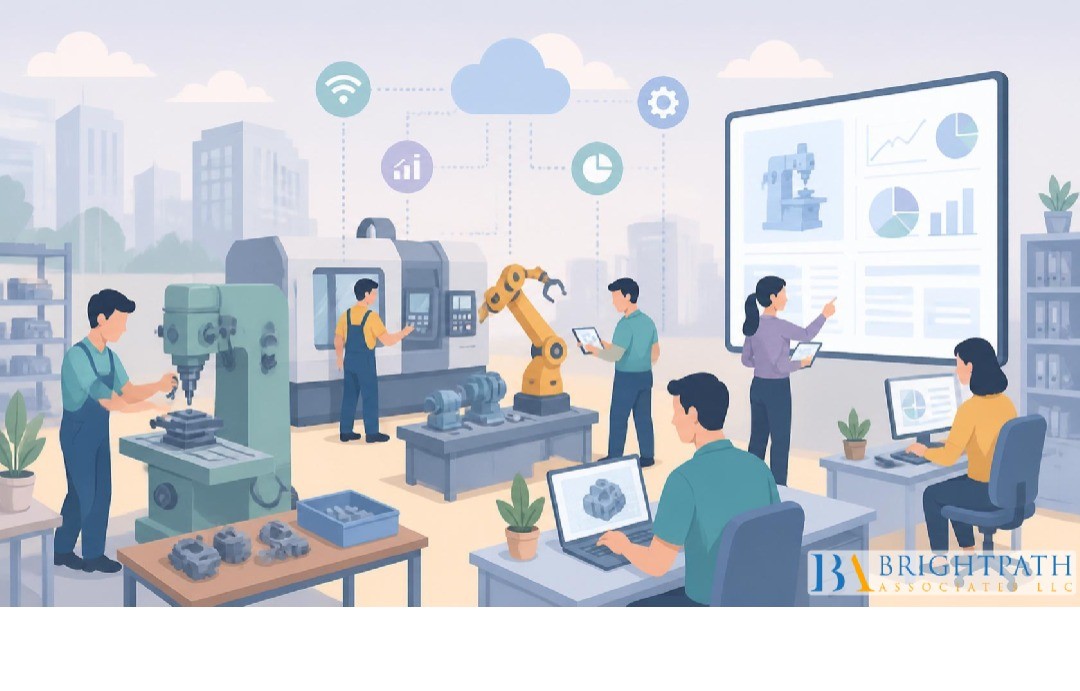
The machinery industry has always been driven by engineering excellence, precision manufacturing, and operational efficiency. However, today's competitive landscape demands far more than producing reliable equipment. Small and mid-sized machinery manufacturers must navigate supply chain disruptions, rising production costs, labour shortages, evolving customer expectations, and increasing global competition while maintaining profitability. In response, digital transformation has emerged as one of the most effective strategies for improving productivity, reducing operational costs, and building long-term resilience. While many business owners associate digital transformation with large multinational manufacturers, modern technologies have become increasingly affordable and accessible, allowing smaller machinery businesses to gain significant competitive advantages without massive capital investments.
Digital transformation extends far beyond replacing paper records with software applications. It represents the integration of digital technologies into every aspect of business operations, enabling organisations to make faster decisions, improve manufacturing efficiency, enhance customer service, and optimise resource utilisation. From cloud-based enterprise resource planning (ERP) systems and Industrial Internet of Things (IIoT) sensors to predictive analytics, artificial intelligence, and digital quality management, technology is reshaping how machinery companies design, manufacture, maintain, and deliver products. Businesses that embrace these innovations position themselves to respond more effectively to changing market demands while creating scalable operations capable of supporting future growth.
One of the most immediate benefits of digital transformation is improved operational visibility. Traditional manufacturing environments often rely on manual reporting, spreadsheets, and disconnected systems that make it difficult for managers to understand real-time production performance. Digital dashboards and connected manufacturing platforms consolidate information from machines, production lines, inventory systems, and supply chains into a single source of truth. Plant managers gain instant visibility into production efficiency, machine utilisation, order status, and equipment performance, allowing them to identify bottlenecks and resolve operational issues before they impact delivery schedules or customer satisfaction.
Predictive maintenance has become another powerful application of digital technology within the machinery industry. Equipment failures can result in costly downtime, missed deadlines, and expensive emergency repairs. By installing sensors that continuously monitor vibration, temperature, pressure, and machine performance, manufacturers can detect early warning signs of equipment degradation before breakdowns occur. Predictive maintenance enables maintenance teams to schedule repairs based on actual equipment condition rather than fixed maintenance intervals, extending machinery lifespan while reducing maintenance costs and improving production reliability. For small manufacturers operating with limited maintenance resources, this proactive approach delivers measurable financial and operational benefits.
Supply chain management has also become increasingly dependent on digital technologies. Machinery manufacturers frequently source specialised components from multiple suppliers while managing complex production schedules and customer delivery commitments. Digital supply chain platforms provide greater visibility into supplier performance, inventory availability, procurement timelines, and logistics operations. Real-time information enables procurement teams to anticipate material shortages, diversify sourcing strategies, and minimise production delays caused by unexpected disruptions. As global supply chains continue experiencing uncertainty, digitally connected operations provide businesses with greater flexibility and resilience.
Customer expectations continue evolving alongside technological advancements. Buyers increasingly expect faster response times, transparent order tracking, customised product configurations, and responsive after-sales service. Customer relationship management (CRM) systems, digital service platforms, and connected machinery enable manufacturers to improve customer communication throughout the entire product lifecycle. Service teams can remotely monitor equipment performance, schedule preventive maintenance, diagnose technical issues, and respond more quickly to customer enquiries. These enhanced service capabilities strengthen customer relationships while creating opportunities for recurring service revenue and long-term business partnerships.
Data-driven decision-making is another significant advantage of digital transformation. Every stage of machinery manufacturing generates valuable operational information, from engineering design and procurement to production, quality assurance, logistics, and customer support. Advanced analytics platforms convert this information into actionable business intelligence, helping leadership teams forecast demand, optimise production planning, reduce waste, improve inventory management, and identify new growth opportunities. Rather than relying solely on historical trends or intuition, decision-makers gain evidence-based insights that improve strategic planning and operational performance.
Quality management also benefits significantly from digital technologies. Manual inspection processes often increase the risk of inconsistencies, documentation errors, and delayed problem identification. Digital quality management systems automate inspections, capture production data in real time, maintain complete traceability records, and simplify regulatory compliance. Automated quality monitoring reduces defects while improving product consistency and customer satisfaction. Manufacturers that consistently deliver high-quality products strengthen their reputation and build greater confidence among customers operating in demanding industrial environments.
One of the most common concerns among small machinery businesses is the perceived cost of digital transformation. Fortunately, technological innovation has dramatically reduced implementation barriers. Cloud computing, subscription-based software, scalable automation solutions, and modular digital platforms allow businesses to adopt technology gradually based on operational priorities and available budgets. Rather than replacing every system simultaneously, organisations can begin with high-impact initiatives such as inventory management, production monitoring, predictive maintenance, or customer relationship management before expanding digital capabilities over time. This phased approach reduces financial risk while generating measurable returns that support future investments.
Successful digital transformation depends not only on technology but also on people. New digital tools require skilled professionals capable of integrating technology into everyday manufacturing operations. Mechanical engineers, automation specialists, manufacturing engineers, data analysts, maintenance managers, production supervisors, cybersecurity professionals, and operations leaders all play essential roles in driving successful transformation initiatives. Continuous employee training, cross-functional collaboration, and leadership support ensure that digital investments translate into lasting operational improvements rather than isolated technology projects.
For small and mid-sized machinery manufacturers, attracting professionals with expertise in automation, smart manufacturing, digital engineering, predictive maintenance, and industrial data analytics has become increasingly important. Building teams capable of managing both advanced technologies and traditional manufacturing operations enables organisations to accelerate innovation while maintaining operational excellence. Companies seeking experienced professionals who understand the evolving machinery sector can explore BrightPath Associates' Machinery Industry to discover specialised recruitment solutions designed to support sustainable business growth.
Looking ahead, digital transformation will continue reshaping the machinery industry through artificial intelligence, industrial robotics, digital twins, augmented reality, autonomous manufacturing systems, and advanced analytics. Businesses that embrace these technologies today will be better positioned to improve productivity, enhance customer experiences, strengthen supply chain resilience, and compete successfully in an increasingly digital marketplace. The objective is not to adopt technology for its own sake but to build smarter, more agile organisations capable of adapting quickly to changing customer needs and market conditions.
For a deeper understanding of practical strategies that help small machinery manufacturers leverage technology for sustainable growth, explore BrightPath Associates' blog, Digital Transformation for Small Machinery Businesses.
Ultimately, digital transformation is no longer an optional initiative reserved for industry leaders—it has become a fundamental business strategy for organisations seeking long-term competitiveness. Small machinery businesses that invest in connected technologies, data-driven decision-making, workforce development, and continuous innovation will be better equipped to overcome operational challenges and capture new market opportunities.
