Digital Log-Stack Measurement: Ditch Manual Tape Measure
Author : Kabir Pathan | Published On : 12 Aug 2026
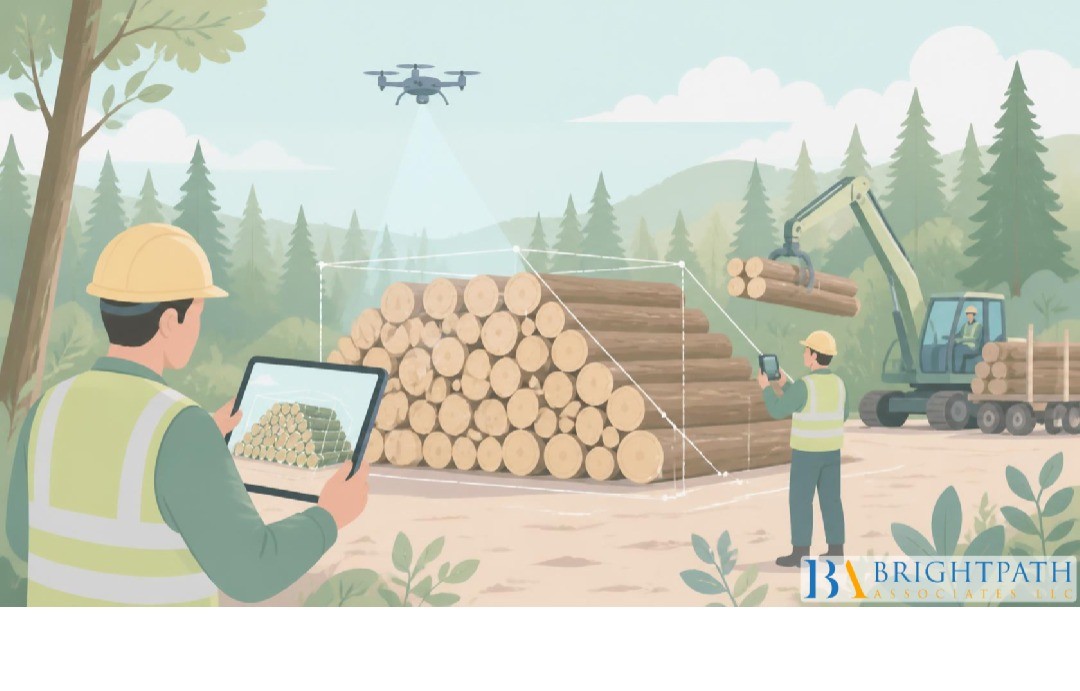
The forest products industry has always depended on accurate measurement. From timber procurement and log receiving to inventory management, production planning, and financial reporting, reliable measurements influence decisions across the entire operation. Yet many mills and timber operations continue to rely on traditional manual methods for measuring log stacks. Workers may use tape measures, visual estimates, handwritten records, and spreadsheets to calculate volumes. While these methods may appear inexpensive and familiar, they can introduce inconsistency, consume valuable labor hours, and make it difficult for management teams to obtain timely operational data.
Digital log stack measurement offers a practical alternative. By combining imaging technologies, sensors, software, and data analytics, companies can transform a traditionally manual measurement process into a faster and more standardized digital workflow. For companies operating in the Paper & Forest Products Industry, this shift represents more than an equipment upgrade. It can become part of a broader strategy for improving inventory visibility, operational efficiency, measurement accuracy, and decision-making.
The challenge with manual measurement begins with the physical nature of log inventories. Log stacks are rarely perfectly uniform. Individual logs vary in diameter, length, shape, orientation, moisture content, and arrangement. A worker measuring a stack must often estimate dimensions and account for irregularities. Even experienced employees can produce different results depending on where and how measurements are taken. When these measurements are subsequently entered into spreadsheets or other systems, additional opportunities for human error appear.
The issue becomes more significant when businesses operate multiple yards, procurement locations, or production facilities. A measurement approach that depends heavily on individual judgment can produce inconsistencies between locations. One facility may follow a slightly different process from another, making comparisons difficult. Digital measurement technologies can help establish standardized procedures so that measurements are captured using consistent methodologies and stored in a common data environment.
One of the most important benefits of digital measurement is speed. Manual measurement can require workers to physically approach a stack, take several measurements, record information, calculate volume, and transfer the results into an inventory system. Depending on the size of the operation, this process can consume substantial amounts of time. Digital tools can potentially capture measurements more rapidly and reduce the amount of manual data entry required. The resulting time savings can allow employees to focus on higher-value activities such as inventory verification, equipment management, quality control, and production planning.
Another major advantage is data integration. A modern measurement system should not operate as an isolated technology. Its real value increases when measurement results can connect with inventory management, enterprise resource planning, procurement, production planning, and analytics platforms. Instead of recording a number on paper and manually transferring it later, the measurement can become part of a digital information chain.
Digital measurement can also contribute to improved traceability. Forest products companies increasingly need visibility into where materials originate, how they move through the supply chain, and how they are ultimately processed. Accurate digital records can support internal accountability and make it easier to investigate discrepancies. When measurement information is connected with supplier and inventory records, companies can build a more comprehensive picture of their raw-material flows.
The technology can be particularly valuable for companies pursuing automation. A business does not need to automate its entire operation at once. Digital log measurement can serve as one component of a gradual modernization strategy. Once measurement data becomes digital, it can potentially feed other automated processes, including inventory alerts, procurement planning, production scheduling, and reporting.
Artificial intelligence and computer vision may further expand the possibilities. Image-based systems can potentially analyze large quantities of visual information and identify patterns that would be difficult for workers to evaluate manually. Over time, companies may be able to use historical measurement data to improve forecasting and identify unusual changes in inventory. The combination of digital measurement and analytics could therefore move organizations from simply recording what they have toward predicting what they may need.
However, technology alone will not solve every measurement challenge. The implementation process requires careful planning. Companies need to evaluate environmental conditions, equipment compatibility, measurement standards, data architecture, employee workflows, and system integration. A technology that works effectively in a controlled environment may require additional considerations when deployed outdoors in changing weather, lighting, dust, moisture, or other demanding conditions.
Employee adoption is equally important. Workers who have relied on manual methods for years may initially question whether a digital system can accurately represent the physical characteristics of a log stack. Management should therefore approach implementation as a process improvement initiative rather than simply an equipment purchase. Training, demonstrations, testing, feedback, and clear operating procedures can help employees understand how the technology supports their work.
Leadership also has a significant role to play. Digital transformation in forest products operations requires managers who understand both traditional manufacturing practices and emerging technologies. Companies need leaders capable of connecting operational realities with data-driven decision-making. This includes plant managers, operations executives, technology leaders, maintenance professionals, data specialists, and supply-chain executives who can translate digital capabilities into measurable business outcomes.
The workforce implications should not be overlooked. As measurement becomes increasingly digital, the skills required to manage the process may evolve. Employees may spend less time physically collecting and manually entering measurements and more time validating information, analyzing exceptions, maintaining technology, and responding to operational insights. This does not necessarily eliminate the need for experienced forestry and mill professionals. Instead, it changes how their expertise is applied.
For small and mid-sized companies, this transition can seem challenging because technology investments must demonstrate clear business value. The strongest business case may come from evaluating the entire measurement process rather than focusing only on equipment cost. Companies should consider labor savings, measurement consistency, inventory accuracy, data availability, reduced administrative work, improved planning, and potential reductions in material discrepancies.
The broader lesson is that digital transformation does not always require a massive capital project. Sometimes meaningful progress begins by replacing one inefficient manual process with a connected digital workflow. Log stack measurement is a strong example because it sits at the intersection of inventory, procurement, production, labor, and data management. The original BrightPath article, Digital Log Stack Measurement: Ditch the Manual Tape Measure, explores this shift and the potential advantages of moving away from traditional manual measurement practices.
For forest products companies, the question is ultimately larger than whether a digital measurement system can calculate volume faster. The more strategic question is what the organization can do with better information. If accurate measurements become available more frequently and flow directly into business systems, managers can make decisions based on current conditions rather than delayed estimates.
That can support a more responsive operation. Procurement can become more data-driven. Inventory can become more visible. Production planning can become more precise. Management can identify discrepancies sooner. Employees can spend less time on repetitive administrative tasks. Over time, these incremental improvements can contribute to a more efficient and digitally connected operation.
